Discover engaging STEM kits that empower teens to explore robotics, hydraulics, circuits, and programming. This guide highlights five highly relevant options, each offering hands-on learning, screen-free play, and real-world problem solving. Below you’ll find quick comparisons, practical how-tos, and a buying guide to help you choose the right kit for teens who love to build and learn by doing.
| Product | Brand | Key Focus | Age Range |
|---|---|---|---|
| Sillbird 12-in-1 Solar Robot | Sillbird | Solar power, modular robots | 8-13 |
| Teach Tech Hydrobot Arm Kit | TEACH TECH | Hydraulics, real mechanical arm | 12+ |
| ELEGOO UNO R3 Smart Robot Car Kit | ELEGOO | Arduino robotics, electronics basics | 8-16 |
| STEM Bluetooth Speaker Kit | CYOEST | Electronics, circuits, DIY speaker | 10+ |
| Smartivity Pinball Machine | Smartivity | Mechanics, engineering, arcade play | 8-99 |
The following sections present detailed looks at five top picks. Each product includes a brief overview, what teens can learn, and how the kit supports hands-on STEM growth.
Sillbird 12-in-1 Solar Robot Kit

The Sillbird 12-in-1 solar robot kit offers screen-free, outdoor-friendly STEM exploration. Teens build a solar-powered robot and experiment with different configurations to see how design changes affect speed and movement. The 190-piece set supports engineering reasoning, problem solving, and renewable energy concepts as students swap pieces to reassemble models. It’s ideal for independent exploration or guided classroom-style challenges, with opportunities to compare solar efficiency under varying lighting conditions.
Teach Tech Hydrobot Arm Kit

Designed for older teens, the Hydrobot Arm Kit teaches hydraulic principles through a functional robotic arm. With six movable axes and up to 270-degree rotation, the kit demonstrates how fluid power translates into controlled motion without batteries. Teens learn mechanical design, leverage systems, and the relationship between force and motion. The kit emphasizes hands-on experimentation with hydraulics to grip and manipulate objects, making it a compelling choice for students delving into engineering fundamentals.
ELEGOO UNO R3 Smart Robot Car Kit

The ELEGOO UNO R3 kit provides a comprehensive Arduino-based platform for teens to explore robotics, sensors, and programming. It includes 24 module parts, such as obstacle avoidance and line-tracing components, with cross-device control via Android and iOS. The assembly is designed to be approachable for beginners while still offering depth through experimentation with code and hardware. The kit supports iterative learning: students can code small projects, test sensors, and refine their robot’s behavior over time.
STEM Bluetooth Speaker Kit
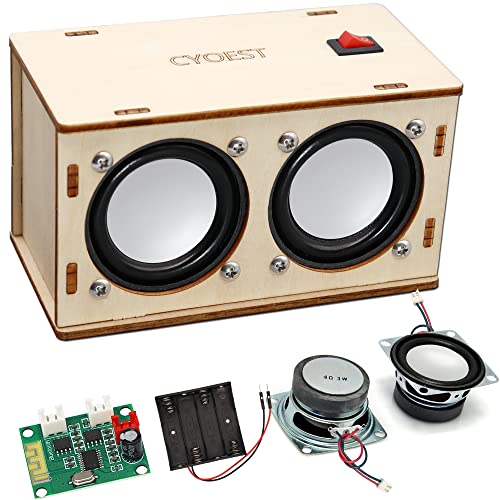
This project kit merges electronics and acoustics by letting teens build their own Bluetooth speaker. It’s a strong fit for learners curious about circuits, audio technology, and hands-on assembly. The kit emphasizes safety and quality control while guiding users through solderless connections, wiring, and testing. Teens gain practical electronics knowledge, plus a tangible product they can use or customize, encouraging continued exploration of audio engineering concepts.
Smartivity Pinball Machine

The Smartivity Pinball Machine blends engineering with arcade-style play. Teens assemble a mechanical pinball setup, exploring gears, levers, and timing mechanisms. The project supports STEM learning through hands-on construction, problem-solving, and critical thinking as students optimize the play experience. It’s suitable for group activities or solo challenges, delivering a satisfying, screen-free engineering journey from start to finish.
Buying Guide
Choose the right kit for your teen
- Learning goals: Look for kits that align with your teen’s interests—solar energy, hydraulics, robotics, or electronics.
- Difficulty level: Select a kit that offers room to grow; some sets are beginner-friendly but scale with more complex projects.
- Hands-on time: Consider how much time your teen can devote to assembly and exploration per session.
Key learning outcomes to expect
- Understanding core STEM concepts: energy transfer, mechanics, circuits, and programming basics.
- Problem-solving and critical thinking through iterative design and testing.
- Teamwork and collaboration when kits support group activities and shared projects.
Hardware and software considerations
- Open-source components and modifiability can extend the learning horizon; look for Arduino or compatible platforms.
- Hydraulics or pneumatics introduce fluid dynamics concepts—good for physics alignment.
- Power sources: Solar-powered kits emphasize sustainability; battery-powered kits offer consistent operation indoors.
Safety and age appropriateness
- Check age guidance and small parts warnings for younger teens or younger siblings at home.
- Safety features, such as durable parts and clear assembly instructions, help maintain a positive learning experience.
Budget and value
- Compare the number of parts, project variety, and future-expandable elements when evaluating price.
- Consider whether a kit includes a comprehensive guide, online resources, and support from the creator community.
Across these options, teens gain exposure to design thinking, engineering principles, and practical coding or scripting skills. Each kit supports self-directed exploration or structured challenges, helping learners gain confidence in STEM domains while producing tangible projects they can discuss, present, or showcase.