Choosing the right toys for a 7-year-old on the autism spectrum involves balancing sensory input, engagement, and skill development. This guide highlights five carefully selected products designed to aid focus, reduce anxiety, and support learning through play. Each item emphasizes safety, durability, and broad usability in various settings—from home to classroom. The following selections cover fidget exploration, sensory seating, musical visuals, puzzle-based play, and communication support, offering multiple ways to enhance daily routines and interactions for a child aged seven.
Summary of Selected Products
| Product | Brand | Key Benefit |
|---|---|---|
| Scientoy Fidget Toy Set, 35 Pcs | Scientoy | Extensive sensory variety for focus and stress relief |
| 21″ Large Spinning Chair For Autistic Kids | Pterying | Vestibular stimulation and body coordination |
| Sensory Spinning Chair, Green | HAPPYMATY | Balance, core strength, and calm down sessions |
| CUBIDI Rainbow Puzzle Ball | CUBIDI | Fine motor skills and color matching with a challenging puzzle |
| NXONE 195 PCS Educational STEM Toys | NXONE | Hands-on construction learning and cooperative play |
Scientoy Fidget Toy Set, 35 Pcs Sensory Toys
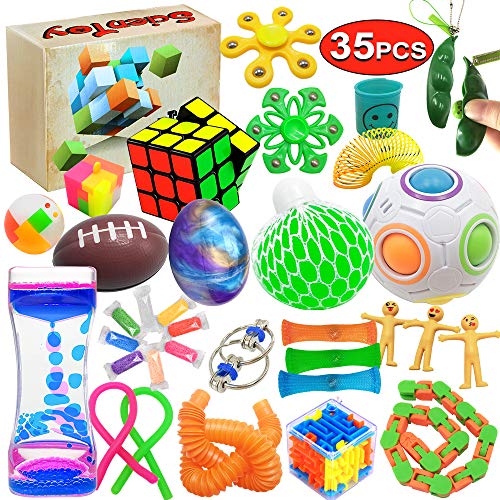
The Scientoy Fidget Toy Set offers 35 pieces designed to support sensory exploration and anxiety relief. With items such as a rainbow magic ball, liquid motion timer, squeeze grape ball, maze puzzle, mesh and marble fidget toys, foam putties, a pop tube, and more, this kit provides varied textures and methods for play. The set is described as non-toxic with ABS materials, aligned to widely recognized toy safety standards, making it suitable for children with autism, ADHD, OCD, or high stress. It encourages squeezing, stretching, flipping, and manipulating objects to help focus attention in calm, self-directed ways.
Key features include: multiple fidget formats that suit different sensory needs, a bundled gift box for gifting or classroom rewards, and a focus on safe use for a range of ages starting in early childhood. Parents and educators may find this set useful for break-time regulation, quiet corners, and hands-on activities that teach patience and motor control. Always supervise young users and check for signs of wear or damage to maintain safety.
21″ L × 19″ W Large Spinning Chair For Autistic Kids

This large, child-friendly spinning chair is designed to support vestibular needs and body coordination. The chair’s multi-functional design allows spinning while seated, kneeling, or lying down, which can help with focus and motor planning. Built from premium PP material with a sturdy base, it’s crafted to withstand active use and supports a weight capacity suitable for a range of seventh-grade children. Safety features include rounded edges and robust construction. Indoor and outdoor usability makes it a flexible option for sensory rooms, classrooms, or home play spaces.
Important considerations: assess space for safe rotation, ensure durability during vigorous activity, and consider individual sensory preferences—some kids may prefer gentle rocking versus rapid spinning. Combine with supervised sessions and complementary activities like storytime or quiet breathing if needed. This chair emphasizes stability and controlled movement as a tool for engagement, rather than a standalone solution for behavior management.
Musical Light Up Wand – Sensory Lights

The Musical Light Up Wand from LoveHugs blends light, sound, and motion to deliver a rich sensory experience. The wand features color-changing lights and a looping musical melody intended to captivate and soothe. This type of sensory toy can support visual tracking, auditory processing, and rhythm recognition, which may be beneficial for a seven-year-old navigating communication and social interaction. It’s suitable for individual play or group settings where shared attention is a learning objective. Supervision is advised in crowded spaces to prevent overstimulation.
Considerations include adjusting light intensity and volume to suit a child’s sensitivity level, and pairing with calm-down routines or storytelling to maximize engagement. The combination of predictable patterns and multisensory input can provide a structured yet enjoyable way to explore feelings and reactions through play.
CUBIDI Rainbow Puzzle Ball
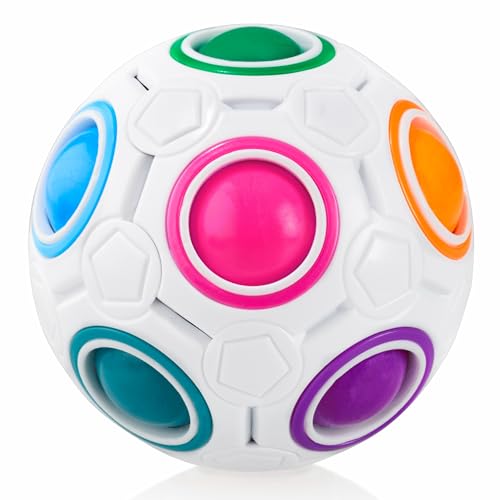
The CUBIDI Rainbow Puzzle Ball is a color-matching puzzle designed to boost fine motor skills and cognitive flexibility. The ball contains 11 interior balls that must be rearranged to align colors with the outer ring, offering a challenging yet rewarding task for children aged 6 and up. For a 7-year-old, this toy supports sequential thinking, problem-solving, and concentration—key skills often targeted in educational settings and home practice. The physical act of manipulating the ball provides tactile engagement while encouraging patience and persistence during play.
Parents should monitor for frustration and offer guided moments to celebrate small successes. Its portability makes it suitable for car trips, quiet corners, or desk work in classrooms. The toy’s design can be used to stimulate conversation about colors, patterns, and strategy, providing an opportunity for social interaction during collaborative play.
NXONE 195 PCS Educational STEM Toys
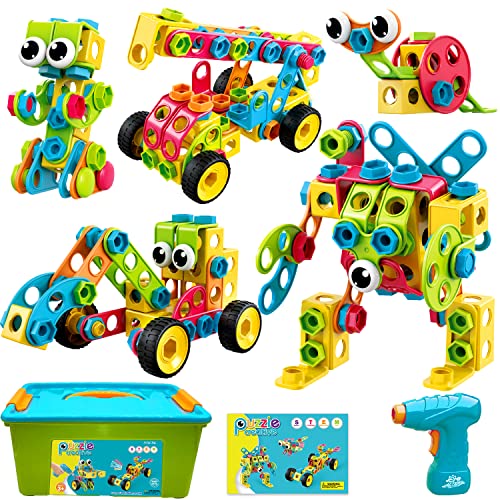
The NXONE 195-piece STEM toy set provides a comprehensive platform for building, constructing, and engineering ideas. The collection includes a storage box and a kid-safe electric drill, enabling cooperative play and shared problem-solving. This set supports early engineering concepts, spatial reasoning, and teamwork—beneficial for a 7-year-old exploring how things fit together and how to plan steps to complete a project. The materials are designed to be phthalate-, lead-, cadmium-, and BPA-free, reinforcing safety for growing minds. The set’s size encourages collaboration, making it well-suited for classrooms or family projects.
Educational value comes from guided builds and open-ended exploration. Parents and educators can introduce challenges that align with a child’s interests, such as constructing simple machines, bridges, or towers, while emphasizing safety and clean-up routines. The array of components also helps strengthen fine motor skills and spatial awareness over time.
Buying Guide
Key purchase considerations for toys aimed at seven-year-olds with autism include sensory needs, safety, engagement duration, and adaptability to home or school environments. The following points help compare items and tailor selections to a child’s profile:
- Sensory compatibility: Some children prefer tactile textures, while others respond to visual or auditory cues. Look for a mix of fidgeting options, calming lights, and music that can be adjusted for volume and intensity.
- Safety and durability: Choose products made from non-toxic materials with rounded edges and sturdy construction. Check weight limits and ensure components are age-appropriate to minimize choking hazards.
- Engagement and learning goals: Identify whether the toy supports focus, fine motor skills, social interaction, or communication. A combination of activities can address multiple needs at once.
- Portability and space: Consider the play space at home or in the classroom. Compact options are useful for travel, while larger items like sensory chairs may require dedicated space.
- Estimating usage: Some children may prefer long, immersive play; others benefit from short, frequent breaks. Select toys that adapt to different play lengths and routines.
- Communication support: For nonverbal or minimally verbal kids, tools that encourage expression—such as AAC devices—can complement sensory toys and aid in daily communication.
In selecting the right set, balance exposure to diverse sensory experiences with gradual progression. Pair toys with structured routines, such as visual schedules or calm-down checklists, to reinforce positive associations with play. Finally, maintain safety by supervising new toys during initial use and reviewing any wear or damage over time.