Discover top STEM toys designed to engage 13-year-olds with hands-on learning, engineering challenges, and creative problem solving. This guide highlights age-appropriate kits that promote critical thinking, collaboration, and screen-free exploration while staying fun and educational.
Summary of Selected Products
| Product | Brand | Key Focus | Included Parts |
|---|---|---|---|
| Smartivity DIY Pinball Machine Toy | Smartivity | Mechanics, physics concepts, engineering design | All parts included, replacement parts lifetime |
| Smartivity DIY Robotic Mechanical Hand | Smartivity | Robotics, gears, motion and mechanism building | Comprehensive instruction, parts kit |
| Poraxy FM Radio Kit | Poraxy | Electrical circuits, radio basics, hands-on electronics | FM radio components, batteries, screwdriver |
| SCAEMO STEM Kits (4 Sets) | SCAEMO | Solar/wind energy, renewable tech, engineering projects | Wooden kits, solar panels, motors |
| Henoda Programmable Building Block Kit | Henoda | Robot construction, remote/app/voice control, STEM programming | 468+ pieces, remote/app controls |
Smartivity DIY Pinball Machine Toy

This pinball machine kit is a screen-free, hands-on project that strengthens STEM fundamentals through active construction. Kids assemble the mechanical components and learn how physics concepts—such as momentum, force, and trajectories—play out in a simple arcade game. The step-by-step manual guides builders through the setup, encouraging patience, problem solving, and creative tinkering. Suitable for a wide age range, it’s designed to engage children into their teens and even adults who enjoy collaborative play. A lifetime supply of replacement parts minimizes interruptions to play and learning.
Key features include: 100% screen-free engagement, a guided building process, and durable parts with easy-to-follow instructions. The kit aims to foster confidence and curiosity about the sciences behind everyday machines.
What to consider
- Skill progression: Introduces mechanics and project planning that scale with age.
- Materials quality: Durable components support long-term exploration.
- Pair programming or group play: Great for classroom or family projects.
Smartivity DIY Robotic Mechanical Hand

Designed to build critical thinking through robotics, this kit offers a screen-free platform to assemble a mechanical hand and understand how linkages and actuators translate into motion. The step-by-step instructions are tailored for young builders, with an emphasis on patience and precision. It supports continued learning as children explore different grasping mechanisms and experiment with different configurations. The kit includes a lifetime supply of replacement parts, reducing the likelihood of halt during ongoing projects.
Key features include: hands-on construction, mechanisms education, and easy-to-follow guidance. The experience fosters engineering curiosity and problem-solving in a collaborative setting.
What to consider
- Complexity level: Suited for older children who want a bigger mechanical challenge.
- Expansion potential: Offers room to redeploy parts into new projects.
- Care requirements: Small parts may require supervision for younger siblings.
Poraxy FM Radio Kit

This kit invites teens to dive into electronics by building a functional FM radio. It combines hands-on assembly with explanations of radio fundamentals and circuit design. The included components and clear instructions help learners understand how resonant circuits, tuning, and amplification work together to receive broadcasts. The kit is designed for curious minds and makes a compelling gift for long-term STEM exploration, with batteries (not included) powering the radio for real-world use.
Key features include: circuit-building experience, practical electronics education, and a design that blends curiosity with real-world application. It’s well-suited for independent projects or group demonstrations in a classroom setting.
What to consider
- Safety: Care with small parts and batteries; supervision recommended for younger teens.
- Learning outcome: Strong emphasis on circuits and RF concepts.
- Upgradability: Potential to retrofit with extra components for advanced learning.
SCAEMO STEM Kits (4 Sets)

These four wooden STEM kits introduce basic energy concepts through solar and wind-powered models, along with an electric fan. Each kit provides a distinct project, encouraging experimentation with renewable energy and basic engineering. The bundle is packaged in a gift-ready box, combining educational value with a presentable display. It appeals to youth who enjoy building, testing, and refining models while learning about sustainability.
Key features include: four separate STEM projects, renewable energy focus, and a family-friendly bonding experience. The sets encourage collaboration and practical problem-solving as learners compare performance across models.
What to consider
- Hands-on scope: Multiple projects allow repeated exploration and comparison.
- Materials: Wooden components provide durability and a tactile building experience.
- Storage and organization: Separate packaging helps keep parts accessible for ongoing projects.
Henoda Robot Toys With APP or Remote Control
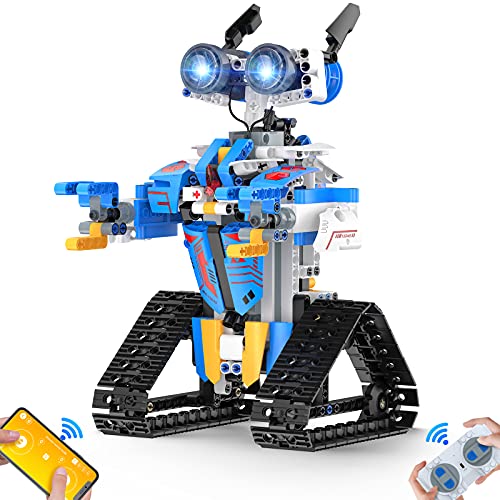
This programmable robotics kit offers 468+ pieces for constructing a versatile robot with remote control, app-based programming, and voice control options. It supports multiple control modes, including gravity sensing and STEM programming, providing a broad platform for learning robotics. The remote control distance exceeds 20 meters, enabling expansive interactive play. This kit suits teens who want to explore advanced robotics concepts and software-driven control, while still offering hands-on building fun.
Key features include: multiple control options (remote, app, voice), extended control range, and a large parts assortment to enable complex builds. It’s designed to promote logical thinking, spatial reasoning, and coding concepts in a tangible way.
What to consider
- Programming learning curve: Suitable for teens ready to experiment with code and app interfaces.
- Component quality: A wide range of parts requires careful organization.
- Safety and supervision: Ensure proper assembly to avoid loose parts.
Buying Guide
Consider these factors when selecting STEM toys for 13-year-olds:
- Learning goals: Decide whether the focus is on robotics, electronics, renewable energy, or mechanical design. Look for kits that align with the student’s interests and challenge level.
- Opportunities for collaboration: Many kits support group projects, which can build teamwork and communication skills.
- Complexity and progression: Choose sets that offer a clear learning curve, with the option to expand or modify later.
- Materials and durability: Durable components reduce frustration and provide long-term value for ongoing projects.
- Safety and supervision: Some kits include small parts or require tools; ensure age-appropriate suitability and supervision where needed.
- Expansion potential: Kits that can be reconfigured or repurposed encourage continued exploration beyond initial builds.
- Educational value: Look for kits that explain the science behind the build and offer problems to solve, not just assembly.
Across these options, the chosen products emphasize hands-on learning, practical engineering, and exposure to real-world STEM concepts suitable for curious 13-year-olds. Each kit supports screen-free play while building confidence, problem-solving, and collaboration skills that are valuable in academics and future careers.