Discover top STEM sets designed to engage children in science, technology, engineering, and math through hands-on play. This guide highlights five well-rounded options that foster creativity, critical thinking, and collaboration for kids ages 3-12. Each pick emphasizes safe materials, clear instructions, and interactive building experiences that teachers and parents can rely on for classroom or home use.
| Product | Age Range | Key Benefit | Pieces |
|---|---|---|---|
| Kids STEM Building Toys (Qirptey) | 3-8 | Creative building with varied shapes and an idea booklet | 125 pieces |
| Snap Circuits Jr. SC-100 | 8+ | Foundational electronics with 100+ projects | 28 parts |
| NXONE 195 PCS STEM Toys | 3-10 | Comprehensive build set with storage and safety features | 195 pieces |
| National Geographic Magic Chemistry Set | 8-12 | Magic-themed chemistry explorations and tricks | 10 experiments |
| 10 in 1 STEM Toys (Tsomtto) | 4-8 | Multiple models and cooperative building activities | 167 pieces |
Kids STEM Building Toys For 3-8 Year Olds

The 125-piece set from Qirptey provides a colorful collection of blocks in varied shapes with an idea booklet. It supports constructive play that builds fine motor skills and early engineering concepts. The kit encourages children to assemble models like race cars, robots, trucks, and dinosaurs, while also inviting imaginative creations. It is marketed for a range of ages and is suitable for classroom or home use, promoting problem-solving and collaborative play.
Snap Circuits Jr. Electronics Exploration Kit

Snap Circuits Jr. introduces electronics through hands-on projects. With more than 100 potential configurations demonstrated by a full-color project manual, children can explore electrical engineering basics safely. The kit contains 28 parts and is designed for ages 8 and up. It serves as a strong starter set for future STEM learning, offering repeated, varied projects that teach circuitry, circuits, and cause-and-effect thinking.
Brain Flakes 500 Piece Set

The Brain Flakes set includes a large, interlocking disc system that supports open-ended building. With 500+ pieces in multiple colors, it fosters spatial reasoning, color recognition, and collaborative play. It is appropriate for a wide age range, including kids and even adults, and supports quiet, screen-free creativity.
Learning Resources STEM Explorers Magnet Movers

Magnet Movers from Learning Resources introduces magnetism and basic physics with a 39-piece set. The kit includes a magnetic wand, assorted magnetic components, and an activity guide, making it suitable for ages 5 and up. It offers a compact way to explore attraction, repulsion, and spatial reasoning while supporting guided activities and independent play.
NXONE 195 PCS Educational STEM Toys
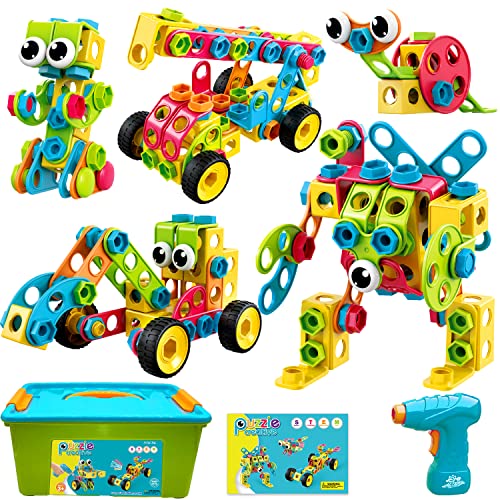
NXONE’s 195-piece set combines blocks, a storage box, and a kid-safe electric drill. The kit is designed to support group play and individual exploration, identifying STEM concepts across science, technology, engineering, and math. Its safety focus and durable construction align with classroom needs for heavy use, while fostering teamwork and problem-solving as children imagine and build together.
National Geographic Magic Chemistry Set
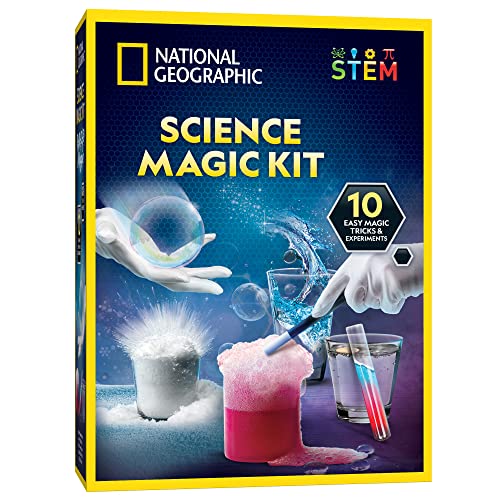
National Geographic’s Magic Chemistry Set blends science with theater. The 10 experiments perform as magic tricks, offering a unique hook to engage older kids in chemistry. The included wand and gloves add an element of performance, while the illustrated guide explains the science behind each trick, making it approachable for curious minds and reinforcing safe, supervised experimentation.
10 in 1 STEM Toys (Tsomtto)

This 10-in-1 set from Tsomtto offers 167 pieces to build ten different models, from cranes to robots. It emphasizes cooperative play, where children work together to interpret instructions and assemble projects. The kit supports STEM learning by developing spatial reasoning, engineering concepts, and collaborative problem-solving without relying on screens.
Buying Guide
Key purchase considerations help match a stem set to a child’s interests and development stage:
- Age suitability and safety: Check small parts for younger children and look for non-toxic materials and rounded edges.
- Educational focus: Decide whether you want foundational electronics, magnetism, chemistry, or open-ended building for creativity.
- Hands-on vs guided learning: Some sets include extensive instruction guides; others favor open-ended exploration with prompts.
- Play setting: Classroom-friendly sets may offer larger quantities and storage; home use benefits from compact storage and simple cleanups.
- Expansion potential: Consider whether the kit scales with the child’s growing skills or integrates with other brands for broader play.
- Maintenance and safety: Storage bins, durability of components, and ease of assembly/disassembly influence long-term value.
In comparing these options, balance factors like complexity, theme variety, and social play potential. For younger beginners, a big-pieces set with simple models supports confidence and motor development. For curious older kids, project-based kits that combine theory with hands-on building can sustain interest and encourage experimentation. For classrooms, sets that offer clear guidelines, multiple project ideas, and durable components tend to perform best over time.