Sorting toys support early math, color recognition, and fine motor development for toddlers. The following selections combine colorful counting actions, animal and object sorting, and hands-on play that fits preschool and home learning. The list highlights options that are durable, washable, and designed for small hands. Use these toys to foster independent exploration or guided learning activities with caregivers.
| Product | Main Benefit | Age Range |
|---|---|---|
| Oomloid Counting Animals Montessori Toys | Colorful animal sorting, tweezers, and bowls to build early math | 3-5, 4-8 |
| Fisher-Price Stacking Toy Baby’s First Blocks | Sort, stack and drop through a shape-sorter lid | 6+ months |
| Learning Resources Farmer’s Market Color Sorting Set | Realistic play food for color sorting and vocabulary growth | 3-5 |
| Skrtuan Counting Animals Color Sorting | 36 animals, sorting bowls, and tweezers for math and motor skills | 3-5 |
| Coogam Sorting Toy for Toddlers | Multi-theme sorting with cards to guide classification | 3-5 |
Oomloid Counting Animals Montessori Toys

Oomloid’s counting animals kit includes 36 multi-colored animals, 6 sorting bowls, and 2 tweezers. Designed for ages 3-5 and extending to 4-8, these Montessori-inspired tools help children practice number counting, animal categorization, and color matching. The included bowls support color-coordinated sorting, while tweezers encourage precise hand movements, promoting fine motor development and concentration during play. Teachers and parents can use the set for small-group activities or home learning stations to build foundational math confidence.
Fisher-Price Stacking Toy Baby’s First Blocks

Fisher-Price’s Stacking Toy offers a simple, classic play pattern. With 10 colorful blocks, babies and toddlers can sort by color and shape, stack them, and drop them through a shape-sorter lid. All blocks fit back into a storage bucket for easy cleanup, and a soft-carry handle supports portable play. This toy emphasizes hand-eye coordination, early spatial awareness, and cause-and-effect learning—ideal for infants and toddlers developing motor skills and early sorting concepts.
Learning Resources Farmer’s Market Color Sorting Set
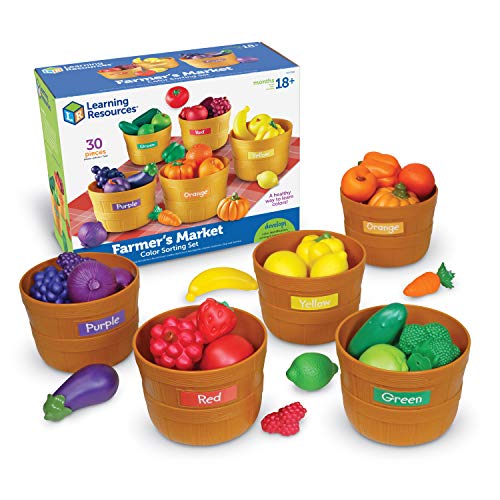
This color-sorting set uses realistic play foods and bushel baskets to teach color recognition and sorting. Children practice classifying items by color and category, while expanding vocabulary as they name familiar foods. The arrangement mirrors grocery and kitchen play scenarios, encouraging pretend play and social interaction. The included sorting cues support preschool-ready skills, laying a groundwork for classroom sorting activities and at-home learning centers.
Skrtuan Counting Animals Color Sorting
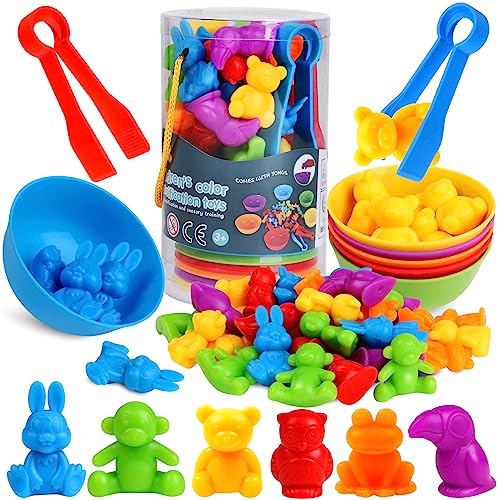
Skrtuan’s set presents 36 forest animals, 6 sorting bowls, and 2 large tweezers in a compact box. Its bright animal shapes and colors promote color recognition, counting, and fine motor development as children pick up, sort, and compare items. Made from durable rubber-like materials, the pieces are washable and designed to withstand regular play. It’s well suited for quiet independent work or cooperative activities with peers or caregivers.
Coogam Sorting Toy For Toddlers

Coogam offers a multi-theme sorting experience: animals, dinosaurs, fruits, vehicles, foods, balls, and ships with 8 activity cards to guide classification. Kids sort items into categories based on attributes, supporting cognitive development, problem-solving, and fine motor skills. The included activity cards provide structured play while leaving room for imaginative exploration, making it suitable for both classroom and home settings.
Buying Guide: Key Purchase Considerations
- Age appropriateness: Choose sets labeled for early childhood to ensure small parts and complexity match developmental stages, typically ages 2–5 for sorting and counting activities.
- Material and safety: Look for durable, washable materials with rounded edges and non-toxic finishes. Rubber-like pieces and wood are common, with water-based paints preferred for safety.
- Skill balance: Prioritize kits that blend color sorting, counting, and fine motor tasks to promote math readiness and hand strength without overwhelming the child.
- Storage and portability: Sets that come with bowls, bins, and storage containers help maintain organization and invite on-the-go learning.
- Teacher and caregiver resources: Some products include activity cards or suggested exercises. These can help structure sessions and extend learning beyond free play.
- Durability and washability: Savvy shoppers value pieces that resist wear and are easy to clean, especially for younger toddlers who explore with hands and mouth.
- Multi-theme options: Toys that cover animals, foods, vehicles, and shapes offer variety and keep interest high across interests and learning goals.