These science kits are tailored for curious 11-year-olds who love experimenting, building, and discovering how things work. The following selections cover a range of topics—from gross science to chemistry tricks and robotics—providing engaging, age-appropriate projects that balance learning with play. Each kit includes guided activities, clear instructions, and materials that help young scientists develop critical thinking and problem-solving skills while having fun.
| Product | Brand | Key Focus |
|---|---|---|
| National Geographic Gross Science Kit | Blue Marble | Gross-out experiments, 45+ studies |
| NATIONAL GEOGRAPHIC Science Magic Kit | Blue Marble | Science + magic tricks, 100+ experiments |
| Thames & Kosmos Mega Cyborg Hand STEM Kit | Thames & Kosmos | Hydraulic, pneumatics, wearable hand |
| Playz Edible Candy Making Science Kit | Playz | Chemistry, food science, 40 experiments |
| National Geographic Magic Chemistry Set | Blue Marble | Magic chemistry tricks, 10 experiments |
National Geographic Gross Science Kit

The National Geographic Gross Science Kit delivers a high-energy introduction to biology and chemistry through 45 gross-themed experiments. Kids dissect a mock brain, create slime, and explore other “totally gross” activities that spark curiosity while teaching core scientific concepts. The kid-friendly guide uses illustrations and concise steps to help budding scientists perform each experiment safely and confidently. The included bonus ideas extend the fun with 30 additional experiments using common household items, expanding hands-on learning beyond the box.
NATIONAL GEOGRAPHIC Science Magic Kit

This kit blends science with magic to deliver 100+ unique experiments and tricks. Kids perform demonstrations that appear to defy physics, such as bending metal with water and floating coins. Each activity is designed as a magic trick, complete with a wand and gloves to enhance the performance. The comprehensive guide explains the science behind the tricks, helping learners connect magical outcomes to real-world physics and chemistry concepts, making it an entertaining bridge to STEM learning.
Thames & Kosmos Mega Cyborg Hand STEM Kit

Build a wearable hydraulic hand that you operate with your own fingers. The kit uses air pressure and water to power the movement, with adjustable finger joints for precise control. No motors or batteries are required, highlighting fundamental pneumatic principles and mechanical design. This project supports hands-on understanding of physics, engineering, and problem solving, while offering a tangible sense of achievement as the hand flexes to grip objects of varying sizes.
Playz Edible Candy Making Science Kit

This edible science kit combines chemistry with culinary creativity. It includes activities to make jelly candies, crystal rock candy, chocolates, lollipops, and more, while teaching basic concepts such as dissolving, solutions, and reactions. The kid-friendly lab guide presents information visually and with straightforward steps, making complex ideas approachable. It’s a flavorful way to explore measurement, mixtures, and food science while producing tasty results.
National Geographic Magic Chemistry Set
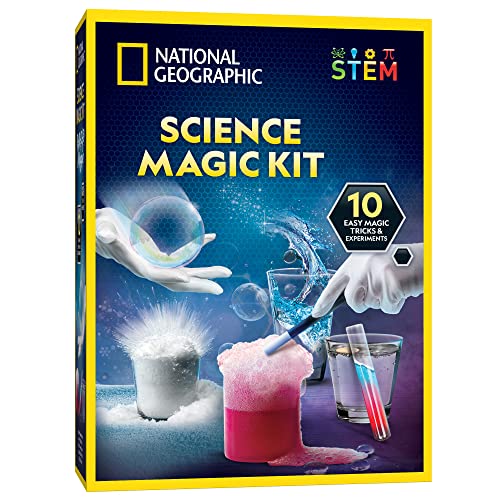
Offering 10 science experiments that blend magic with chemistry, this kit includes tricks such as making color-changing solutions and magical-looking phase changes. The included guide provides illustrated, kid-friendly instructions along with insights into the science behind the tricks. It’s designed to capture imagination and introduce foundational chemistry concepts, making it suitable for classroom demos or home science sessions.
Buying Guide
When choosing science kits for 11-year-olds, consider how the activities support curiosity, safety, and learning progression. Look for kits that align with common core science ideas—like physical science, chemistry, biology, and engineering—while offering age-appropriate challenges. Assess the following factors:
- Age-appropriateness and skill level: Ensure activities match an 11-year-old’s cognitive and motor skills to promote confidence without frustration.
- Hands-on value: Favor kits that require active building or testing rather than purely observational experiments to maximize engagement and retention.
- Safety and materials: Check for non-toxic components, clear safety guidelines, and sturdy equipment suitable for young learners.
- Guidance and explanations: High-quality, illustrated instructions and accessible explanations help sustain interest and deepen understanding.
- Expansion potential: Kits with additional experiments or related activities extend learning beyond the box and support curiosity over time.
- Cross-disciplinary connections: Options that weave math, engineering, or literacy into science activities help develop broader skills.
From gross-out science that captures attention to magic-inspired experiments and hands-on engineering, there are multiple paths to engaging 11-year-olds in STEM. Consider a mix of content areas (biology, chemistry, physics, robotics) to build a well-rounded science toolkit. For families seeking a single starter kit, prioritize those with clear instructions, safe materials, and scalable challenges. Schools and homeschooling environments may benefit from kits that provide structured lesson ideas and extension projects to complement science curricula.