Babies and toddlers benefit from stimulating, safe play surfaces that promote motor skills, sensory exploration, and early learning. The following play tables for babies combine bright colors, musical features, and developmental activities to keep little ones engaged while giving caregivers peace of mind. This selection focuses on durable designs, adjustable features, and age-appropriate activities that grow with your child.
Summary of chosen products
| Product | Brand | Key Feature | URL |
|---|---|---|---|
| VTech Magic Star Learning Table | VTech | Bilingual activities, gears, nursery rhymes, light-up buttons | Amazon |
| Skip Hop Baby Activity Center | Skip Hop | Grow-with-Me 3-stage design, 25+ activities | Amazon |
| LeapFrog Little Office Learning Center | LeapFrog | Electronic laptop, globe, Explore/Learn/Music modes | Amazon |
| Fisher-Price Laugh & Learn DJ Table | Fisher Price | Three piano modes, 12 activities, 100+ songs and phrases | Amazon |
| Baby Einstein Discovering Music Activity Table | Baby Einstein | Piano, guitar, drum; ages 6 months+ | Amazon |
VTech Magic Star Learning Table
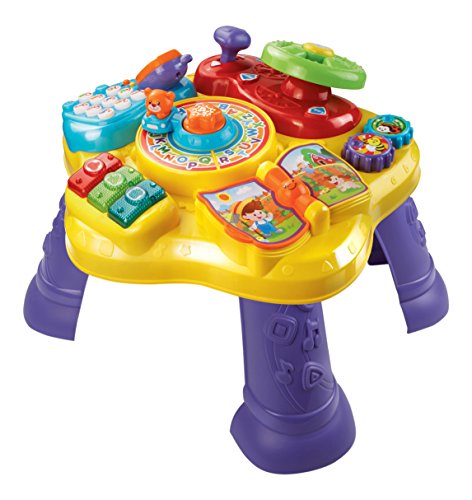
The VTech Magic Star Learning Table combines bright visuals with practical activities designed for early exploration. Six bilingual activities provide English and Spanish language exposure, supporting early communication skills. A steering wheel lets a bear move around the table, while the book page flip and gear spins promote fine motor development. Light-up music buttons introduce colors and rhythm, offering multisensory engagement for infants and toddlers. The compact footprint suits small playrooms and can be used as a toy table or a portable learning station.
Skip Hop Explore & More Interactive Center
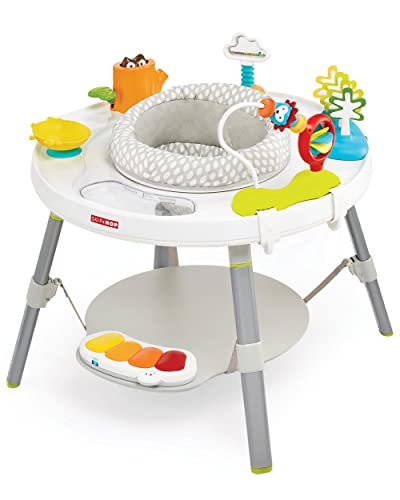
Skip Hop’s Grow-with-Me design supports three developmental stages, from sitting to cruising and eventually standing. The activity center includes a musical, light-up piano with multiple modes, a popping owl, and clip-on toys that can be strategically positioned as your child grows. With 25+ activities, the center offers varied sensory input—music, lights, and textures—while remaining sturdy and safe. It is suitable for babies 4 months and up, and the structure can transition to a toddler-friendly play table to extend usefulness.
LeapFrog Little Office Learning Center
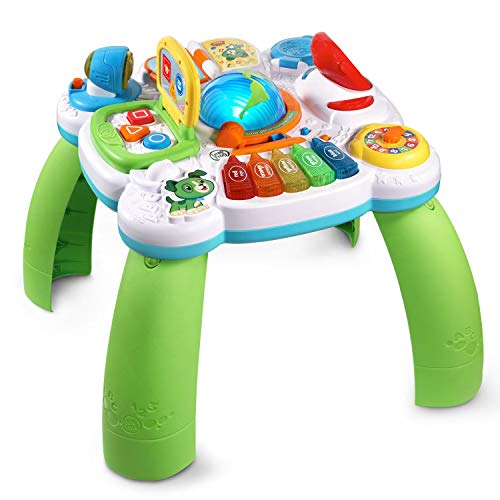
The LeapFrog Little Office Learning Center offers a desk-like setup with a pretend laptop and globe to foster imaginative play and early literacy. It features 27 electronic touchpoints and multiple modes—Explore, Learn, and Music—so children can hear basic words, greetings, and global music. Opening the laptop reveals interactive content that supports shape and animal recognition through button presses. This option emphasizes role-play and conversational skills, suitable for curious minds beginning to explore daily routines.
Fisher-Price Laugh & Learn DJ Table

This Fisher-Price DJ Table blends music and education with three piano modes and multi-color lights to stimulate auditory and visual senses. The table includes 12 fine motor activities, allowing babies to press keys, spin a light-up disc, and interact with a number pad. Smart Stages levels provide a progressive learning path as a child grows, covering colors, shapes, numbers, counting, opposites, the alphabet, and even Spanish words. Suitable for infants and toddlers who enjoy musical play and interactive storytelling.
Baby Einstein Discovering Music Activity Table

Baby Einstein focuses on musical exploration with a piano, guitar, and drum, encouraging babies to create their own melodies. The table supports early stand-and-play phases and introduces musical concepts through engaging instruments. With a straightforward setup, it provides a sensory-rich experience that blends music with imaginative play. This option is ideal for families prioritizing auditory development and creative expression in early childhood.
Buying Guide: Key Purchase Considerations
When selecting a play table for babies, consider the following factors to ensure safety, longevity, and developmental value:
- Age range and growth trajectory: Look for multi-stage designs or modular components that adapt as your child grows from sitting to standing.
- Educational value: Evaluate whether the table emphasizes language, numbers, colors, music, or imaginative play, and whether modes can be adjusted to suit different milestones.
- Durability and safety: Check sturdy legs, non-toxic materials, rounded edges, and weight limits to prevent tipping and ensure long-term use.
- Ease of setup and portability: Favor lightweight, easily assembled units with simple storage options for toys and accessories.
- Sound and sensory features: Consider volume controls, sound quality, and the inclusion of lights or motion to maintain engagement without overstimulation.
- Material versatility: Tables that can be used on the floor or as a conventional table may offer more value for space-constrained homes.
- Cleaning and maintenance: Choose surfaces that are easy to wipe down, with removable, washable components where possible.
- Warranty and safety certifications: Check manufacturer warranties and any safety certifications to ensure reliable, compliant product quality.
In practice, families should weigh how each feature aligns with their child’s interests. For example, bilingual or international content can support early language exposure, while music-rich tables promote auditory development and rhythm awareness. A grow-with-me design can maximize value by transitioning from infant play to toddler activities.
Additional considerations include space availability, parental supervision needs, and budget constraints. While all listed options offer engaging experiences, choosing a table with a balanced mix of sensory input, interactive challenges, and robust construction typically yields the broadest developmental benefits over time.