Finding engaging, developmentally appropriate toys helps toddlers build early literacy, numeracy, and fine motor skills. The following selected products are designed to capture a toddler’s curiosity through interactive textures, sounds, and hands-on play. Each option emphasizes language development, problem-solving, and imaginative play while keeping screen time minimal.
| Product | Brand |
|---|---|
| LeapFrog Learning Friends 100 Words Book | LeapFrog |
| LeapFrog 2-in-1 LeapTop Touch | LeapFrog |
| Airbition Talking Flash Cards | Airbition |
| Electronic Alphabet Wall Chart | GaHoo |
| JoyCat Learning Tablet: Tap-to-Read Cards | JoyCat |
LeapFrog Learning Friends 100 Words Book
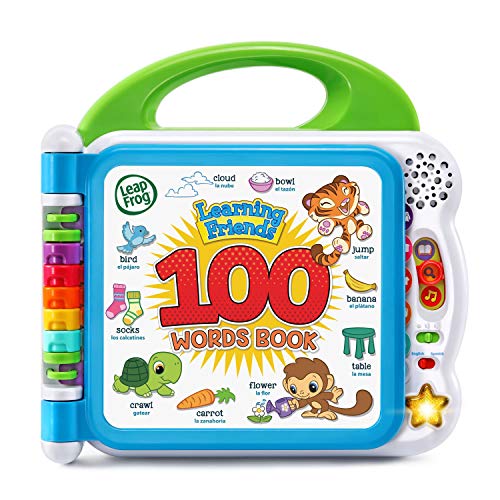
The LeapFrog Learning Friends 100 Words Book introduces more than 100 words chosen by learning experts. Toddlers meet learning friends Turtle, Tiger, and Monkey who guide vocabulary across categories such as pets, animals, food, colors, activities, opposites, and more. Interactive pages respond to touch with word playback, engaging sound effects, and fun facts. A light-up star button triggers the Learning Friends theme song and additional word content, supporting early receptive and expressive language skills in a playful format.
LeapFrog 2-in-1 LeapTop Touch

This versatile preschool laptop toy features a screen that flips from keyboard to tablet mode, supporting pretend play and early tech familiarity. The keyboard displays letters A-Z and numbers 1-10, while the unit can be swiveled and transformed into a touch tablet for interactive games. Parents can customize experiences to help children spell their own name, reinforcing early literacy and fine motor skills through role-play and exploration in a safe, age-appropriate format.
Airbition Talking Flash Cards for Toddlers

The Airbition Talking Flash Cards present 224 colorful illustrations and sounds across animals, vehicles, food, fruits, and vegetables. This Montessori-inspired tool supports vocabulary expansion and cognitive development while offering a form of sensory engagement that can assist children with autism or speech therapy. The device uses a standard American accent, includes a repeat function, and provides five-level volume control for comfortable use in different environments.
Electronic Alphabet Wall Chart

This interactive wall chart teaches the alphabet and numbers through touch-activated content. The back side includes additional shapes, colors, and count activities, expanding the scope beyond letters to a broader early learning framework. It’s designed to be lightweight, easy to hang, and portable for car trips or cozy learning corners. The clear audio and colorful visuals support recognition, memory, and early phonemic awareness without relying on traditional buttons, making it accessible for toddlers with varying levels of fine motor control.
JoyCat Learning Tablet: Tap-to-Read Cards

The JoyCat Kids Learning Tablet uses screen-free audio-based flash cards to teach letters, phonics, basic math, colors, shapes, and songs. With 156 pages of content and 20 Listen & Find games, it emphasizes tactile manipulation and auditory learning. The format supports independent exploration, word-building, and phonemic awareness while aligning with Montessori-inspired approaches. Materials are designed to be durable for active toddlers and suitable for ongoing skill-building through guided or self-directed play.
Buying Guide
- Age appropriateness: Look for toys labeled for 2-year-olds that support language, motor, and cognitive development without overloading with advanced concepts.
- Language development features: Prioritize toys offering word playback, songs, and repetitive phrasing to reinforce vocabulary and pronunciation.
- Interactivity and reward systems: Choose options with immediate feedback (sounds, lights, or music) to sustain engagement while promoting cause-and-effect learning.
- Fine motor and sensory variety: Favor tools with touch, squeeze, twist, or turn actions to strengthen hand muscles and coordination.
- Screen time balance: Favor screen-free or minimal-screen options to minimize overstimulation and support healthy attention spans.
- Durability and safety: Ensure sturdy construction, non-toxic materials, and small parts appropriate for toddlers who may mouth objects.
- Adaptability: Consider toys that grow with a child, offering multiple modes or levels to extend use beyond the 2-year stage.
- Portability and storage: Lightweight designs and easy storage help maintain an organized play environment in small spaces.
- Care and maintenance: Check if batteries are required, accessibility of replacement parts, and cleaning guidelines to maintain toy longevity.
- Educational balance: Assess whether the toy blends play with purposeful learning, avoiding overly prescriptive activities that limit creative exploration.
These selections emphasize interactive play that supports early literacy, number sense, and cognitive development while maintaining safety and age-appropriate challenge. Parents can mix and match options to create a balanced, engaging learning routine that fits busy family schedules and varied learning styles.