For caregivers, educators, and therapists, a clear feelings chart helps toddlers name emotions, regulate reactions, and build communication skills. This article highlights five standout feelings charts designed for young children, especially toddlers, with classroom and home use in mind. Each option supports social-emotional learning, provides durable design, and is suitable for calming corners or circle time discussions. Read on to compare features, formats, and practical use cases to choose the right chart for your setting.
| Product | Brand | Key Benefit | Ideal Use |
|---|---|---|---|
| Hadley Designs Feelings Chart For Kids | Hadley Designs | 4 laminated 11×17″ posters for regulation and decoding emotions | Classroom walls, calming corners |
| BIZIBAFF Feelings Chart Poster | BIZIBAFF | 16-emotion chart, durable laminated design | Classroom, daycare, home learning |
| Distasio 9 Calming Corner Posters | Distasio | Comprehensive calming corner kit with feelings wheel and coping skills | Calming corners, therapy rooms |
| FLYAB Feelings Chart For Kids | FLYAB | 16 feelings with “All Feelings Are Welcome Here” message | Classroom decorations, bulletin boards |
| Thought-Spot I Know What to Do Flipbook | Thought-Spot | Visual guide to feelings and positive choices | Autism-friendly learning, calm-down corners |
Below are five carefully chosen products aligned with the keyword, each offering unique strengths for toddler audiences. Consider your setting, space, and whether you need a simple reference poster or a more interactive, multi-piece kit.
Hadley Designs Feelings Chart For Toddlers—Colorful Regulation Posters
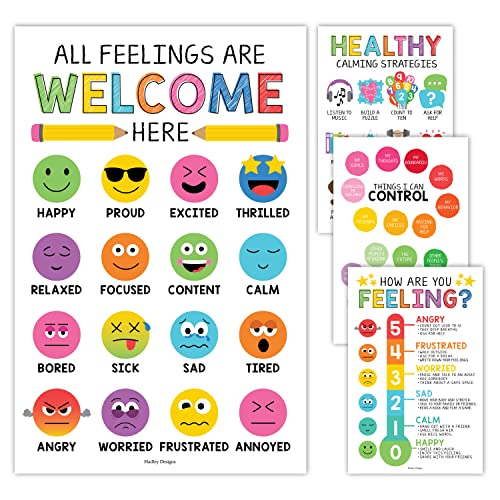
Hadley Designs offers a set of four laminated, self-regulation posters sized at 11×17 inches each. The series focuses on helping children articulate how they feel, a key component of emotional regulation in early years. The laminated design supports repeated handling, wiping, and long-term classroom use. The posters are crafted to help kids decode emotions in ways that feel concrete and approachable, aiding teachers and parents during transitions, social stories, and group discussions. Designed in the United States, this option emphasizes clarity and color to capture attention and reduce guessing about moods.
BIZIBAFF Feelings Chart Poster For Kids

This chart features 16 common emotions and comes in a large 11.8″ x 16.5″ format, making it highly visible in classrooms or at home. The laminated, kid-friendly design resists tears and spills, which is ideal for active toddler spaces. It functions well on bulletin boards, walls, or in homeschooling areas, and it supports social-emotional learning by giving children a concrete reference for expressing feelings and communicating needs. The poster’s bright colors and clear illustrations are tailored to capture attention and maintain engagement during circle time or one-on-one talks.
Distasio 9 Calming Corner Posters
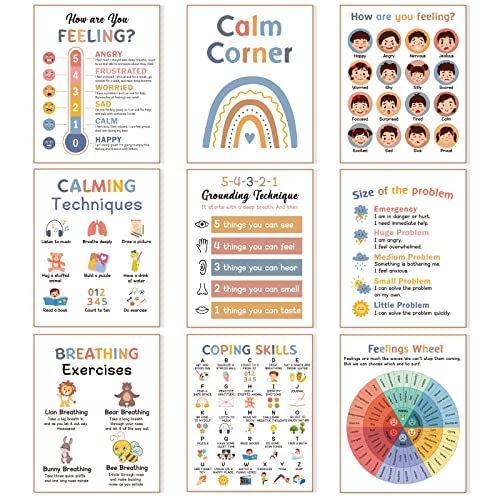
The Calming Corner Poster Kit includes nine 8×10 inch posters, featuring a calming corner title, feelings chart, coping strategies, breathing exercises, and a feelings wheel. This kit is ideal for creating a dedicated space where toddlers can learn self-regulation skills in a structured way. The set is designed to be decorated in classrooms, homes, or counseling rooms, helping to establish a safe, predictable environment. While the frame is not included, these posters offer a cohesive visual language for expressing emotions and practicing calming techniques during stressful moments.
FLYAB Feelings Chart For Kids

FLYAB presents a 11.2″ x 16.5″ feelings poster featuring 16 distinct emotions and the message All Feelings Are Welcome Here. This layout supports emotional literacy and self-awareness, making it suitable for both classroom decorations and home learning. The vibrant graphics and kid-friendly characters help maintain engagement, particularly during early literacy and social-emotional activities. The kit includes glue points for easy installation, enabling quick setup in classrooms or learning corners.
Thought-Spot I Know What to Do Flipbook

This flipbook-style emotions chart focuses on guiding children through recognizing feelings and choosing positive actions. It is particularly helpful for children with autism or ADHD, including nonverbal learners, by offering a visually structured way to communicate thoughts and regulate behavior. The pages are sturdy and designed for frequent handling, making it suitable for home use, classrooms, or calm-down corners. The flipbook format supports interactive storytelling and personalized discussions about coping strategies, enabling incremental skill-building over time.
Buying Guide: Key Purchase Considerations
- Age-appropriate design: Look for charts with large visuals, simple language, and bright colors that appeal to toddlers without overwhelming them.
- Durability and material: Laminated posters or thick cardboard with protective coatings stand up to handling in busy spaces or therapy settings.
- Size and placement: Consider wall space, bulletin boards, or small shelves for calm-down corners. Larger posters are easier for groups to see; smaller options fit intimate learning areas.
- Emotional scope: Some charts cover a broad range of emotions (16 or more), while others focus on a core set of feelings. Choose based on the classroom routine and individual needs.
- Format versatility: Decide between single posters, poster kits, or interactive flipbooks. Kits work well for structured activities; individual posters pair with free-form discussions.
- Support materials: Tools like coping skills, breathing exercises, and feelings wheels add practical value beyond recognition of emotions.
- Accessibility and inclusivity: Look for language that recognizes that all feelings are valid and that supports diverse learners, including those with special needs.
- Maintenance: Reversible or laminated surfaces simplify cleaning between lessons and daily use in busy environments.
When selecting a feelings chart for toddlers, align the choice with your goals—whether fostering recognition, facilitating communication, or shaping a calming routine. Consider combining a simple, visually clear poster with a broader kit that includes coping strategies and breathing exercises for a more comprehensive approach to social-emotional learning.