Escape room kits that work for big gatherings offer shared challenges, collaborative problem solving, and immersive themes without leaving home. The following selections are geared toward groups that want to work together, make decisions quickly, and enjoy varied puzzles—from logic and codes to physical dexterity and teamwork. This guide highlights five top choices, each with group-friendly mechanics, clear clues, and scalable play that keeps everyone engaged from start to finish.
| Product | Players | Why It Fits Large Groups |
|---|---|---|
| Mattel Games Escape Room in a Box The Werewolf Experiment | Teens & Adults | Cooperative, 60-minute run; shared goal and Alexa integration for dynamic clues |
| EPIC ENIGMAS | Escape Room Party | Magic Harry | 1-25 Players | Designed for big groups; multiple simultaneous teams with group challenges |
| Thames & Kosmos EXIT: The Enchanted Forest | 1-4 Players | Card-based, scalable via cooperative puzzle flow and clear clue system |
| Thames & Kosmos EXIT: The Sinister Mansion | 1-4 Players | Card-based, no apps; can be played in rounds for larger gatherings |
| The House of Riddles | Exit: The Game | 1-4 Players | Social deduction-like narratives with teamwork; easy to split into teams |
Mattel Games Escape Room In A Box The Werewolf Experiment

In this cooperative adventure, all players share a single objective: to escape before a mad scientist turns everyone into werewolves. The game includes 19 puzzles that mix physical actions and mental challenges, designed for a 60-minute session. A bonus feature is Alexa compatibility, which can enhance pacing, provide subtle hints, or introduce timed events to keep a large group moving together. Although the core format centers on a single team, its clear structure and group-reaching puzzles make it adaptable for larger groups by rotating players through roles or forming two simultaneous tracks for a single table. The difficulty is approachable for teens and adults, with enough variety to sustain interest across a multi-hour event when run by a facilitator.
Key features support group play: collaborative goals, time pressure, and integrated tech that can help coordinate a big room. Handling 10–20 players can be achieved by splitting the group into sub-teams, rotating through puzzles, or running two parallel sessions with shared twists. The Werewolf Experiment emphasizes teamwork and quick communication, essential components for large gatherings seeking a shared, immersive experience.
EPIC ENIGMAS | Harry Magic Escape Room

Designed as a family-oriented escape experience, this kit transforms a home into a magical adventure. It presents five enigmatic rooms and a storyline that blends fantasy with teamwork. The product is compatible with 1-5 players, but the narrative and puzzle variety lend themselves to large-group adaptations. For big events, organizers can segment participants into teams that tackle different rooms in rotation or collaborate on the same clue path with shared checkpoints. The theme appeals to younger players and adults alike, making it a versatile option for mixed-age gatherings.
Group-oriented strengths include captivating riddles, interconnected challenges, and a shared sense of progression. While the official player count is smaller, groups can maintain momentum by assigning roles—such as clue tracker, hint negotiator, and final puzzle captain—to ensure inclusive participation. The design’s emphasis on collaborative problem solving makes it a practical choice for birthday parties, family reunions, or school events where many participants interact around a central table.
Thames & Kosmos EXIT: The Enchanted Forest
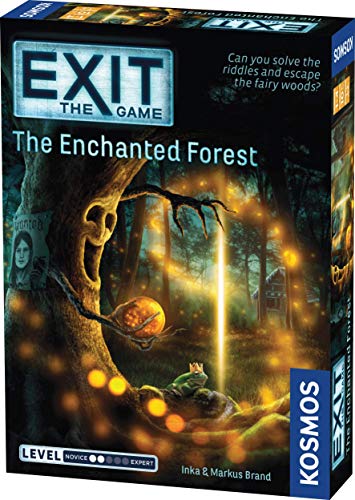
EXIT: The Enchanted Forest is a card-based home escape experience designed for 1–4 players, but its modular nature lets groups expand by running parallel sessions or creating a rhythm where teams pass clues to one another. The theme features fairy-tale creatures encountered during a woodland walk and guides players toward memory, logic, and deduction to navigate back. Clue cards help prevent stagnation, ensuring that a larger group can keep moving without getting stuck on one puzzle for too long. The absence of apps keeps the flow simple and accessible for audiences who prefer a traditional, printed-puzzle format.
For larger gatherings, consider staging two linked sessions with overlapping time markers. Facilitators can synchronize hints to maintain parity between groups or assemble a combined scoreboard at the end. Since it’s card-based, the setup remains portable and scalable, making it suitable for school events, library programs, or multi-family game nights where space is limited but enthusiasm runs high.
Thames & Kosmos EXIT: The House Of Riddles

The House of Riddles is part of the EXIT: The Game series, offering a unique storyline where players are summoned to an abandoned house, locked inside, and tasked with solving a sequence of riddles to escape. The core experience supports up to four players, but it excels in group settings by hosting multiple teams that converge on the same mystery. The card- and clue-based design eliminates the need for electronics, which makes it easy to organize at large gatherings. Facilitators can orchestrate a relay of rooms or split the group into teams working on parallel paths with periodic hints to maintain parity.
Key group advantages include collaborative problem solving, a guided difficulty curve, and a resolvable end-state that fosters shared achievement. Because it is scalable through timing and team rotation, it can accommodate classrooms, clubs, or large family events. The game’s modularity ensures that even participants with varying puzzle skills can contribute meaningfully to the escape narrative and sense of momentum as the clock advances.
EPIC ENIGMAS | Escape Room Party | Magic Harry

Escape Room Party by EPIC ENIGMAS is explicitly built for large group participation. It accommodates up to 25 players when run as a party-style experience, making it ideal for birthday bashes, school events, and family reunions. The kit features five magical rooms with multiple character roles, encouraging collaboration and collective problem solving. The party format includes decorations and balloons, turning a game session into a themed event, which helps maintain energy across a crowd. The game emphasizes teamwork, with clues that require cross-team communication to advance the storyline.
In large-group environments, this product shines when caregivers or hosts assign rotating captains and keep everyone moving through a clear progression. With rounds or stations, participants can rotate through different challenges, ensuring equal participation and reducing waiting times. This makes it a robust option for events that need both depth and broad appeal across diverse ages.
Buying Guide: Key Purchase Considerations For Large Groups
- Group scalability: Look for games designed for teams or with mechanics that allow easy splitting into subgroups. Card-based formats often scale well without extra equipment.
- Session length and pacing: For big gatherings, choose kits that offer flexible timing—short, multiple rounds, or replayable sections—to maintain momentum and engagement.
- Age range and accessibility: Select titles with broad appeal across ages or with adjustable difficulty to accommodate children, teens, and adults in the same event.
- Facilitator role: Consider whether the game benefits from a dedicated host or can run smoothly with rotating roles among participants. Clear clue systems help reduce bottlenecks.
- Technology and setup: Apps and electronics can enhance pacing in small groups but may complicate large events. Purely paper-based games are often simpler to coordinate at scale.
- Thematic variety: A mix of fantasy, mystery, and adventure themes helps attract diverse groups and maintain interest during longer events.
- Replayability: For multiple sessions, choose games with varied puzzles or the ability to run multiple teams concurrently without overlap.
- Storage and portability: If you host events in different venues, select compact, easy-to-transport kits that require minimal setup effort.
When planning for large groups, a practical approach is to select one multi-player party kit (like Escape Room Party) and couple it with 1–2 card-based or modular experiences (like EXIT titles) that can run in parallel stations. This combination enables synchronized pacing, equitable participation, and a memorable shared narrative across dozens of players without overwhelming organizers. Always have a facilitator plan, a signaling system for hints, and a clear end-point to celebrate collective achievement.