Engineering kits designed for 10-year-olds can foster problem-solving, critical thinking, and hands-on learning. The following selection combines mechanical, electrical, and programming experiences to suit curious minds while keeping activities safe and engaging. Each kit is rooted in real-world concepts—from hydraulics to circuits—so kids can build confidence as they explore how things work.
| Product | Brand | Key Focus |
|---|---|---|
| Thames & Kosmos Mega Cyborg Hand STEM Experiment Kit | Thames & Kosmos | Hydraulics, Pneumatics, Wearable Robotics |
| ELEGOO UNO R3 Smart Robot Car Kit V4 | ELEGOO | Arduino Robotics, Coding, Sensors |
| Smartivity DIY Robotic Mechanical Hand | Smartivity | DIY Mechanical Hand, Hands-on Engineering |
| National Geographic Circuit Maker Kit | Blue Marble | Electrical Circuits, 120 Projects |
| Henoda Robot Toys Kit | Henoda | Programmable STEM Building |
Note: Each product listed includes an emphasis on experimentation, safe materials, and step-by-step instructions to guide young builders through complex ideas with approachable activities.
Thames & Kosmos Mega Cyborg Hand Kit

The Mega Cyborg Hand lets young builders operate a wearable mechanical hand using their own finger movements. It relies on air pressure and hydraulic pistons to open and close fingers, enabling a gripping action capable of lifting objects. Each finger joint adjusts to varied angles for precision motion, offering a tactile introduction to hydraulics, pneumatics, and mechanical advantage. The kit emphasizes safe, hands-on learning without motors or batteries, highlighting fundamental physics principles through interactive exploration.
ELEGOO UNO R3 Smart Robot Car Kit V4

This Arduino-based kit introduces programming, electronics assembly, and robotics in a single package. It includes 24 modular parts, such as obstacle avoidance and line-tracing modules, plus compatibility with Android and iOS devices for remote control. The assembly interface uses standardized ports to minimize wiring errors, making it accessible for beginners while still challenging enough for curious 10-year-olds. The project fosters logical thinking, sequencing, and basic coding concepts that lay the groundwork for more advanced STEM endeavors.
Smartivity DIY Robotic Mechanical Hand

Smartivity’s mechanical hand is a hands-on STEM toy designed for ages 8 to 14. The kit provides a step-by-step manual guiding kids through constructing a functioning robotic hand, delivering hours of screen-free, practical engineering exploration. It emphasizes developing fine motor skills, spatial reasoning, and persistence as children assemble components and test the system. The project also encourages iterative improvement as young builders adjust the mechanism to optimize grip and movement.
National Geographic Circuit Maker Kit

Geared toward aspiring electricians, this kit includes more than 120 circuit projects to illuminate fundamentals of electricity. Kids can explore sound, lighting, and even motorized experiments while practicing safety-conscious experimentation. With kid-friendly video instructions accessible via QR codes, the National Geographic Circuit Maker Kit combines hands-on building with multimedia guidance, making it a strong option for 10-year-olds fascinated by circuits, power, and storytelling through electronics.
Henoda Robot Toys Kit
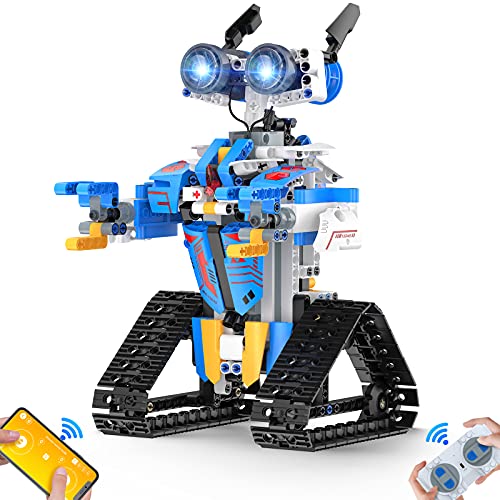
Henoda’s robot kit blends brick-building with remote and app-based control options. With 468+ pieces, it supports layered learning—from hand-eye coordination to programmable, motion-based tasks. The toy can be steered using a 2.4 GHz remote or a smartphone app via Bluetooth, offering multiple control modes such as path planning, voice control, and STEM programming. This versatility helps kids compare different interfaces for controlling a single robotic system and supports collaborative, classroom-style exploration at home.
Buying Guide: Key Purchase Considerations
When selecting engineering kits for a 10-year-old, consider a balanced mix of concepts, difficulty level, and safety. The right kit should provide clear instructions, scalable challenges, and opportunities to expand learning beyond the box. Review the following considerations to compare options effectively.
- Age appropriateness and safety: Look for sets designed for ages 8–14 with durable materials and non-toxic parts. Parental supervision may be beneficial for younger builders.
- Hands-on learning vs. programming: Some kits emphasize mechanical construction with little coding, while others integrate programming or app-based controls. Choose based on your child’s interests and prior experience.
- Concept coverage: Identify which engineering areas matter most—hydraulics, circuits, robotics, or structural engineering—and select kits that offer diverse experiences or deep dives into a single topic.
- Ease of assembly and documentation: Clear, illustrated instructions help maintain engagement. Look for kits that offer troubleshooting tips and replacement parts if needed.
- Expandability: Some kits pair well with other sets, enabling you to build a broader STEM toolkit over time. Check compatibility and availability of extra modules or components.
- Cost and value: Compare the number of activities, the longevity of the learning, and included parts. A higher upfront cost may reflect more durable materials and richer learning experiences.
- Social and collaborative learning: Group projects or family builds can enhance motivation and problem-solving. Some kits include activities designed for multiple participants.
To maximize learning, pair kits with supplementary resources such as beginner-friendly coding tutorials, physics basics, or circuit-building guides. Encourage kids to document their design decisions, iterate on failures, and explain how each component contributes to the overall mechanism. This approach reinforces critical thinking and helps develop a structured problem-solving mindset.