Discover a curated selection of kid-friendly emotion-face resources designed to boost emotional understanding, empathy, and communication. This guide highlights five top products that use realistic expressions, engaging activities, and practical coping strategies to support children in therapy, education, and home practice. Each item emphasizes variety, durability, and accessibility for diverse needs.
| Product | Brand | Key Benefit |
|---|---|---|
| MEROCO Feelings Emotions Cards | MEROCO | Realistic expressions with mirror for self-observation |
| Emotions Flashcards (50) | SpriteGru | Extensive mood range with coping skills |
| Craftstory 116 Pcs Feeling & Emotions Busy Board | Craftstory | Hands-on, multi-element facial expressions for play-based learning |
| HJQAYNC 800Pcs Face Emotion Stickers | HJQAYNC | Large quantity for classroom motivation and decoration |
| Brybelly Feelings In A Flash | Brybelly | Scenario cards to teach empathy and coping |
MEROCO Feelings Emotions Cards for Kids Therapy

The MEROCO set focuses on realistic facial expressions to help children recognize and imitate a broad spectrum of emotions. Included is a mirror to encourage children to observe and mirror their own expressions, enhancing self-awareness and expression. The cards cover common emotions such as joy, anger, sadness, and surprise, with durable materials suited for ongoing use in therapy, speech practice, and at home. The wide range supports individualized teaching plans for children with autism, ADHD, or other developmental needs, making it a versatile tool for clinicians and caregivers.
Emotions Flashcards, 50 Different Feelings with Coping Skills

This flashcard set presents 50 distinct moods with cartoon-style faces designed to grab children’s attention. Each card pairs a mood with practical coping strategies, offering a dual approach: emotional identification and actionable tools. The double-sided format reinforces learning, with one side for recognizing the emotion and the other side for coping skills, making it suitable for therapy sessions, classroom activities, and home practice. Its engaging visuals support kids with autism and ADHD in connecting feelings to expressions and responses.
Eersida 800 Pieces Face Emotion Stickers

Although primarily a sticker pack, these 800 pieces offer a broad spectrum of facial expressions with gradient watercolor designs and accompanying emotion labels. They are designed for classroom motivation, journaling, and reward systems, allowing teachers and parents to quickly reinforce emotional literacy during daily activities. The compact 1.4-inch size makes them versatile for decorating notebooks, project boards, or behavior charts, while the waterproof finish adds durability for varied environments.
Feelings in a Flash – Emotional Intelligence Flashcard Game
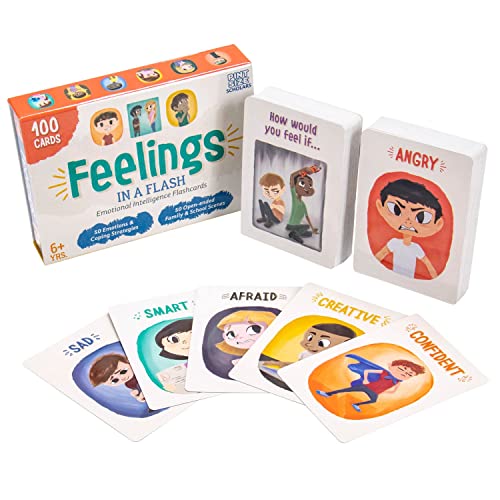
This card game blends scenario-based learning with emotion recognition. It includes 50 scenario cards and 50 reaction faces, encouraging open-ended discussion and empathy-building activities. The coping suggestions on emotion cards provide a practical framework for guiding positive behavior and decision-making. It is suitable for toddlers through early elementary ages and supports special-needs education by fostering social and emotional skills in a structured play format.
Buying Guide: Key Purchase Considerations
- Age and developmental fit: Look for sets designed for the target age range. Younger children benefit from simple, bold faces and single emotions, while older kids can handle more complex scenarios and coping strategies.
- Educational goals: Decide whether you want expressive cards for emotion identification, coping skills integration, mirror-based self-observation, or scenario-driven empathy training. Some sets combine multiple approaches for a comprehensive program.
- Durability and materials: For classroom or therapy settings, choose durable cards, boards, or stickers that resist frequent handling. Consider laminated or wipe-clean surfaces for reuse with different groups.
- Format variety: A mix of cards, boards, and stickers can address different learning styles—visually, kinesthetically, and verbally. Double-sided tools or accompanying guides enhance instructional versatility.
- Inclusion and accessibility: Prioritize tools that cover a broad spectrum of emotions and culturally diverse expressions. Mirrors, if included, should be safe and age-appropriate to promote reflective practice.
- Portability and storage: Compact kits with storage options are ideal for travel, classrooms, and therapy rooms. Look for organizers or bags that keep components intact and organized.
- Supplementary resources: Some products offer paired activities, suggested lesson plans, or printable exercises. These can extend learning beyond the initial kit and support parent or caregiver involvement.
Additional Considerations and Comparisons
When choosing among emotion-face tools, consider the setting and intervention approach. Mirror-based tools like the MEROCO cards encourage self-observation, which can be powerful for self-regulation training. Sets with coping skills, such as the Emotions Flashcards and Feelings in a Flash, provide a structured framework for teaching children how to respond to intense emotions. Sticker packs offer a flexible reinforcement system suitable for classroom motivation and behavior tracking, though they may require supplementary activities to build deeper emotional understanding. Busy boards combine tactile play with social-emotional learning, supporting multisensory engagement for kids who benefit from hands-on exploration.
For programming, a blended approach often yields the best outcomes. Use emotion cards for naming and labeling in group sessions, couple them with scenario-based cards to practice empathy, and incorporate sticker or reward systems to reinforce positive coping responses. Incorporating mirror work or personal reflection can deepen emotional awareness and help children generalize skills to real-world interactions.