Emotion cards help children recognize, name, and manage feelings in a structured, engaging way. This article highlights five highly relevant sets that support therapy, homeschooling, and classroom activities for kids, including those on the autism spectrum or with speech and language challenges. Each section outlines what makes the product effective, its contents, and how it can be used to foster social-emotional learning at home or in school.
Summary of Selected Products
| Product | Brand | Key Benefit |
|---|---|---|
| Emotions Flashcards, 50 Different Feelings | SpriteGru | 50 emotions with coping skills; double-sided for practice and coping strategies |
| Lachilly Emotions Learning Flashcards | Lachilly | High-frequency words with emotion images; vocabulary + emotion practice |
| MEROCO Feelings Emotions Cards | MEROCO | Realistic expressions plus a mirror for self-observation |
| Feelings in a Flash – Emotional Intelligence | Brybelly | 50 scenario cards with 50 emotion faces to build empathy and coping |
| 50 Emotions Flash Cards Volume 1 | CreateFun | 10 emotions with cognitive skills support; used by clinicians |
Emotions Flashcards: 50 Feelings with Coping Skills

SpriteGru’s Emotions Flashcards present 50 different moods with cartoon faces to aid recognition. The set emphasizes coping skills on the flip side, which helps children apply strategies to regulate emotions. The dual-sided design encourages discussion about feelings and practical responses, making it suitable for therapy sessions, classroom activities, and home use.
Key features include: 50 expressive emotion cards; identification of moods such as happy, sad, angry, and surprised; coping skills on the reverse to guide healthy responses; child-friendly cartoon faces that capture attention and support memory. The format is accessible for early learners and supports empathy development through explicit labeling and discussion prompts.
Lachilly Emotions Learning Flashcards

Lachilly’s Emotions Learning Flashcards pair 28 emotion words with engaging cartoon images. The set includes 15 double-sided cards to maximize value and minimize weight. This product targets kindergarten to first-grade learners, aiding vocabulary expansion, reading readiness, and expressive communication. It is positioned as a classroom-ready resource suitable for ESL learners and home schooling alike.
Key features include: 28 emotion words with accompanying images; 15 double-sided cards; high-frequency vocabulary designed for early learners; durability and portability for classroom and home use. The design supports independent practice and guided activities, helping children link feelings to language and social situations.
MEROCO Feelings Emotions Cards for Kids

MEROCO’s set uses realistic child facial expressions to improve recognition and imitation of emotions. A mirror is included to encourage children to observe and reflect on their own expressions, enhancing self-awareness and social communication. The cards cover a broad range of emotions, supporting therapy and autism-focused social-emotional learning.
Key features include: realistic facial expressions; a mirror for self-observation; broad emotional coverage including joy, anger, sadness, and surprise; durable materials suitable for repeated use; versatile applications in speech therapy and social skills training. The cards are designed for use in homes, clinics, and classrooms with children who have autism or other developmental needs.
Feelings in a Flash – Emotional Intelligence Card Game
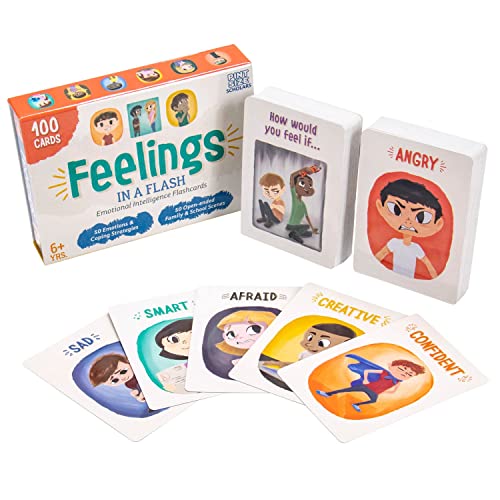
Brybelly’s Feelings in a Flash offers 50 scenario cards paired with emotion faces. This format encourages discussion about coping strategies in family and school contexts. The scenario-based approach supports children in recognizing how emotions appear in real-life situations and choosing appropriate responses, promoting empathy and social problem-solving.
Key features include: 50 scenario-based cards; 50 emotion faces; open-ended prompts to explore coping strategies; emphasis on emotional intelligence and social skills; suitable for toddlers, special needs, and typical development alike. The open-ended nature makes it adaptable for different ages and learning objectives.
50 Emotions Flash Cards Volume 1

CreateFun’s 50 Emotions Flash Cards Volume 1 targets a broad audience, including speech-language pathologists and educators. The kit focuses on a set of essential emotions and aims to support emotional development, cognitive skills, and social communication. It is positioned as a versatile tool for therapy, homeschooling, and classroom use.
Key features include: brand endorsement in clinical settings; 10 core emotions including happiness, sadness, anger, and surprise; cognitive skill support such as visual recall and problem solving; adaptable for various ages and needs. The material is designed for durable daily use and easy integration into lessons or sessions.
Buying Guide: Key Purchase Considerations
When choosing emotion cards for kids, consider the child’s needs, learning setting, and the intended use. The following factors help compare options:
- Emotional range: Choose sets with a broad spectrum of emotions to build comprehensive recognition and understanding.
- Visual design: Look for clear, age-appropriate illustrations or photos. Realistic faces may aid older children; cartoon faces can engage younger kids.
- Dual-sided content: Cards that pair emotions with coping strategies or prompts support practical application and emotional regulation.
- Additional tools: Mirrors, rings, or lanyards can improve engagement and portability for therapy and classroom activities.
- Durability and size: For frequent use, select sturdy materials and appropriately sized cards for little hands.
- Language support: Consider sets with high-frequency words or bilingual options to assist language development and ESL learners.
- Therapy alignment: If used in clinical settings, check for evidence-based relevance and suitability for autism, ADHD, or developmental needs.
- Storage and organization: Punched holes, rings, or pouches help keep sets organized for ongoing sessions.
Usage strategies to maximize value include: daily emotion check-ins, scenario-based discussions to practice coping skills, and family involvement to reinforce learning at home. For therapists, integrating cards with target goals and progress notes can help track improvements in recognition, labeling, and regulation. For teachers, pairing cards with classroom routines can support social-emotional learning across activities and centers.