Finding engaging, educational toys that teach coding without screen time can be challenging. The following five products are designed to help 8-year-olds explore basic programming concepts, problem-solving, and early robotics using hands-on activities. Each option emphasizes safety, durability, and clear learning outcomes while offering room to grow with a child’s curiosity.
| Product | Brand | What It Teaches | Key Benefit |
|---|---|---|---|
| Snap Circuits Jr. SC-100 Electronics Exploration Kit | Snap Circuits | Basic electronics, circuitry | Hundreds of projects with colorful manuals |
| Sillbird 12-in-1 Solar Robot Building Kit | Sillbird | Solar power, engineering concepts | Solar-powered hands-on learning |
| Klutz Lego Gear Bots | Klutz | Kinetic engineering, gears | Eight build-and-learn projects |
| Teach Tech Mech 5 Mechanical Coding Robot | Snap Circuits | Mechanics, coding basics | Mission-based, modular robot |
| Learning Resources Botley The Coding Robot | Learning Resources | Screen-free coding, sequencing | 80-step program with beginner-friendly remote |
Snap Circuits Jr. SC-100 Electronics Exploration Kit

Snap Circuits Jr. SC-100 offers a safe, hands-on introduction to electronics suitable for 8-year-olds. The kit provides 29 parts that can assemble into more than 100 projects, with a full-color instruction manual guiding youngsters through circuits and devices. The modular design helps kids understand how electrical components interact—an approachable entry point to engineering thinking. The project-based approach supports iterative learning, where children can rebuild and refine projects to match growing curiosity.
Sillbird 12-in-1 Solar Robot Building Kit

This solar-powered building kit engages kids with renewable energy concepts while enabling 12 different robot configurations. By assembling gears, levers, and solar cells, children explore problem-solving, sequence, and cause-and-effect in a tangible way. The option to run the robots under indoor lighting or sunlight provides flexible, screen-free experimentation that grows with the child’s understanding of engineering principles and energy transfer.
Klutz Lego Gear Bots

Klutz Lego Gear Bots combines LEGO Technic elements with papercraft to deliver kinetic, gear-driven creatures. With a 64-page instruction book that blends STEM content with step-by-step directions, children learn about axles, cams, and cranks while building manipulatives that move in response to their design choices. This kit supports creativity, fine motor skills, and an early understanding of mechanical systems that underpin coding logic.
Teach Tech Mech 5 Mechanical Coding Robot
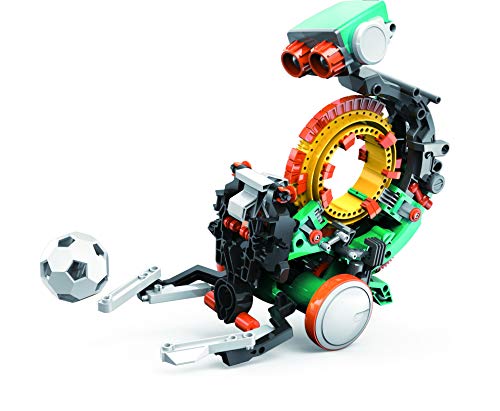
Mech 5 introduces young engineers to mechanical coding through a mission-based design. Kids snap coding buttons onto a rotating wheel to control actions such as throwing, lifting, and drawing. The robot emphasizes sequencing, cause-effect, and basic programming concepts in a compact, modular package. The hands-on assembly reinforces logical thinking and planning, fostering an early interest in robotics and software logic.
Learning Resources Botley The Coding Robot

Botley the Coding Robot offers a screen-free introduction to programming with an 80-step sequence program, remote programming, and straightforward hardware. Suitable for ages 5 and up, Botley grows with a child through loops, conditional statements, and obstacle-detection challenges. Its ready-to-use design minimizes setup time, encouraging independent exploration while reinforcing essential logic skills that underpin later coding coursework.
Buying Guide: Key Purchase Considerations For Coding Toys
When selecting coding toys for 8-year-olds, consider how each kit balances play with learning. Look for real-world skills like logic, sequencing, problem-solving, and basic engineering principles. Durability, safety, and age-appropriateness matter, especially for younger children exploring more complex mechanisms.
Consider these factors:
- Learning trajectory: Choose kits that scale from simple to more complex projects to match growing skills.
- Hands-on vs. screen-time: Screen-free options can reinforce concepts through tactile exploration, while some kits offer optional digital companions for extended learning.
- Component quality and safety: Ensure components are non-toxic, robust, and clearly labeled for easy assembly without frustration.
- Interdisciplinary value: The best kits blend engineering, math, and problem-solving with creative design.
- Expansion potential: Some kits work well with additional sets or complementary products to broaden learning without overwhelming the child.
Durability and age range are important. For instance, Snap Circuits kits emphasize safety and modular learning, while Botley offers a robust screen-free coding foundation. Solar-based kits like Sillbird introduce renewable energy concepts that pair well with early programming ideas. Gear-focused kits such as Klutz Lego Gear Bots foster an understanding of mechanical relationships that underpin computational thinking. Robotics-centric options like Teach Tech Mech 5 provide mission-based tasks that simulate real coding challenges. Evaluate your child’s interests—electrical engineering, robotics, or mechanical gaming—and pick a kit that aligns with their curiosity and patience level.
Additional Considerations: How To Maximize Learning
To maximize learning from coding toys, pair hands-on activities with brief, guided discussions. Ask open-ended questions like, “What happens if we change this part?” or “Why do we think this sequence leads to that result?” Maintain a steady pace that builds confidence, and encourage kids to teach a family member what they built. Documenting progress, such as a simple project journal or a photo log, helps reinforce memory and reflects growth over time. Finally, choose kits that invite creative experimentation, enabling kids to repurpose parts for new inventions and solutions.