For parents seeking educational, hands-on ways to nurture early coding skills in a fun, age-appropriate way, these screen-free toys offer practical problem-solving, storytelling, and critical thinking opportunities. Each option below is designed to grow with a child’s abilities, from basic sequencing to more advanced logic and robotics concepts. The selections emphasize safe, durable components, intuitive play modes, and clear instruction sets to keep 7-year-olds engaged while avoiding excessive screen time.
| Product | Brand | Key Benefit |
|---|---|---|
| Botley the Coding Robot | Learning Resources | Screen-free coding with 80-step programming and obstacle detection |
| Code & Go Robot Mouse | Learning Resources | Easy, push-button coding with a light-up mouse and visual cards |
| Cooper The STEM Robot | Learning Resources | Multi-mode learning with line tracing, sensors, and robot communication |
| Snap Circuits Jr. SC-100 | Snap Circuits | Over 100 projects building foundational electronics and circuits |
| Playz My First Coding & Computer Science Kit | Playz | DIY CS activities exploring binary, encryption, and algorithms |
These options provide a spectrum from introductory to more involved play, all crafted to foster curiosity and practical STEM skills without reliance on screens.
Botley the Coding Robot

Botley the Coding Robot introduces programming fundamentals without screens. It comes ready to use out of the box and offers 80-step programming with loops and obstacle detection, providing a scalable challenge as a child’s skills grow. The set is ideal for collaborative play and independent exploration, making it a strong foundation for early computational thinking.
Code & Go Robot Mouse
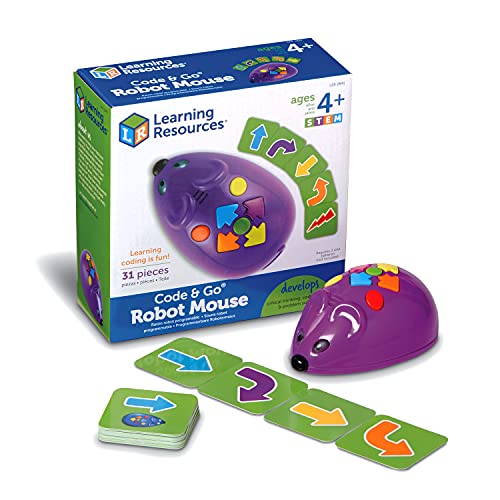
The Code & Go Robot Mouse uses simple, pictorial direction cards and a programmable mouse that lights up and makes sounds. This hands-on approach teaches sequencing, direction, and basic logic through engaging, age-appropriate tasks. It’s perfect for tabletop or floor play and encourages steady progression as a child’s planning and execution skills improve.
Cooper The STEM Robot

Cooper The STEM Robot emphasizes screen-free coding with command cards and four interactive play modes, including line tracking and obstacle avoidance. It also supports robot-to-robot communication for extended play value. A USB-C charging cable is included, simplifying setup and reducing the need for frequent battery changes, which helps sustain longer learning sessions.
Snap Circuits Jr. SC-100

Snap Circuits Jr. introduces basic electronics through more than 100 projects in a vividly illustrated color manual. Kids can build safe, functional circuits—flying saucers, alarms, and more—while developing an understanding of electrical pathways and circuit principles. The hands-on nature of the kit makes complex ideas approachable and enjoyable for young learners.
Playz My First Coding & Computer Science Kit

Playz offers a kid-friendly introduction to computer science through hands-on activities that explore binary codes, encryption, and algorithms. The kit includes 30+ tools and a colorful guide, making complex concepts accessible to beginners. It’s a strong option for kids who enjoy puzzle-like challenges and creative problem-solving without requiring a computer.
Buying Guide
Key considerations when selecting coding toys for 7-year-olds:
- Screen time balance: Prioritize toys that promote hands-on thinking and offline problem solving to build foundational skills.
- Developmental fit: Look for age-appropriate challenges that scale with the child’s abilities, offering new goals as they improve.
- Safety and durability: Choose sturdy materials with rounded edges and non-toxic components; ensure small parts are secured for younger children.
- Ease of use and setup: Prefer products with intuitive instructions, clear visuals, and components that are easy to assemble or deploy.
- Expandability: Some kits offer additional projects or compatible expansions to sustain interest over time.
- Battery and power: Consider how power is supplied (batteries vs. rechargeable) and whether replacement parts are readily available.
- Learning progression: A mix of coding logic, robotics, and electronics fosters a well-rounded STEM foundation.
- Safety standards and certifications: Look for products that adhere to child-safety guidelines and have age-appropriate warnings.
Buying strategies often involve balancing immediate engagement with long-term growth. Screen-free options like Botley and Cooper provide robust foundational coding experiences, while kits such as Snap Circuits and Playz complement this with practical electronics and computer science concepts. Families may layer these toys over time, alternating between problem-solving challenges and hands-on engineering projects to maintain curiosity and steady progress.