Discover engaging, screen-free coding toys designed for 3-year-olds that build early computational thinking, problem-solving, and fine motor skills. This guide highlights five top picks that balance storytelling, hands-on play, and simple programming concepts for toddlers and preschoolers. Each option emphasizes tactile interaction, age-appropriate challenges, and educational value to support early STEM development.
Summary Of Selected Products
| Product | Brand | Age Range | Key Benefit |
|---|---|---|---|
| MatataStudio Upgraded Talebot Pro Coding Robot | MatataStudio | 3-5 | Interactive map, voice feedback, storytelling and command recording |
| WhalesBot A1 Coding Toy | WhalesBot | 3-6 | Magnetic building blocks, quick-start steps, sensor-based play |
| zhiwuzhu Magnetic Alphabet Maze | zhiwuzhu | 2-4 | Magnetic letters, fine motor practice, Montessori-style design |
| Learning Resources Coding Critters Go Pets Scrambles the Fox | Learning Resources | 4+ | Story-driven challenges, screen-free, path-following coding |
| Learning Resources Code & Go Robot Mouse | Learning Resources | 4+ | Two-speed programmable mouse, beginner-friendly coding cards |
MatataStudio Upgraded Talebot Pro Coding Robot

The Talebot Pro introduces screen-free coding experiences for ages 3-5. It features an interactive map and voice feedback to guide learning, helping toddlers progress through coding concepts with clear, kid-friendly prompts. Children press command buttons to make the robot walk, draw, sing, or dance, and even record their own voice commands and tales. With up to 256 commands available, the toy supports a structured path from simple sequences to more complex loops and actions, reinforcing early programming ideas in a playful format.
WhalesBot A1 Coding Toy for Kids

WhalesBot A1 combines magnetic modular blocks with a guided learning path designed for children aged 3 and up. The toy emphasizes hands-on construction to explore basic coding concepts as kids assemble modules to control devices and vehicles. A quick-start approach helps toddlers enter the activity with three easy steps, then gradually introduces more complex tasks as they gain confidence. The magnetic design supports open-ended play, story-driven exploration, and practical problem solving without screens.
zhiwuzhu Magnetic Alphabet Maze

This Montessori-inspired magnetic maze targets ages 2-4 with a strong emphasis on fine motor skills and early literacy. Built from sturdy wood and non-toxic finishes, it features alphabet-themed parking spaces and colorful magnetic cars that align with each letter. The design encourages children to recognize letters, sequence, and spatial relationships while engaging in imaginative play. It blends sensory engagement with cognitive development, offering a gentle foundation for future coding-oriented activities.
Learning Resources Coding Critters Go Pets Scrambles the Fox

Scrambles the Fox offers a story-driven, screen-free coding challenge set for kids aged 4 and older. The 12-page full-color storybook adventure guides children to code Scrambles along black-line paths to reach goals. The combination of tactile gameplay and narrative helps kids connect problem solving with storytelling, promoting logical thinking, sequencing, and persistence in a safe, age-appropriate context.
Learning Resources Code & Go Robot Mouse
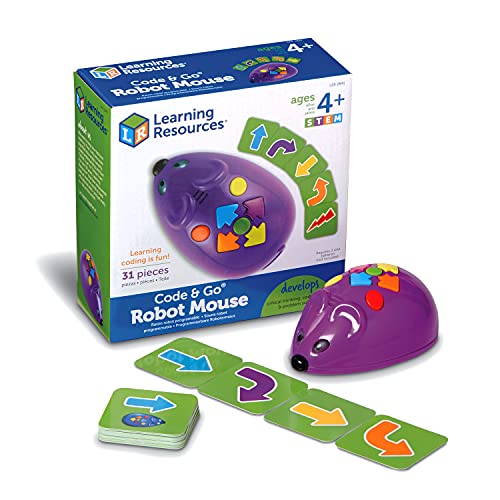
Code & Go Robot Mouse introduces early coding concepts with a friendly robotic mouse. Two speeds and programmable actions respond to pictorial direction cards, making it suitable for classroom or family play. This set emphasizes sequencing and cause-and-effect relationships, and it scales well as children’ skills grow. It requires three AAA batteries and offers a straightforward path from simple commands to more involved activities, supporting ongoing engagement as kids learn.
Buying Guide: Key Purchase Considerations And Comparisons
- Age appropriateness: For 3-year-olds, prioritize screen-free, tactile play that introduces basic sequencing, directionality, and cause-and-effect. Avoid sets that require advanced reading or complex controls.
- Learning goals: Look for products that blend storytelling with coding concepts, such as path-following, command sequences, and loop concepts, to build foundational logic and problem-solving skills.
- Engagement style: Some toys rely on maps and storybooks, others use magnetic blocks or interactive animals. Consider a mix aligned with a child’s interests—story-driven play, engineering-inspired activities, or simple robot interactions.
- Reusability and expansion: Toys that offer multiple levels of challenge (e.g., scalable complexities, adjustable paths, or removable modules) ensure continued growth as the child’s abilities advance.
- Durability and safety: For toddlers, robust construction and non-toxic materials are critical. Smooth edges and kid-safe finishes help prevent injuries during active play.
- Power and maintenance: Screen-free options with batteries are simple, but consider long-term maintenance like battery replacements and the availability of replacement parts or expansion kits from the brand.
- Learning balance: Screen-free toys support hands-on exploration, yet it can be beneficial to pair them with short, guided activities to reinforce concepts and maintain interest.
- Portability and storage: Compact, stackable designs or organized kits help reduce clutter and encourage on-the-go learning.
When comparing options, consider how easily a toy introduces basic coding ideas without overwhelming a three-year-old. Prefer devices that offer immediate, tangible feedback—lights, sounds, or motion—that confirm correct actions. Also evaluate how the product supports parent or caregiver involvement through guided activities, story prompts, or clear instruction cards. The right combination can foster curiosity, persistence, and confidence in early computational thinking while keeping playtime enjoyable and safe.