Exploring building sets designed for teens can spark lifelong curiosity in science, technology, engineering, and math. This guide highlights five standout kits that balance challenge, creativity, and hands-on learning. Each option supports independent projects or guided exploration, helping teens develop problem-solving skills, spatial reasoning, and practical engineering know-how. Below is a concise summary of the chosen products, followed by detailed sections that explain what makes each kit valuable for teen learners.
| Product | Brand | Focus | Key Benefit |
|---|---|---|---|
| Sillbird 12-in-1 Solar Robot Building Kit | Sillbird | Solar robotics and STEM exploration | Outdoor learning with renewable energy |
| LEGO Technic Bugatti Bolide Racing Car Building Set | LEGO | Mechanical design and engineering concepts | Realistic model with display value |
| Thames & Kosmos Structural Engineering: Bridges & Skyscrapers | Thames & Kosmos | Structural engineering principles | 20 models, extensive building pieces |
| Discovery Model Engine Building Kit | Discovery | Internal combustion engine mechanics | Hands-on mechanical understanding |
| XITALAXU Mechanical Fish Building Sets | XITALAXU | Large-scale mechanical build with illumination | Decorative and educational, engaging for teens |
Sillbird 12-in-1 Solar Robot Building Kit

The Sillbird 12-in-1 Solar Robot Building Kit offers a versatile entry point into renewable energy concepts and robotics. With 190 pieces, the kit emphasizes hands-on experimentation, encouraging teens to design, build, and test solar-powered models. The included activities foster understanding of solar energy conversion, gearing, and simple mechanical systems while supporting screen-free play. The kit’s flexible design invites iteration, making it suitable for classrooms or individual projects after school.
Key features align with teen learning goals: outdoor solar play, a robust build experience, and the chance to observe real-world energy use. The kit is designed to scale in complexity as a teen’s skills grow, offering both immediate gratification in the form of solar-powered motion and deeper investigation into how sunlight drives motion. For teachers and parents, it serves as a practical demonstration tool for renewable energy principles and engineering problem-solving.
STEM Projects for Kids & Adults Build Your Own Bluetooth Speaker
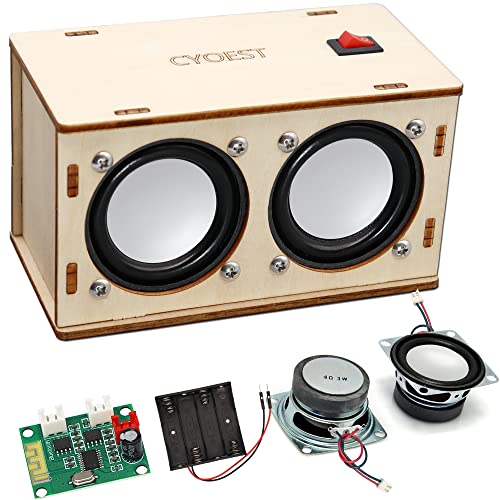
This dual-purpose kit provides hands-on electronics exploration by guiding teens through the construction of a Bluetooth speaker. The project helps learners understand circuitry, acoustics, and solder-free assembly. It emphasizes safety and quality, with attention to reliable components and clear, beginner-friendly instructions. The kit appeals to teens who enjoy practical, real-world electronics projects that culminate in a functioning device they can use and showcase.
Educational value centers on experiential learning: students learn by assembling circuits, testing performance, and troubleshooting components. The project also introduces fundamental design thinking as learners balance form, function, and user experience. While accessible for beginners, it remains engaging for teens who want a tangible outcome—an audio device they built themselves—making it an appealing bridge to more advanced electronics topics.
LEGO Technic Bugatti Bolide Racing Car Building Set

The LEGO Technic Bugatti Bolide set is a rich exploration of high-performance automotive engineering through construction. It’s designed for ages 9 and up, introducing teens to intricate gearing, precision building, and mechanical systems. The model’s aesthetics—bright yellow accents with black detailing—make it a striking display piece, while its functional mechanisms—such as differential gears and suspension—offer real-world engineering insights. For teen builders, this kit blends challenge with a clear, rewarding final product.
Learners benefit from stepping through a systems-based approach: understanding how power transfers from a drive motor to wheels, how gear ratios affect speed and torque, and how alignment influences performance. The set also supports collaborative projects, as teens can compare design choices and discuss optimizations, reinforcing critical thinking and collaborative problem-solving in STEM contexts.
Thames & Kosmos Structural Engineering: Bridges & Skyscrapers

This kit focuses on the fundamentals of structural engineering, offering 20 distinct models that reveal how forces such as load, compression, and tension influence design. With more than 285 building pieces and an illustrated manual, it provides a thorough, hands-on way to study engineering concepts. Teens can experiment with different configurations to observe stability, scalability, and failure modes, which cultivates a practical understanding of how bridges and skyscrapers withstand real-world stresses.
The project-based format supports inquiry-driven learning: learners can pose questions about weight distribution, material efficiency, and the trade-offs between lightness and strength. The manual guides exploration while leaving space for teens to hypothesize, test, and iterate—core skills for STEM problem-solving and engineering literacy in higher education or technical fields.
Discovery Model Engine Building Kit
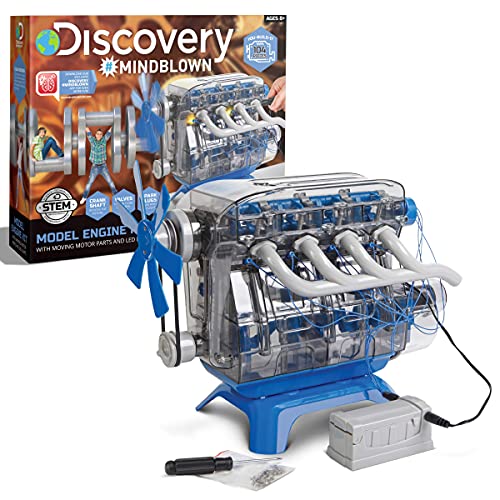
The Discovery Model Engine Kit is a classic starter project for teens curious about automotive engineering and mechanical systems. It features a four-cylinder combustion engine model with pistons, fans, valves, belts, LEDs, and more. The kit emphasizes critical thinking as learners assemble complex mechanisms and observe how each component contributes to engine operation. The hands-on assembly encourages problem-solving, measurement, and iterative improvements, making it a solid choice for teens exploring mechanical engineering concepts.
By building and testing the engine, teens gain insight into timing, torque, and energy conversion. The included LED indicators and moving parts provide immediate feedback, reinforcing cause-and-effect understanding. This kit also scales well for classroom demonstrations or independent, longer-term projects, supporting both foundational learning and more advanced exploration as skills mature.
XITALAXU Mechanical Fish Building Sets

The XITALAXU Mechanical Fish Building Sets center on an ocean-inspired lantern fish model with a built-in light. With 1038 pieces, this large-scale build challenges teens to recreate a detailed underwater creature while integrating a rotating light feature. The hands-on construction fosters spatial reasoning, planning, and fine motor skills, making it both an impressive display piece and an educational project. The set’s decorative lighting adds an aesthetic dimension that can inspire further creative experimentation in home or classroom settings.
Beyond assembly, the kit invites exploration of mechanics and electronics: how gears interact to animate movement, how to manage weight distribution for stable posing, and how illumination can be used to enhance a model’s display value. It’s well-suited for teens who enjoy intricate builds, storytelling through mechanical design, and decorative, functional decor once completed.
Buying Guide: Key Purchase Considerations
- Learning goals: Align the kit with teen interests—renewable energy, automotive engineering, structural design, or mechanical systems. Consider how deeply the kit explains fundamentals and whether it offers room for independent exploration or guided activities.
- Complexity and age range: Match the difficulty level to the teen’s current skills and willingness to tackle challenging builds. Some sets scale in complexity, offering continued engagement as skills grow.
- Hands-on vs. screen-free: If the objective is screen-free learning, prioritize kits that emphasize physical construction, experimentation, and tangible outcomes rather than digital components.
- Expansion potential: Check whether the kit supports modifications, additional models, or integration with other building systems. This can extend learning and creativity over time.
- Materials and durability: Look for robust pieces, clear instructions, and safe components that can withstand repeated assembly and disassembly during iterative learning.
- Display and practical value: Some kits culminate in models that can be displayed or repurposed, enhancing motivation by providing a tangible end product.
- Educational scope: Consider supplementing kits with supplementary resources such as manuals, online tutorials, or project ideas to broaden understanding of the concepts involved.