Choosing a first bicycle for a 12- to 24-month-old involves balancing safety, design, and developmental benefits. The right balance bike fosters early motor skills, confidence, and independent movement, while minimizing risk with pedal-free designs and sturdy construction. Below, five carefully chosen options from trusted brands offer age-appropriate features, ease of use, and engaging designs to delight both children and guardians.
| Product | Brand | Age Range | Key Benefit |
|---|---|---|---|
| SEREED Baby Balance Bike for 1-2 Year Olds | SEREED | 12-24 months | 135° turning, gravity steering, no pedals |
| Umatoll Colorful Lighting Baby Balance Bike | Umatoll | 12-24 months | Glowing rear wheels (no batteries) |
| Gamfeiny Colorful Lighting Baby Balance Bike | Gamfeiny | 10-36 months | No-pedal design with lighted wheel appeal |
| SEREED Baby Balance Bike for 1 Year Old Girls & Boys | SEREED | 12-24 months | Sturdy frame, non-slip wheels, comfortable seat |
| Retrospec Cricket Baby Walker Balance Bike | Retrospec | 12-24 months | Safe, beginner-friendly, durable |
SEREED Baby Balance Bike for 1-2 Year Olds
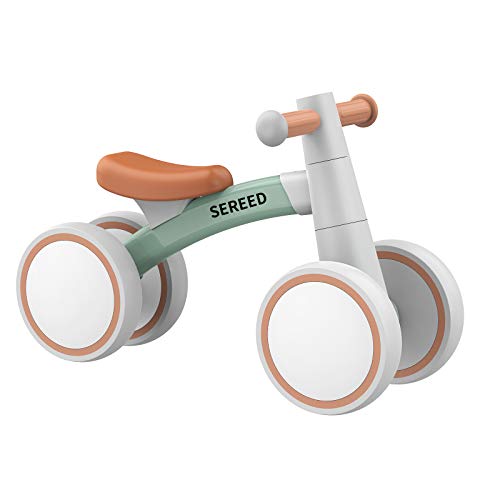
Designed for toddlers aged 12 to 24 months, this balance bike emphasizes safe exploration and early mobility. The pedal-free design reduces foot entanglement and features a 135° turning limit with gravity steering, helping little riders learn steering and balance without leaving the ground. A sturdy aluminum frame, non-slip TPU handle, and a softly cushioned seat provide comfort during indoor or outdoor practice. The 4-wheel configuration supports stability as babies push, glide, and gain confidence in their first riding experiences.
SEREED Baby Balance Bike for 1 Year Old Boys & Girls

This model reinforces balance, steering coordination, and early confidence for toddlers 12 to 24 months. Its no-pedal design ensures safe mobility, while the widened closed wheels help prevent foot clamping. The lightweight aluminum frame, non-slip TPU handle, and a gentle-seat provide a comfortable ride for both indoor play and outdoor strolls. Suitable for little ones who are just starting to discover mobility and independence, the bike supports steady progress without pedals complicating learning.
Umatoll Colorful Lighting Baby Balance Bike Toys

Featuring glowing rear wheels that illuminate without batteries, this bike adds an eye-catching element to playtime. It is designed for 12 to 24 months, with a 135° steering limiter to prevent tip-overs and fully enclosed wheels to avoid foot clamping. The TPU handle ensures a secure grip, while the adjustable seat accommodates growing toddlers. This balance bike promotes balance and coordination through hands-on exploration while maintaining safety as a top priority.
Gamfeiny Colorful Lighting Baby Balance Bike

Geared toward ages 10 to 36 months, Gamfeiny’s balance bike blends color-fun lighting with a no-pedal design. The setup encourages walking and riding practice while improving balance, steering, and confidence. Like other models, it features a 135° steering limiter, safety-focused enclosed wheels, and a soft seat. The design suits both indoor and outdoor environments, making it a playful, development-focused option for early riders.
Retrospec Cricket Baby Walker Balance Bike
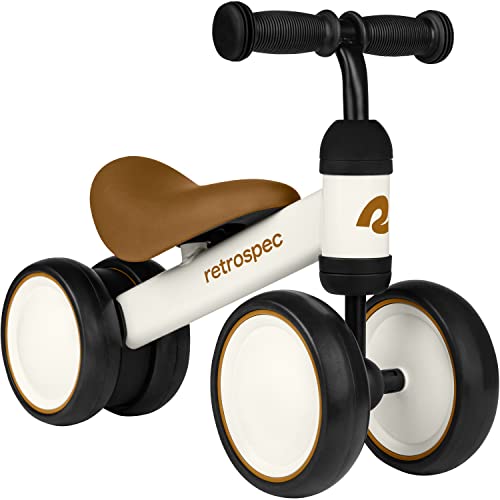
The Retrospec Cricket is designed for 12 to 24 months, focusing on beginner motor skills development. It keeps feet on the ground, allowing children to control speed and movement while learning balance. The scratch-resistant wheels protect flooring, and the toy balances safety with opportunities for early mobility. Its simple, sturdy construction makes it a reliable first ride-on option for toddlers as they begin exploring walking and coordinated movement.
Buying Guide: Key Purchase Considerations And Comparisons
When selecting a first bike for a 12- to 24-month-old, consider safety features, age appropriateness, growth potential, and environment. Below are important factors and how the featured models compare.
- Age suitability: All top picks target 12–24 months, with some models supporting up to 36 months. Ensure the product explicitly states the recommended age range to match your child’s development.
- Pedal-free design: Pedal-free or 4-wheel setups help minimize foot injuries and simplify initial balance learning. Most options here emphasize no-pedal operation and stability.
- Steering and balance: Look for a constrained steering angle (around 135 degrees) to prevent falls, and a low center of gravity for confidence during practice.
- Wheels and floor impact: Enclosed or non-slip wheels protect little feet and reduce floor damage. Scratch-resistant wheels are an added benefit for indoor use.
- Adjustability: Seats and handlebars that adjust as toddlers grow extend the toy’s usable life and comfort during play.
- Safety materials: Lightweight aluminum frames, soft seats, and non-slip handles contribute to a secure riding experience without adding unnecessary weight.
- Entertainment features: Some models include colorful lighting or engaging visuals to capture a child’s interest and encourage longer play sessions.
- Indoor vs outdoor use: If primarily indoors, prioritize wheels and seat comfort; for outdoor use, consider ground clearance and durability against uneven surfaces.
- Maintenance and durability: Simple designs with robust frames tend to require less maintenance and endure repeated use by toddlers discovering balance and coordination.
Product variety matters: balance bikes focus on early balance and steering, while 5-in-1 push tricycles or multi-mode trikes (as seen with newyoo models) provide transitional support as children develop more advanced riding skills. Consider your child’s temperament, typical play area, and whether you prefer a lightweight, easy-to-store option or a more feature-rich design with adjustable components. Safety certifications and warranty terms can also influence long-term value.