Exploring the world starts at home. The right toddler-friendly world map combines vivid visuals, durable materials, and age-appropriate content to spark curiosity about countries, cultures, and geography basics. This article highlights five top picks that balance colorfully engaging art with sturdy construction, making them suitable for classrooms, playrooms, and homeschooling spaces. Each option emphasizes interactive learning, whether through wall posters, tactile puzzles, or interactive features, helping young learners develop early map literacy and world awareness.
Product At A Glance
| Product | Category | Age Range | Format |
|---|---|---|---|
| Momo & Nashi United States Map For Kids & World Maps For Kids 2pc Set | Wall Posters | Ages 4-8 | Poster pair, laminated poster set |
| BEST LEARNING i-Poster My World | Interactive Poster | Ages 5-12 | Electronic/interactive wall map |
| 2 Pack – World & USA Map for Kids [Illustrated] – Palace Learning | Wall Posters | Ages 4-8 | Two laminated posters |
| QUOKKA Wooden Puzzles for Kids Ages 4-6 | Wooden Puzzles | Ages 4-6 | Two-piece North America and World maps |
| Taika World Felt Set | Flannel Map | Ages 4+ | Felt world map with icons |
Momo & Nashi United States Map For Kids & World Maps For Kids 2pc Set
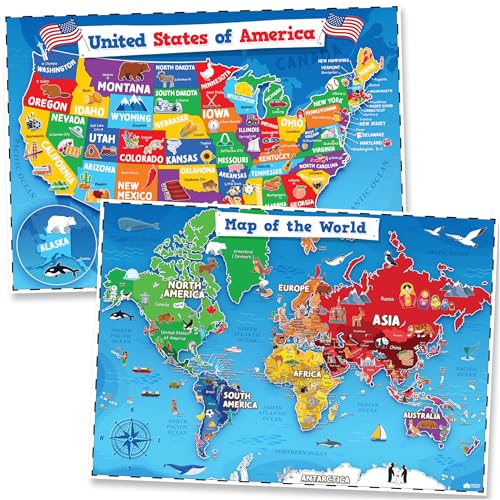
Premium, high-quality United States map for kids and world maps set designed to spark curiosity about the USA and global regions. The pair functions as a versatile classroom tool and home learning aid, creating an inspiring environment for geography discussions. The designs feature updated facts and well-researched illustrations across regions, states, and continents, with engaging icons and landmarks to provoke thoughtful conversations.
Bright colors and clear fonts support readability for early readers. The posters are suitable for walls in classrooms, bedrooms, daycares, homeschool spaces, and libraries, blending educational content with appealing artwork that keeps kids focused without overwhelming them.
BEST LEARNING i-Poster My World
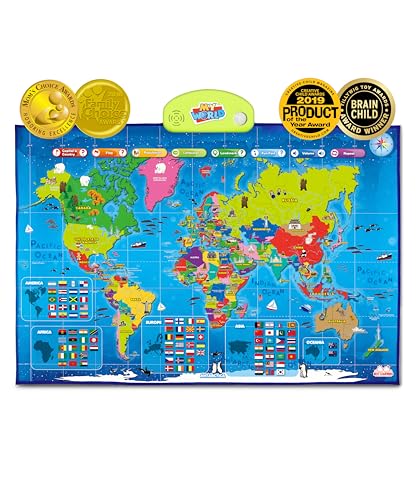
This interactive world map is designed for kids ages 5-12 to learn countries, flags, and fun facts. With over 500 guided prompts, children tap to hear country names, capitals, and related trivia, transforming geography into an engaging, audio-guided experience. It has earned family- and child-focused awards, underscoring its appeal for STEM curiosity and global awareness.
The i-Poster approach supports independent exploration and guided learning, making it a strong option for classrooms or households that value hands-on technology-assisted education. Content covers continents, oceans, landmarks, and cultural notes to broaden cultural literacy.
Palace Learning 2 Pack – World & USA Map for Kids [Illustrated]

This two-poster set features 18″ x 29″ laminated maps for durability in busy learning spaces. The pair provides a concise, illustrated overview of both the world and the United States, supporting early geography recognition and conversations about places, cultures, and connections between regions. Lamination helps withstand classroom use and frequent handling by curious toddlers and preschoolers.
Taika World Felt Set

This felt world map offers a tactile learning experience with 17 animal icons, 14 famous world landmarks, and a complete map set featuring all continents and oceans. The 43×28 inch felt board uses self-adhesive Velcro dots, enabling hands-on play without magnets. It supports memory development and spatial awareness as children place icons and discuss geography in a tangible way.
QUOKKA Wooden Puzzles for Kids Ages 4-6

Two realistic wooden maps provide a tactile learning experience with photo-realistic imagery. Color-coded state shapes in the USA puzzle help early learners recognize locations, while the world map piece introduces continents and oceans. The durable wood and high-quality printing resist wear, supporting repeated, hands-on geography exploration at home or in the classroom.
Buying Guide: Key Considerations For Toddlers And Early Geography
- Durability and safety: For toddlers, choose materials that withstand handling, such as laminated posters, sturdy wooden puzzles, or felt setups. Look for non-toxic materials, rounded edges, and secure adhesives.
- Age-appropriate content: Ensure content aligns with early geography concepts—continents, basic country recognition, major landmarks, and culturally diverse icons. Interactive elements should support vocabulary growth and memory.
- Interactivity vs. simplicity: Interactive options (audio prompts, Velcro-based felt pieces, or tactile puzzles) can boost engagement. Simpler posters work well for very young learners who benefit from bright visuals and easy-to-read text.
- Display space and format: Consider room layout. Laminated posters save wall space and are easy to wipe clean. Puzzles and felt boards can be used at low tables for hands-on exploration.
- Growth potential: The best sets offer both immediate learning value and evolving content as a child ages—progressing from basic recognition to more detailed geographic concepts.
- Maintenance: Easy-to-clean surfaces and durable materials extend product life in busy spaces. Laminated posters resist spills; felt boards clean with a damp cloth; wooden puzzles endure frequent use.
- Multisensory learning: Combining visual posters with tactile elements (puzzles, felt pieces) supports diverse learning styles and can improve retention.
- Aesthetic fit: Colorful, kid-friendly art helps create an inviting learning environment, encouraging ongoing exploration and conversations about geography.
When selecting a world map for toddlers, balance educational content with durability and engagement. The recommended picks above provide diverse formats—poster sets for wall display, interactive posters, tactile boards, and wooden puzzles—so caregivers can match a child’s interest and space constraints without compromising learning value.