Finding the right push walker for a toddler can support early mobility while offering learning opportunities. This guide reviews five top models designed for 1- to 3-year-olds, focusing on safety, durability, and play value. Each option blends sturdy construction with features that encourage exploration and motor development. The products below include wooden designs, multi-activity tables, and adjustable features to grow with your child.
| Product | Brand | Ideal Age | ||
|---|---|---|---|---|
| 2-in-1 Push Walker | bpmfkid | 1-4 | Wooden Push Walker | Tool toy set and 2-in-1 design |
| iPlay, iLearn 3 in 1 Walker | iPlay, iLearn | 9-36M | Activity Table + Walker | Music, lights, drawing board |
| SYNCFUN Learning Walker | SYNCFUN | 6-12M+ | Push Walker with Play Panel | Two-speed settings |
| WOODMAM 10-in-1 Walker | WOODMAM | 12-36M | Montessori Push Walker | Gears, beads, xylophone, more |
| Labebe Wooden Walker | labebe | 1-3 | Push Walker with Toy Chest | 2-in-1 walker and toy storage |
2-in-1 Push Walker With Tool Toy

The bpmfkid model combines a sturdy wooden push walker with a built-in tool toy set. This design supports first steps while offering hands-on activities that promote fine motor skills and imaginative play. Its high-quality wood construction ensures durability, and the hidden mute wheels protect floor surfaces during movement. Quick assembly is possible with illustrated instructions and a screwdriver. The two-in-one concept—walker and tool table—encourages children to walk safely and then explore a small toy workshop as they progress.
Key features include a supportive handle, smooth movement, and a compact footprint suitable for living rooms and playrooms. The product’s dimensions (approximately 13.4″ L x 11.1″ W x 19″ H) fit most spaces without overwhelming a room. Suitable for kids aged 1-4 years, it adapts to developing walkers who enjoy both mobility and hands-on activities. Parents seeking an equity-friendly wooden walker with extra play value will appreciate the 2-in-1 design and durable construction.
iPlay, iLearn 3 in 1 Baby Walker
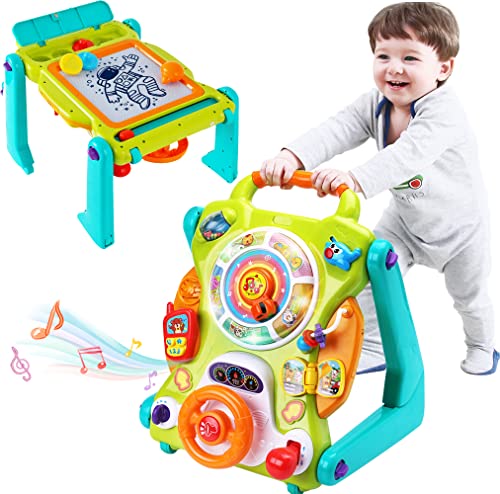
The iPlay, iLearn walker centers on a versatile activity table and walker combo. It transitions from infant-friendly music and lights to a sit-to-stand feature that supports early mobility. The activity table introduces scenes and animals to stimulate motor skills and cognitive development. A magnetic doodle board on the table encourages drawing creativity, while the overall structure remains sturdy for steady first steps. This model is well-suited to toddlers who benefit from engaging auditory and visual stimuli as they learn to walk and explore.
As children grow, the toy table provides new avenues for discovery, including scene recognition and interactive play. The design emphasizes safe, age-appropriate exploration with doors and panels that motivate movement without overwhelming a little one. The toy’s dimensions and weight balance make it a practical option for busy households seeking a long-lived learning walker with multiple play modes.
SYNCFUN 2 in 1 Sit to Stand Learning Walker

The SYNCFUN walker emphasizes adjustable speed settings to match a child’s development. It supports standing, walking, and pushing with a detachable play panel that can be used on the floor, attached to a crib, or placed on the walker itself—providing versatility for different play environments. The panel includes light-up buttons, sounds, and a piano with seven modes, offering an engaging audio-visual learning experience. This option is particularly suitable for families seeking a modular toy that grows with a child’s abilities.
With two-speed options, caregivers can tailor the walking experience for younger or more confident toddlers. The safe design includes rounded edges and stable wheels to reduce tipping. The combination of walking practice and interactive features makes it a strong candidate for parents prioritizing multi-sensory learning during early mobility. The inclusion of ABC buttons and a phone-like interactive element adds familiar, kid-friendly appeal.
WOODMAM 10-in-1 Montessori Push Walker

The WOODMAM model positions itself as a comprehensive Montessori-inspired learning walker with 10 activities in one. Gears, a peek-a-boo window, counting beads, a pretend phone, mirror, xylophone, spinning blocks, a shape sorter, and a sliding puzzle offer diverse sensory experiences. The walker supports first steps while building cognitive and fine motor skills. A detachable busy board expands play options by enabling tabletop learning and travel activities. This design is well-suited for families seeking a feature-rich walker that remains informative as a child grows.
Height and balance are carefully considered, with an ergonomic 17″ height to help maintain proper posture during walking. The integrated toy set fosters independent exploration and cooperative play when siblings share the walker. Parents should consider storage needs, as the product includes numerous pieces that contribute to educational value while requiring organization during use.
Labebe Wooden Push Walker With Toy Chest

The Labebe model combines a walker with a large toy storage chest, enabling sit-to-play and push-to-walk transitions. The design emphasizes safety with a rubber ring for floor protection and a broad base for improved balance. The walker’s maneuverability makes it a practical option for carpets and hardwood floors alike, with easy handling for early walkers learning to push and stand. The toy chest enhances the value proposition by providing a convenient space to carry favorites around the house.
Labebe’s build focuses on easy weight management and stability so babies can adapt to standing and walking without sudden shifts. The 2-in-1 approach supports both independent mobility and carried play, making it a versatile choice for families who want a single, durable unit that accommodates varying activity levels and room layouts. The design stands out for combining storage with mobility training in a single piece of equipment.
Buying Guide: Key Purchase Considerations
- Safety and stability: Look for wide, reinforced bases, smooth wheels, and rounded edges. Ensure there are no small detachable parts that could pose choking hazards for younger toddlers.
- Age and height suitability: Choose a walker that matches your child’s height and development stage. Adjustable heights or seats help accommodate a growing toddler.
- Material and durability: Wood-based walkers tend to be sturdy and long-lasting, while plastic models may be lighter. Consider floor protection features, such as rubberized wheels.
- Learning and play value: Multi-activity designs (gears, beads, music, light panels) can stimulate motor skills and cognitive development. Removable panels add versatility for different rooms and travel.
- Portability and storage: If space is limited, prioritize compact designs or those with fold-away components. Detachable busy boards or toy chests offer extra value but may require more space when in use.
- Maintenance: Surfaces and components should be easy to clean. Wood finishes should resist minor spills, and fabric elements should be wipeable when applicable.
- Growing with the child: Some walkers morph into sit-to-stand activity centers, or include adjustable features to extend the product’s usable life as skills mature.
Choosing the right walker involves balancing safety, durability, and learning potential. Parents should inspect product manuals for assembly instructions, warranty terms, and age recommendations. Considering room size, child preferences, and the walker’s ability to adapt to various activities will help ensure a purchase that remains valuable as a toddler develops new skills.