Exploring the micro world is a cornerstone of STEM learning for children. The right kid-friendly microscope can spark curiosity, teach critical observation skills, and build early science confidence. Below are five trusted options that balance zoom range, ease of use, build quality, and engaging features for ages 3–14. Each entry includes a brief overview and key capabilities to help you compare at a glance.
| Product | Brand | Key Benefit |
|---|---|---|
| Odatay 1000X Handheld | Odatay | 4K display; slides included; long-distance viewing |
| BMDSAE 1000X Pocket | BMDSAE | Ultra portable; anti-shake; LED illumination |
| BEAVERLAB Finder 4.0″ | BEAVERLAB Finder | High-res 1080P; 1600X zoom; pocket miniscope |
| AUKCLAX 1000X Recordable | AUKCLAX | 2.4″ IPS screen; photo/video capture |
| HEWEIMEI 1600X Kids | HEWEIMEI | 4.0″ screen; 48MP camera; multi-mode |
Note: All products below are selected from reputable kid-focused microscope lines and offer safe, age-appropriate features for at-home science exploration.
Odatay 1000X Handheld Digital Microscope

The Odatay handheld microscope provides 200x–1000x magnification across four levels, accommodating long-distance viewing at the lowest setting and detailed close-ups at higher levels. Its 4K HD camera pairs with a 2.4-inch display, enabling photo capture, video recording, and simple navigation for kids aged roughly 5–12. Eight built-in LEDs and adjustable brightness help illuminate specimens in diverse lighting. A 32GB memory card and included accessories support a ready-to-explore kit—ideal for classroom-style activities or science fairs.
This unit emphasizes hands-on learning with a compact footprint. Kids can carry it to desks, the backyard, or field trips, turning everyday objects into mini-labs. The included protective case and slides foster safe handling, while the data cable and lanyard support easy storage and portability. For families seeking a versatile digital microscope with a clear screen, the Odatay option is a solid starter choice.
Uarzt 58-Piece Microscope Kit

The Uarzt kit emphasizes an exploratory, family-friendly experience with 44 extras, including 13 specimens and 31 blank slides. Magnification spans from 100x to 1200x, making it suitable for observing plant cells, histology, and everyday samples. Aimed at ages 5–12, the kit promotes early scientific literacy by pairing a colorful, accessible microscope with guided activities. A carrying box supports organization during play sessions, science nights, or classroom demonstrations.
Educational value centers on building intuition about how a real optical microscope works. The included guide helps kids understand core parts and simple operation, while blank slides invite hands-on experimentation. This kit is well-suited for curious learners who enjoy decorating slides and recording observations for future reference. It also lends itself to collaborative family science projects that reinforce observation and documentation skills.
BMDSAE 1000X Pocket Digital Microscope

The BMDSAE pocket microscope offers 1000x magnification with a 2MP camera and a lightweight, durable design. Its anti-shake feature stabilizes images in busy environments, making it suitable for backyard biology explorations or museum visits. The device is compact and easy to use, with a simple focus mechanism designed for kids who are new to microscopy. A rechargeable battery maintains portability for extended sessions away from power outlets.
Key strengths include a robust build, straightforward operation, and reliable image capture. The anti-shake function helps prevent blurry pictures when kids are excited, and the 2MP camera delivers crisp stills and video. This model is a practical option for families seeking a compact, no-fuss microscope that still delivers clear magnified views.
BEAVERLAB Finder 4.0″ Mini Microscope

The BEAVERLAB Finder is a handheld 4.0-inch mini microscope with a 1080P display and 100x–1600x magnification range. The built-in 2MP CMOS sensor captures full HD photos and videos, enabling quick sharing with family and friends. A hotspot feature simplifies transferring results to a mobile device for quick posting or classroom submission. This device blends portability with solid imaging quality, making it appealing for on-the-go science learning.
With a larger viewing screen for shared observation, the Finder is suitable for collaborative activities. The higher magnification levels encourage close-up studies, such as insect anatomy or plant cell structure. The built-in display reduces the need for a separate computer, which can be a practical feature for travel and demonstrations.
AUKCLAX 1000X Recordable Kids Microscope
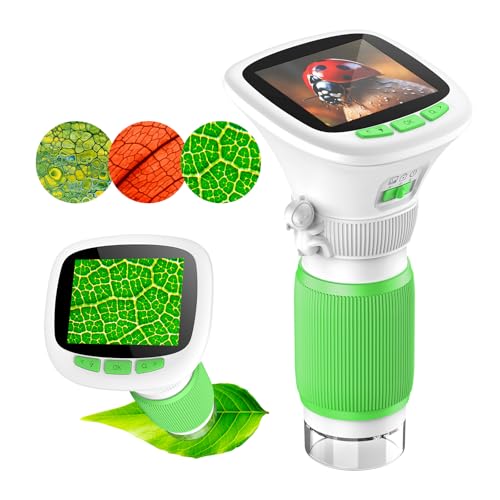
The AUKCLAX model emphasizes 200–1000x magnification with a 2.4-inch IPS screen and 200W photo/video recording capabilities. Its design prioritizes an engaging, recordable experience so kids can document discoveries. A 3-level brightness setting helps reveal details in varying light, and the 2.4-inch display provides immediate feedback during observations. The kit’s portability supports science exploration beyond the classroom and fosters early data collection habits.
Recordability is a notable feature for young learners who benefit from revisiting findings. The IPS display offers rich colors, while the zoom range supports both macro and micro observations. For parents seeking a digital, easy-to-use system that encourages documentation, this option provides a balanced mix of accessibility and capability.
HEWEIMEI 1600X Digital Microscope
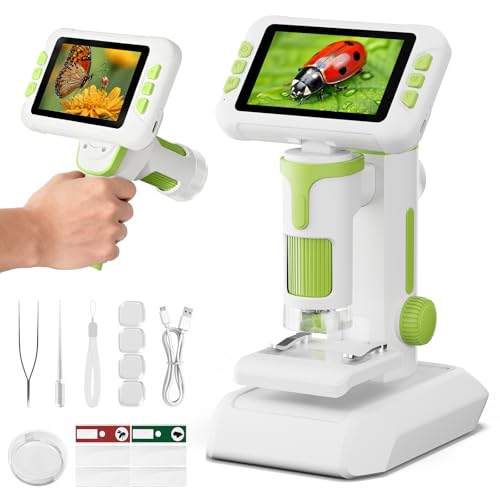
The HEWEIMEI microscope delivers up to 1600x magnification with a 4.0-inch IPS screen and a built-in 48MP camera. The 1000x–1600x high-power zoom supports very close inspections of textures, fibers, and tiny specimens. A detachable multi-mode design allows desktop, handheld, and portable use, enhancing versatility for home, school, or travel. Six LEDs with three brightness modes ensure visibility across lighting conditions.
This model is positioned for deeper curiosity. The larger screen and high magnification enable detailed study that aligns with more advanced science activities, yet remains approachable for motivated younger learners. It’s well-suited for projects that require documenting specimens through photos or videos for presentations or science fairs.
Buying Guide: Key Purchase Considerations
- Magnification range: Look for a model that covers low to high magnification (e.g., 100x–1000x or 200x–1600x). This lets kids start with bigger objects and progress to fine details.
- Display and recording: Digital screens and built-in cameras help kids learn by seeing results instantly. Recordable options support documentation for later review or sharing.
- Portability and durability: Lightweight, rugged designs with protective cases suit classroom and travel use. A lanyard or carrying case adds convenience for on-the-go exploration.
- Lighting: LED illumination is essential for clear viewing. Adjustable brightness helps accommodate different sample types and ambient conditions.
- Accessories: Slides, specimen kits, and cables expand learning opportunities. Some kits include ready-to-use samples, while others invite DIY slide preparation.
- Age appropriateness: Check recommended age ranges and ensure the device has simple controls and safety-friendly construction for younger children.
- Ease of setup: Machines that require minimal assembly or setup help maintain engagement for kids and reduce parental assistance needs.
- Educational value: Kits that include guided activities or teacher-friendly instructions can enhance STEM learning outcomes.
When choosing, balance the child’s interest level with the product’s complexity. For younger kids, prioritize durability, simple focus, and visual feedback. For older children, higher magnification, recording features, and more extensive slide kits provide extended learning pathways. Consider whether you want a handheld, desktop, or portable model based on where the child will use it most—at home, in the classroom, or on science outings.