Finding suitable toys for a 5-year-old with autism involves selecting items that balance sensory input, safety, and engagement. This guide highlights five carefully chosen toys that support focus, calming strategies, and social play, while aligning with common needs in early childhood sensory development. Each product section includes practical details and how the toy supports attention, self-regulation, and exploration.
Summary of Selected Products
- Scientoy Fidget Toy Set, 35 Pcs Sensory Toy for ADD, OCD, Autistic Children, Adults, Anxiety Autism to Stress Relief
- LoveHugs Musical Light Up Wand – Sensory Lights for Autistic Children
- Pterying 21″ Large Size Spinning Chair for Autistic Kids
- Playbees Light-Up Transparent Car Toy for Autistic Kids
- KidSquare Color Sorting Sensory Toys for Kids with Autism
Scientoy Fidget Toy Set: 35 Pcs Sensory Toolkit
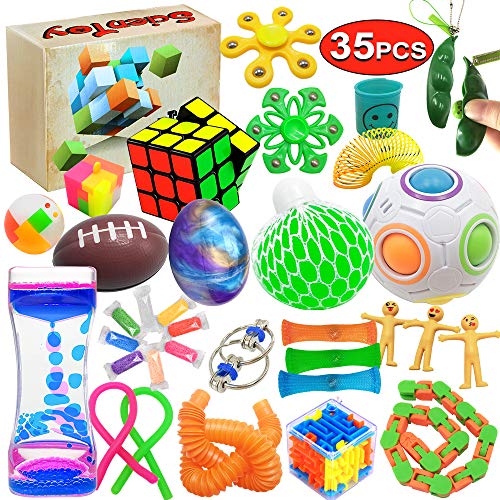
The Scientoy Fidget Toy Set provides a broad range of tactile and visual stimuli designed to support sensory processing and calm engagement. With 35 pieces, including a rainbow ball, liquid motion timer, mesh and marble fidgets, foam putties, and more, children can explore squeezing, flipping, twisting, and squeezing motions. The set emphasizes safe materials (ABS plastic) and compliance with toy safety standards, making it suitable for classroom rewards and home use. The variety helps maintain interest while giving options to channel restless energy into controlled, focused play. This kit can be used for individual sensory breaks or small-group activities that encourage cooperative play and turn-taking.
Key features in practice: broad tactile options to address varying sensory needs, durable construction, and a ready-to-play bundle that reduces decision fatigue for caregivers and teachers.
LoveHugs Musical Light Up Wand

The LoveHugs light-up wand provides a multisensory experience with color-changing lights and looping musical melodies. The visual stimulation from spinning lights can capture attention, while the musical component offers auditory feedback that can be soothing during transitions or moments of frustration. This toy supports calm-down routines by offering predictable sensory input, helping children anticipate and regulate responses to new or challenging situations. The wand is compact, portable, and easy to use in various settings such as classrooms, therapy sessions, or car rides.
Usage considerations: consider using in short, structured play sessions to help with transitions, and pair with a quiet space to reinforce self-regulation strategies.
Pterying 21″ Large Spinning Chair

This large, child-friendly spin chair is designed to support vestibular input and motor coordination. It can be used while sitting, kneeling, or lying down, providing flexible engagement that supports balance and focus. The chair is made from sturdy materials and can support substantial weight, making it suitable for active kids who benefit from movement as part of their learning and play. The spindle-like action encourages controlled spinning, which can help regulate sensory systems and reduce anxiety during calm-down periods or imaginative play.
Important considerations: monitor speed and duration to match the child’s comfort level, and ensure safe use on appropriate surfaces to prevent tipping.
Playbees Light-Up Transparent Car Toy

This light-up car combines visual and auditory stimulation with simple, intuitive play dynamics. The transparent body reveals moving gears, which can captivate children while promoting observation skills and basic mechanical curiosity. The LED effects and sound provide multi-sensory input that can engage attention and reduce overstimulation by offering predictable, repeatable cues. The toy is compact and travel-friendly, making it suitable for therapy sessions, car rides, or waiting periods where a child might need a structured distraction.
Usage tips: pair with brief turn-taking activities or cue cards to incorporate social elements into playtime, if appropriate for the child.
KidSquare Color Sorting Sensory Toy

The KidSquare Color Sorting toy targets multiple developmental areas, including color recognition, emotion awareness, and fine motor skills. Its five-petal design corresponds to basic emotional states (happy, angry, scared, sad, disgust), helping children label and communicate feelings through play. The toy is portable and durable, making it suitable for on-the-go therapy sessions, classroom activities, and home practice. Its autism-friendly design supports sensory exploration without overwhelming options, providing a structured yet imaginative way to practice social-emotional learning and language development.
Buying Guide: Key Purchase Considerations
- Safety and age suitability: Ensure toys meet recognized safety standards (non-toxic materials, small parts avoidance for younger children, sturdy construction for frequent handling).
- Sensory targeting: Choose tools that address a child’s primary sensory needs—visual, tactile, auditory, vestibular, or proprioceptive input. A mix can help maintain engagement while supporting regulation goals.
- Ease of use: Prefer simple, intuitive toys that a child can activate with minimal setup, aiding independence and reducing frustration.
- Durability and cleanup: Look for durable plastics and easy-to-clean surfaces, especially for toys intended for daily use or school settings.
- Portability: For travel or therapy sessions, compact and lightweight options reduce friction in everyday routines and transitions.
- Social and cognitive benefits: Favor toys that encourage turn-taking, labeling emotions, or following simple rules to foster communication and social skills.
- Customization and variety: A mix of single-focus fidgets and more complex toys can accommodate evolving needs as a child grows and learns.
- Supervision and guidance: Some toys may require adult modeling to maximize benefits, such as structured play sessions or calm-down routines.
When selecting toys for a five-year-old with autism, it helps to balance immediate sensory relief with opportunities for learning, social interaction, and self-regulation. Consider pairing toys with routine-based activities—short, predictable play segments followed by quiet time—to build consistency and reduce anxiety during transitions. Always monitor responses and adjust choices to align with the child’s evolving preferences and developmental goals.