Choosing the right push walker supports balance, coordination, and independent confidence as toddlers learn to walk. This guide highlights five reliable, activity-rich walkers that blend playtime with mobility. Each option combines engaging features with safe design to help little explorers take those first brave steps.
| Product | Brand | Key Features |
|---|---|---|
| VTech Sit-to-Stand Learning Walker (Blue) | VTech | Removable tray, 5 piano keys, motor skill builders |
| Fisher-Price 4-in-1 Snack Cart Walker | Fisher-Price | 4 play modes, language button, 135+ tunes |
| Fisher-Price Laugh & Learn Sis Walker | Fisher-Price | 2 modes, 75+ songs & phrases, educational themes |
| HYES 5 in 1 Baby Push Walker | HYES | 5 modes, adjustable speed, shape/color play |
| Tiny Land Wooden Baby Walker | Tiny Land | Wooden design, adjustable speed, sensory toys |
All five options emphasize stability, engaging activities, and durable construction for everyday use at home or while traveling. Consider space, weight, ease of assembly, and the child’s current mobility stage when choosing between a more traditional push walker and a multi-activity walker.
VTech Sit-to-Stand Learning Walker (Blue)
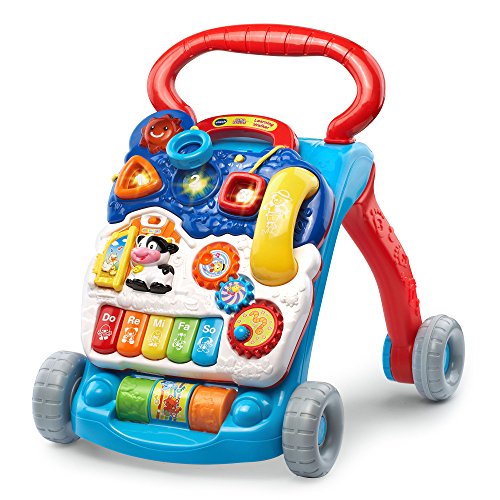
The VTech Sit-to-Stand Learning Walker combines mobility with early education. It features a detachable activity tray for sit-down play and reattaching on the go, allowing the walker to transition with the child from sitting to cruising on carpet or hard floors. The center includes five piano keys that produce musical notes and a pretend telephone handset to encourage imaginative role-play. Built-in activities like shape sorters, light-up buttons, and colorful rollers help develop fine motor skills while exploring colors and textures.
VTech Sit-to-Stand Learning Walker (Frustration Free Packaging)
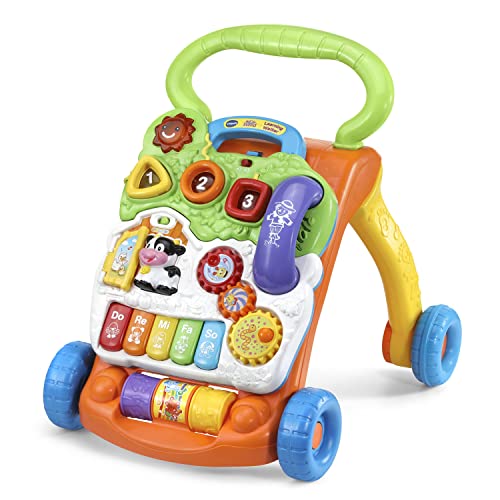
This version mirrors the features of the blue model with a detachable tray for early learners and a built-in auditory center. The five piano keys and telephone handset foster creativity and pretend play, while the motor development elements—shape sorters, light-up buttons, and rollers—support hand-eye coordination and tactile exploration as children transition from sitting to standing and walking.
Fisher-Price 4-in-1 Snack Cart Walker
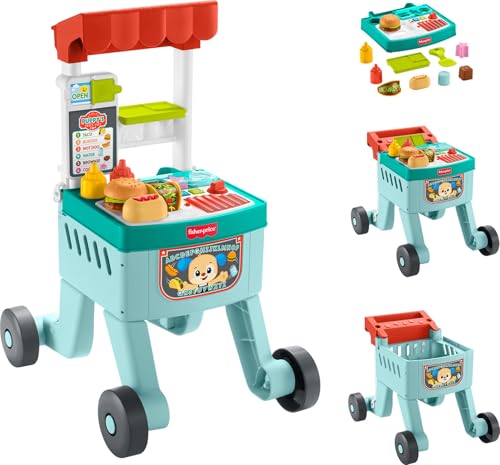
This snack-cart-themed push walker grows with your baby through four play modes, from sitting to walking to pretend play. It features Smart Stages learning that covers opposites, numbers, shapes, and more, plus a globe button to switch languages (English, Spanish, French, Brazilian Portuguese). With 135+ songs, sounds, and phrases, littered with lights and interactive elements like a grill dial and cooler door, toddlers stay engaged as their locomotion improves.
Fisher-Price Laugh & Learn Smart Stages Sis Walker
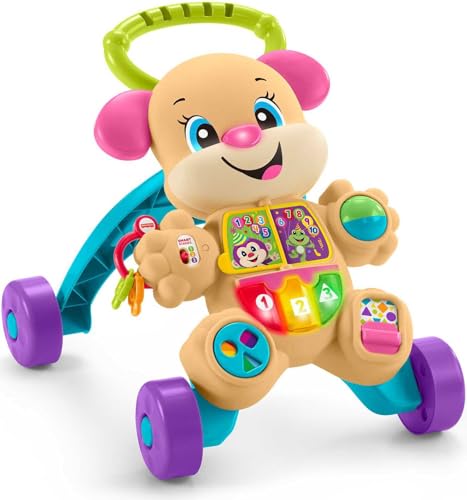
This walker grows with your child through two modes: sit-and-play and stand-and-walk. It offers 3 Smart Stages levels featuring 75+ songs, sounds, and phrases that teach the alphabet, shapes, colors, numbers, and basic Spanish words. With seven hands-on activities—such as a light-up piano, nose, roller, spinner, and flip page—this walker emphasizes interactive discovery while supporting mobility.
HYES 5 in 1 Baby Push Walker

HYES presents a 5-in-1 design: baby walker, scooter, motorbike, entertainment table, and activity center. The removable play panel features a basketball frame with three balls, shape blocks, spinning rollers, a piano keyboard, and color recognition aids. An adjustable speed control, non-slip traction, and a rear wheel lock provide stability and safety as toddlers build confidence in walking and independent exploration.
Tiny Land Wooden Baby Walker

This wooden walker emphasizes Montessori-inspired play with a built-in mirror, gears, and learning toys. The rear rack lets toddlers carry favorite items for exploration, and the adjustable speed setting helps tailor the pace to a child’s first steps. Made from sturdy natural wood with non-toxic finishes, it balances durability with a gentle walking experience for growing toddlers.
Buying Guide: Key Purchase Considerations
- Age and development stage: Match the walker’s features to the child’s sitting, crawling, or walking progression. Some models offer multiple modes to grow with the child, while others emphasize early musical or language-based activities.
- Stability and safety: Look for wide base designs, non-slip wheels, and secure locking mechanisms for speed control. Check weight capacity and ensure materials meet safety standards for infants and toddlers.
- Engagement and learning: Decide whether you want a walker primarily for mobility or also as an educational toy. Some walkers include languages, songs, or shape/color activities that stimulate cognitive development.
- Portability and storage: Consider weight, foldability, and whether the walker is easy to transport for travel or storage in small living spaces.
- Durability and materials: Wooden walkers tend to be sturdy and long-lasting, while plastic models may offer lighter weight and more interactive electronic features. Ensure finishes are non-toxic and easy to clean.
- Maintenance: Check for removable trays or washable components for easier cleaning, especially after messier play or snack time.
- Space and layout: Measure the intended play area to ensure the walker fits comfortably without crowding furniture or causing trips and falls.
Each featured model provides a distinct blend of movement support and interactive play. When evaluating options, consider how the walker will adapt as your child gains confidence, balance, and independent mobility.