Children enjoy interactive play, and toy robots blend imagination with basic STEM concepts. The following selections feature gesture sensing, remote control, programmable actions, and entertaining dances and songs. Designed for ages 3 and up, these robots encourage planning, sequencing, and problem-solving in a safe, engaging way. Below you’ll find five standout options that balance durability, features, and value for curious kids and curious families alike.
Buying quick glance: the table below summarizes the five highlighted products, including brand and a snapshot of core capabilities to help you compare at a glance.
| Product | Brand | Key Features | Age Range |
|---|---|---|---|
| KingsDragon RC Robot Toys | KingsDragon | Gesture/IR control, 50 programmed actions, LED eyes, obstacle avoidance | 3–8 |
| KingsDragon RC Gesture Sensing Robot | KingsDragon | Hand gesture control or remote, 50 programmable moves, singing and dancing | 6–9 |
| Ruko 1088 Smart Robots | Ruko | Voice/app control, 15.8-inch height, multiple expressions and songs | 4–9 |
| BAZOLOTA Programmable Robot | BAZOLOTA | Gesture sensing, 50 programmable moves, singing and dancing | 3–12 |
| Hamourd RC Emos | Hamourd | Track-driven movement, demo mode, LED eyes, remote control | 5+ |
KingsDragon Gesture & Sensing Robot

This KingsDragon robot combines infrared remote control with hand gesture commands, enabling left and right turns, forward and backward slides, and more. It features an automatic display mode and obstacle avoidance for interactive play. Its eyes glow with blue LEDs as it moves, adding a compelling visual cue for kids. The robot offers an Intelligent Programming mode that can store and playback up to 50 actions, letting children build sequences like turn left, walk forward, and dance. Built from non-toxic ABS plastic with flexible joints, it is designed for durability during active play.
Designed for early STEM learning, the robot’s programming capability supports planning and sequence thinking. The built-in sensors help teach cause-and-effect as kids adjust their actions and observe outcomes. The model’s sturdy wheels and joints support a variety of movement patterns, from simple to complex routines, encouraging experimentation and repeated practice without frustration.
KingsDragon RC Gesture Sensing Interactive Robot

This KingsDragon model supports both hand gestures and remote control. It moves forward and backward and turns left or right in response to either input method, with obstacle detection so it won’t collide with furniture or walls. The eyes light up with LEDs during motion, adding a dynamic visual element. Programmable actions are limited to 50 moves, which can be recorded via the remote and replayed in sequence, making it suitable for kids who enjoy choreographing simple robotic routines and songs.
The robot’s design emphasizes ease of use: straightforward controls, clear cues, and a responsive sensor package. It serves as a good bridge between beginner RC toys and more advanced programmable robots, offering hands-on learning without steep setup requirements. The build quality supports frequent handling by younger users, while maintaining safe operation for curious makers aged around six and up.
Ruko 1088 Smart Robot

Ruko’s 1088 is a large, programmable robot designed to inspire imagination and literacy through storytelling, music, and dance. Standing up to 15.8 inches tall, it offers 10 songs and 10 expressions to keep play engaging. The robot supports multiple control modalities, including voice commands and a companion app, enabling gradual exposure to programming concepts as kids grow. Its diverse actions—gymnastics, storytelling, and recording—provide a broad canvas for creative exploration and early computational thinking.
The Ruko model places emphasis on narrative-driven play, encouraging kids to create scenes and performances. The height and presence of the robot create a sense of companionship that can motivate consistent interaction. It is particularly suited for children who enjoy animated storytelling and who benefit from a broader range of expressive options in a single toy.
BAZOLOTA Programmable Robot
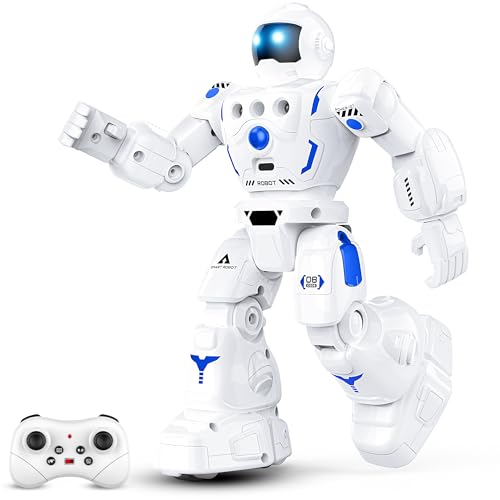
BAZOLOTA’s robot emphasizes gesture sensing with remote control versatility and a long 164-foot control range. It supports 50 programmable actions and offers a demo mode where commands are demonstrated and then replayed. The robot can sing and dance, with adjustable volume to suit different environments. Its design suits children who enjoy sequence building and performance, providing a platform to explore basic programming concepts while enjoying lively interactivity.
The feature set favors independence in exploration: kids can memorize sequences, test new patterns, and observe immediate feedback from the robot’s movements. The long control range broadens play areas and reduces the need to constantly reposition the robot, which is helpful for energetic play sessions or classroom-style demonstrations at home.
Hamourd RC Emos Robot
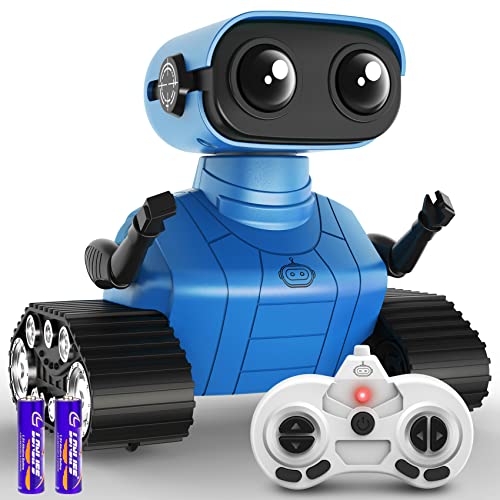
Hamourd’s Emo robot combines track-based mobility with a remote control to deliver steady, engaging movement. It features LED eyes, a range of dance moves, and a demo mode that presents automatic choreographies. The 2.4 GHz remote generally allows multiple robots to operate without interference, making it suitable for siblings or friends who want to play together. The design prioritizes easy handling and intuitive controls for younger users, with engaging light-up eyes that keep kids visually engaged during play.
The robot supports multiple play styles: controlled navigation, pre-programmed routines, and automatic demos. This variety helps children compare different control methods and observe how small changes in input alter outcomes, reinforcing cause-and-effect reasoning. The overall packaging and build are aimed at durability for younger hands and repeated experimentation.
Buying Guide: Key Purchase Considerations
- Age appropriateness: Check recommended ages to ensure the robot’s complexity matches a child’s cognitive and motor development.
- Control method: Decide between remote control, gesture sensing, or app-based control. Gesture sensing offers hands-on learning, while app control can expose kids to more advanced features over time.
- Programmable capabilities: Look for models that store and replay sequences (often up to 50 moves). This supports planning, sequencing, and iterative improvement.
- Educational value: Consider how the robot encourages problem solving, storytelling, and basic programming concepts through interactive play.
- Durability and safety: Non-toxic materials, rounded edges, and sturdy wheels or tracks are important for frequent handling by young children.
- Audio and visuals: LED eyes, sounds, and music can enhance engagement but ensure volume controls are present for comfortable listening levels.
- Interactivity vs. simplicity: Some kids enjoy elaborate routines; others prefer straightforward driving and dancing. Choose a model that aligns with the child’s interests.
- Expansion potential: If purchasing multiple robots, consider compatibility features (e.g., 2.4 GHz remotes) to allow simultaneous play without interference.
Overall, the selections above provide a spectrum of options from gesture-controlled and programmable to large, storytelling-oriented robots. Each model supports early STEM skills—sequencing, cause and effect, pattern recognition—while keeping play accessible and entertaining for kids in the American market.