Discover the best toy electric guitars for kids, designed to fit small hands, spark creativity, and foster a lifelong interest in music. The following selections emphasize safe design, age-appropriate playability, and engaging features like lights, demos, and built-in lessons. Each option below is suitable for beginners and offers a path to developing rhythm, coordination, and musical curiosity without the frustration of oversized, adult guitars. Read on to see five top-rated picks, with a quick at-a-glance summary to help you decide.
| Product | Brand |
|---|---|
| Best Choice Products 30in Kids Electric Guitar Starter Kit | Best Choice Products |
| Donner 30 Inch Kids Electric Guitar DSJ-100 | Donner |
| Kids Electric Toy Guitar with Strap (Blue) | Jakeloo |
| M SANMERSEN Kids Electric Toy Guitar (Pink) | M SANMERSEN |
| Simba My Music World Rock Guitar | Simba |
Best Choice Products 30in Kids Electric Guitar Starter Kit

The Best Choice Products 30-inch kids electric guitar is designed to be kid-friendly without sacrificing the look and feel of a real instrument. The kit includes a compact 30-inch electric guitar, a 5W amplifier, strap, gig bag, extra strings, and picks, offering a complete beginner setup. The instrument emphasizes a true-to-life appearance with an all-wood build and a glossy finish, contributing to durability and playability. This option is suitable for young players who want a legitimate guitar experience while staying within an approachable size. The included tuner and access to a digital learning app provide a structured pathway for beginners to practice regularly.
Key features support early skill development, including a portable, child-sized body that reduces reach fatigue and a beginner-friendly amp setup. The accompanying lessons and digital tuner help with consistent tuning and practice routines, which can improve ear training and musical timing. Parents should note the kit’s emphasis on core fundamentals, with sufficient options to expand as the child grows. The design aligns with households seeking a single, versatile starter package that balances authenticity with kid-safe proportions.
Donner 30 Inch Kids Electric Guitar DSJ-100

Donner’s 30-inch DSJ-100 is tailored for children with a light, portable build and a neck length engineered for smaller hands. The design prioritizes ergonomic comfort to minimize fatigue during long practice sessions, making it suitable for beginners who are building a daily playing habit. The 35 cm neck and a 4.3 cm fingerboard width were selected to fit the proportions of many young players, helping to promote accurate fretting and smoother transition to full-sized instruments later on. The matte lacquer finish adds a soft touch, reducing friction and keeping playing comfortable over extended sessions.
The kit’s emphasis on starting from a kid-centered layout can support early confidence and interest in music. For guardians, this option offers a practical bridge between toy-like instruments and real guitars, with a design that scales well as the child’s technique improves. While the DSJ-100 focuses on comfort and accessibility, it remains compatible with common accessories and educators’ curricula, enabling guided lessons or self-paced exploration at home.
Jakeloo Kids Electric Toy Guitar with Strap (Blue)
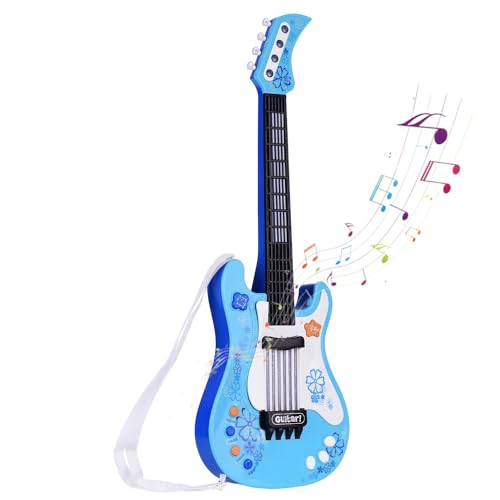
The Jakeloo kids guitar is a toy-oriented option designed for toddlers and younger children. It features a built-in music system with demos, animal sounds, tones, rhythms, and a 3-instrument setup that blends an engaging light show with interactive play. The no-string design reduces risk of pinching or squeezing little fingers, making it a safer choice for preschoolers exploring music for the first time. The vibrant blue color and smaller scale are visually appealing, helping kids feel excited about making music and encouraging early experimentation with rhythm and sound.
Educational benefits cited include exposure to musical patterns and the coordination of music with light cues. The emphasis on sensory feedback—lights, sounds, and responsive keys—supports early cognitive development and fine motor skills. For parents, this option offers a low-risk entry point into musical play, with a user-friendly interface that’s appropriate for very young performers who may not yet grasp pitch or technique but enjoy the experience of making music.
M SANMERSEN Kids Electric Toy Guitar (Pink)

The M SANMERSEN pink electric toy guitar for kids focuses on rhythm and creative play with a robust demo and rhythm feature set. It includes eight demo songs, four instrument tones, and four rhythms to engage budding musicians and help them recognize musical patterns. The toy design often uses color and light cues to keep a child engaged while practicing patterns and simple melodies. Its safety profile prioritizes child-friendly materials and an emphasis on non-intense, beginner-friendly interaction, suitable for curious young players who want to experiment with a “real” guitar feel without the complexity of a full instrument.
Interactive elements, such as infrared sensing and flashing lights that respond to touch, provide a sensory-rich learning experience. Parents can leverage these cues to guide rhythm exercises, timing, and coordination. The product’s design leans toward encouraging spontaneous performance and creativity, rather than focusing narrowly on technique, making it a good match for early musical exploration and family-friendly playtime.
Simba My Music World Rock Guitar

The Simba My Music World Rock Guitar offers a larger playing experience for kids ready to step beyond tiny toy guitars. At approximately 22 inches with a belt strap and real metal strings, it provides a more authentic feel while remaining manageable for younger players. The built-in demo key helps replicate a rock sound, and the on/off switch allows parents to manage play sessions easily. This option suits children who want to simulate real performances and develop stage presence as they practice basic chords and riffs. The combination of a strap and real-sounding output makes it appealing for pretend play that resembles live performances.
Educational merit stems from practice routines that mimic real guitar technique, aiding in hand-eye coordination and rhythm development. The guitar’s size is a step closer to a full instrument, giving young performers a tangible bridge between toy guitars and serious hobby or beginner practice. This choice is well-suited for families who want a more tactile, performance-oriented play experience without the weight or cost of a true beginner’s guitar.
Buying Guide: Key Purchase Considerations and Comparisons
- Age and size suitability: Choose a scale that matches your child’s height and reach. Smaller, lighter guitars help maintain motivation and reduce fatigue during practice.
- Safety features: Look for no-string designs for very young kids, rounded edges, and non-toxic materials to minimize pinching and injury risks.
- Playability vs. realism: Decide whether you want a toy with pretend features or a starter instrument that mirrors real guitars in size, output, and feel.
- Learning support: Some models include built-in lessons, apps, or tuners. These tools can support structured practice and reinforce musical concepts like timing and pitch.
- Durability and longevity: Durable finishes, solid hardware, and secure straps reduce wear and tear as kids grow and become more enthusiastic about playing.
- Future growth: Consider whether the instrument can scale with your child’s progression, such as moving from a 30-inch size to standard beginner guitars later on.
- Additional accessories: Kits with tuners, extra strings, and gig bags offer convenience and value, but confirm compatibility with the child’s ongoing needs and future upgrades.
- Sound and volume control: Some toys produce brighter or louder sounds. Features like volume control or wear-resistant finishes help ensure a comfortable listening environment for siblings and parents.
- Educational alignment: If educational goals are a priority, seek products that emphasize rhythm training, ear development, and coordination through interactive features or guided lessons.
- Budget and value: Compare kit components, build quality, and included accessories to determine the overall value for a family’s goals—whether casual play or serious starting-point exploration.