Bird watching benefits from a reliable monocular or telescope that delivers bright, sharp images with steady viewing. The following selections emphasize magnification range, optical clarity, portability, and compatibility with tripods or smartphones, making them suitable for field use, hiking, and scenery observation. Each option below targets different needs—from compact daily carry to high-power spotting—so you can choose based on how you observe birds in various environments.
The table below summarizes five selected options tailored for bird watching. Use it to compare magnification, lens size, and notable features at a glance.
| Product | Brand | Key Feature | Best For |
|---|---|---|---|
| Pankoo 16X52 Monocular | Pankoo | 16×52 with BAK-4 prism; bright, high-contrast images | All-around birding and travel |
| RIROMA 40X60 Monocular | RIROMA | 40x magnification; waterproof and fog-proof | Distant birds in varied weather |
| usogood 10×42 Monocular | usogood | 10×42 with lightweight design; comfortable 360 ft field of view | Everyday carry and quick viewing |
| KTBDING 80×100 Monocular | KTBDING | 80x magnification; 100 mm objective; tripod-compatible | Long-distance birding and stable imaging |
| Pankoo 12×60 Monocular | Pankoo | 12×60 with BAK-4; wide field of view | Compact, versatile field use |
Pankoo 16X52 Monocular for Bird Watching
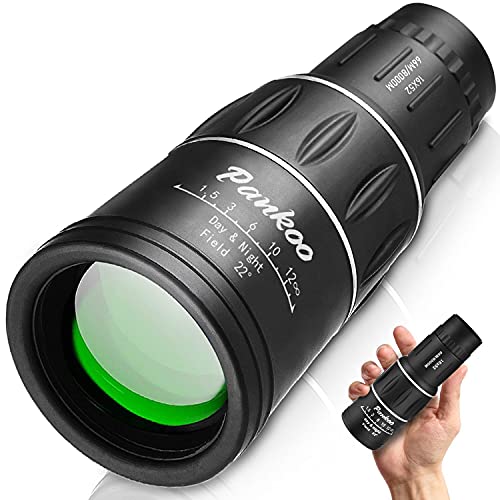
The Pankoo 16X52 Monocular combines a 16x magnification with a 52 mm objective, delivering bright, high-contrast images suitable for birding in forests or open skies. Its BAK-4 prism and multi-coated lenses increase light transmission, reducing chromatic aberration for clearer field views. The monocular is compact enough for single-handed use and includes adjustable eye relief, making it a practical gift for outdoor enthusiasts and casual bird watchers alike. Its versatility supports hiking, travel, concerts, and wildlife observation beyond birds.
ASxmhGo 80×100 High Powered Monocular
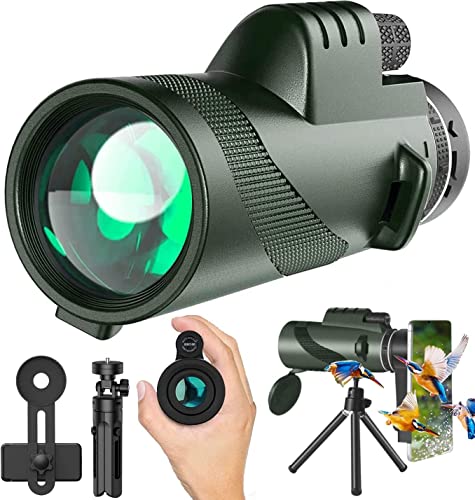
With 80x magnification and a 100 mm objective, this monocular aims to reduce shake for distant birds and landscapes. It features a high-quality optical system with a BAK-4 prism and fully multi-coated lenses to maximize light transmission and minimize distortion. The device is portable and lightweight with a hand strap, designed for hiking, bird watching, and travel. Its compatibility with a smartphone adapter broadens its use for documenting sightings.
RIROMA 40X60 Monocular with Tripod

The RIROMA 40X60 Monocular offers powerful magnification for distant birds along with waterproof and fog-proof construction. The 60 mm objective helps gather light for brighter views in challenging conditions, and the BAK-4 prism with fully multi-coated lenses enhances contrast and color fidelity. A compact form factor and tripod compatibility make it a solid choice for stable long-range birding and travel scenarios.
KTBDING 80×100 Monocular with Tripod
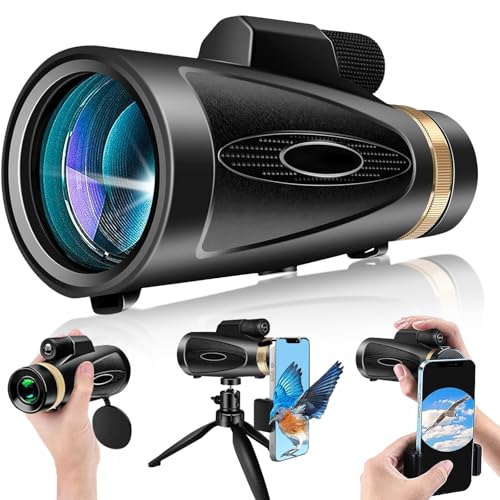
This 80×100 monocular provides substantial reach for distant bird species. It uses a high-quality optical system with fully multi-coated lenses and a BAK-4 prism to maximize light transmission and clarity. The package includes a tripod and smartphone adapter for stable imaging, making it well-suited for field observations, bird photography, and wildlife travel where steady framing matters.
Pankoo 12×60 Monocular with Accessories

The Pankoo 12×60 Monocular delivers a balanced combination of magnification and field of view, making it a versatile option for bird watching and travel. Its large 60 mm objective lens, BAK-4 prism, and fully multi-coated lenses ensure bright, color-rich images with a broad viewing angle. The monocular includes a smartphone adapter and a hand strap for convenient, on-the-go use in varied weather and terrain.
Buying Guide
Key purchase considerations
- Magnification and objective lens size: Higher magnification helps see distant birds, but can amplify shake. Larger objectives boost light gathering for brighter images, especially in low light.
- Optical quality: Look for BAK-4 prisms and fully multi-coated coatings to maximize light transmission, contrast, and color accuracy. This reduces edge blur and color distortion.
- Weight and portability: For field use, a compact, lightweight monocular or small spotting scope improves handling over long hikes and travel days.
- Stability and mounting: Tripod or smartphone adapter compatibility adds stability for long-distance viewing and documenting sightings.
- Weather sealing: Waterproof and fog-proof designs are valuable for birds observed in damp or misty environments, ensuring reliable performance.
- Eyecup design and eye relief: Important for eyeglass wearers; adjustable or longer eye relief improves comfort and field of view.
- Accessory ecosystem: Cases, straps, and phone adapters extend usefulness for photography, note-taking, and field recordings.
Perspective and use-case comparisons
- Casual birding and travel: Lighter 8–12x magnifications with 40–60 mm lenses balance weight and field of view for quick scans and ease of use.
- Distance and detail: High-power models (40x–80x) excel at identifying distant species, but require tripods or stabilization to maintain a clear image.
- Weather and durability: Waterproof and fog-proof builds are advantageous in humid forests or coastal areas where weather changes rapidly.
- Smartphone integration: Models with smartphone adapters enable easy photo and video capture, helping with species documentation and sharing findings.
- Budget considerations: Entry-level monoculars provide solid value for beginners; premium units focus on optical clarity and rugged design for enthusiasts.