Finding engaging, screen-free STEM toys for an 11-year-old boy can boost critical thinking, creativity, and practical skills. The following five options blend robotics, circuits, and solar-powered projects to align with curious learners who enjoy building, experimenting, and solving problems. Each product below offers kid-friendly instructions, durable parts, and opportunities to develop engineering thinking through play.
style=”font-weight:bold;”>Summary of Selected Products
| Product | Brand | Key Focus |
|---|---|---|
| Smartivity DIY Pinball Machine | Smartivity | Mechanical engineering, screen-free play |
| Snap Circuits Jr. SC-100 | Snap Circuits | Electrical circuits, hands-on projects |
| Lucky Doug Solar Power Kits | Lucky Doug | Solar tech, STEM exploration |
| Henoda Robot Toys | Henoda | Remote control STEM robotics |
| 14-in-1 Solar Robot Kit (KIDWILL) | KIDWILL | Solar power, multi-robot building |
Smartivity DIY Pinball Machine

The Smartivity Pinball Machine is a 100% screen-free project that develops key skills such as problem solving, mechanical reasoning, and patience. The kit guides kids 8–14 through building a functional pinball arcade at home, with step-by-step instructions that promote confidence as the machine comes to life. All parts are designed for durability, and the kit includes a lifetime supply of replacement parts to ensure ongoing playtime. This experience supports iterative thinking as kids adjust ramps, levers, and targets to maximize play value.
Snap Circuits Jr. SC-100 Electronics Kit

Snap Circuits Jr. introduces foundational electrical engineering concepts through a wide variety of safe, modular projects. With over 100 possible projects and a full-color manual, kids can build gadgets like alarms and flying devices, learning circuits, flow, and circuitry in a hands-on way. The kit emphasizes safety and clarity, making it suitable for independent exploration or guided learning sessions. Its structured projects help structure logical thinking and design skills as kids test and modify circuits.
Lucky Doug Solar Power Kit
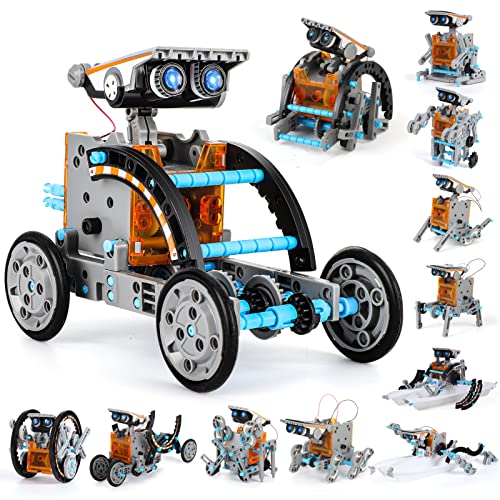
The Lucky Doug Solar Power Kit offers a 12-in-1 STEM experience powered by sunlight, enabling kids to build multiple robots and vehicles. The solar-powered design teaches renewable energy concepts and reinforces environmental science, while the included clear instructions help youngsters assemble and reassemble components to explore different mechanisms. This kit is well suited for outdoor play on sunny days and indoor demonstrations when weather limits sun exposure.
Henoda Robot Toys
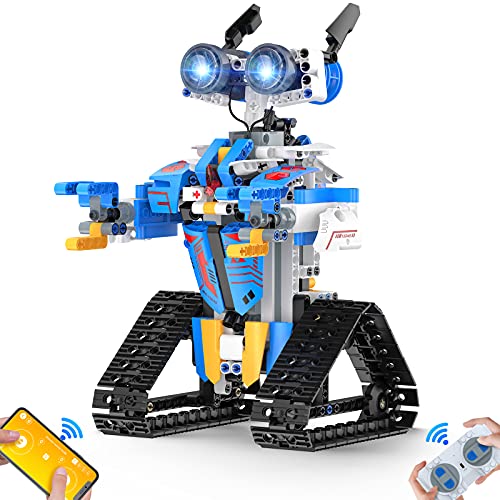
Henoda offers a versatile robot building kit with 468+ pieces and multiple control modes, including a Bluetooth app, 2.4 GHz remote, and several operating modes like path and gravity-sensor programming. This STEM project supports hands-on engineering, spatial reasoning, and motor control as kids design, assemble, and experiment with moving parts, rotating joints, and glowing features. It stands out for its flexible control options and long-range remote capability, which broaden the scope for experimentation and storytelling with robots.
14-in-1 Solar Robot Kit (KIDWILL)

The 14-in-1 Solar Robot Kit from KIDWILL enables building 14 distinct robots powered by solar energy or batteries. This kit emphasizes adaptability, allowing kids to switch from a wagging-tail dog to a walking crab, among other forms. It reinforces concepts of solar power, energy transformation, and mechanical design, while encouraging creative experimentation. The included solar panel demonstrates renewable energy in action, providing an engaging entry point into physics and engineering within a hands-on framework.
Note: Each product in this selection supports multiple learning styles, including tactile manipulation, visual planning, and collaborative project work. Buyers should consider the child’s current interests—mechanical construction, electronics, robotics, or solar science—to tailor a choice that will sustain long-term engagement and growth.
Buying Guide: Key Purchase Considerations
- Age and safety: Check recommended ages and included safety features, especially for projects with small parts or sharp edges.
- Skill progression: Look for kits that offer scalable challenges or multiple modes of play to grow with the child.
- Project complexity: Consider whether the child prefers guided steps or experimenting with open-ended designs.
- Learning focus: Decide between circuits, robotics, solar energy, or mechanical construction to align with interests and future skills.
- Durability and parts availability: Durable parts and replacement parts help sustain long-term use and reduce frustration with breakages.
- Support materials: Rich manuals, color diagrams, and included project ideas enhance comprehension and retention.
- Future expansion: Some kits are compatible with add-ons or other sets, enabling extended learning and more complex builds.
- Outdoor vs. indoor use: Solar-powered and outdoor-friendly kits can encourage active, hands-on exploration outside.