Finding engaging, educational toys for a five-year-old can be challenging. The following five STEM-focused options offer hands-on exploration, critical thinking, and fine motor development for curious minds. Each product blends play with purposeful learning in math, science, and engineering, helping kids build confidence while having fun. Below you’ll find quick insights and a buying guide to help you compare these top choices.
style=”display:none;”>Summary Table of Selected Products
| Product | Brand | Key Benefit | Age Range |
|---|---|---|---|
| Brainometry 3D Puzzle | Learning Resources | Brain-boosting pattern blocks and hands-on problem solving | 5+ |
| 10 in 1 STEM Toys | Tsomtto | Multiple models to build, fostering imagination and engineering basics | 4-8 |
| Pixel Art Challenge | Learning Resources | Spatial reasoning with 40 progressive challenges | 5+ |
| My First Science Kit | Doctor Jupiter | 100+ experiments for screen-free science exploration | 4-8 |
| Lite Brite Classic | Lite Brite | Light-based art and color patterns to boost creativity | 4+ |
Brainometry 3D Puzzle And Pattern Blocks

Learning Resources Brainometry stimulates critical thinking and early math skills through colorful pattern matching activities. The set is designed for ages 5 and up, using tactile blocks with varied shapes and patterns to encourage active exploration and problem solving. By manipulating pieces to fit patterns, children gain an intuitive understanding of spatial relationships while improving fine motor skills. The package includes 10 double-sided activity cards in English that scale in difficulty, letting a child advance as their abilities grow. It’s a compact, versatile option for independent play or guided learning sessions.
10 In 1 STEM Toys For Kids 4-8

Tsomtto’s 10-in-1 set provides 167 pieces and a step-by-step guide to build 10 distinct models, including a tower crane, rocket car, robot, and helicopter. This hands-on kit supports foundational STEM learning by encouraging kids to plan, assemble, and test their designs—one model at a time. It fosters teamwork through collaborative building, enhances fine motor skills, and introduces basic engineering concepts, while remaining suitable for 5- to 7-year-olds and older siblings to enjoy together.
Pixel Art Challenge STEM Activity

Learning Resources Pixel Art Challenge combines art and STEM, offering 40 hands-on challenges that grow increasingly complex. Children work with tactile foam pixel pieces to recreate patterns, which strengthens fine motor skills and spatial reasoning. The activity teaches sequence planning, pattern recognition, and basic coding concepts in a screen-free format, appealing to kids who enjoy creative design and logical thinking alike.
Doctor Jupiter First Science Kit

Doctor Jupiter’s My First Science Kit provides over 100 experiments designed to spark curiosity and foster problem-solving. The kit emphasizes hands-on exploration, encouraging kids to observe, hypothesize, and test ideas in a tactile, engaging way. It’s a well-rounded option for birthdays or holiday gifts, offering a broad introduction to STEM concepts with multiple projects that can be revisited as a child’s skills grow.
Lite Brite Classic
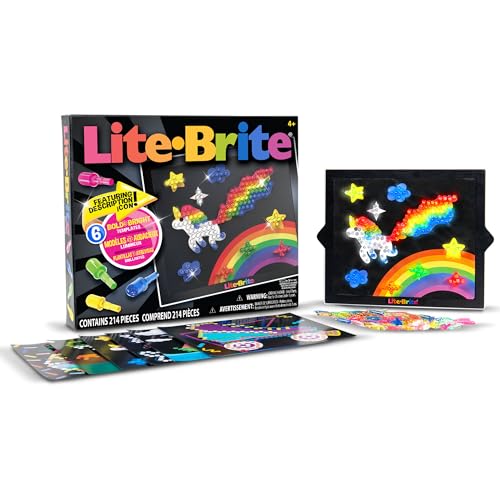
The Lite Brite Classic invites kids to create art with light, combining creativity with visual pattern recognition. With 206 glowing pegs in six colors, six design templates, and four light modes, children can explore color mixing, symmetry, and spatial awareness while crafting luminous pictures. It’s a timeless way to blend STEM thinking with imaginative play, supporting early math or science interests through artistic expression.
Qirptey STEM Building Toys

Qirptey’s 125-piece building set offers color- and shape-varied blocks with an idea booklet to guide construction. It supports 5-year-olds in developing fine motor skills, spatial reasoning, and early engineering concepts. The included instructions encourage cooperative play and problem solving as kids assemble race cars, robots, trucks, and imaginative creations, promoting independent thinking and collaborative design.
Buying Guide: Key Purchase Considerations
When selecting STEM toys for a five-year-old, consider the following perspectives to ensure a well-rounded choice:
- Learning objectives: Look for sets that blend problem solving, spatial reasoning, and basic engineering concepts with hands-on activities.
- Age appropriateness and safety: Ensure pieces are age-appropriate, non-toxic, and sized to prevent choking hazards for younger siblings.
- Complexity and progression: Choose toys with scalable difficulty or multiple activities to keep children engaged as their skills grow.
- Skill balance: Favor a mix of math, science, and engineering-based play to foster a broad STEM foundation.
- Social vs. solitary play: Some kits support teamwork, while others are ideal for solo exploration; select based on your child’s preferences and family dynamics.
- Durability and storage: Durable materials with organized storage help sustain interest and keep play areas tidy.
- Educational value vs. entertainment: Aim for toys that deliver meaningful learning outcomes while remaining fun and engaging.
- Expansion potential: Consider compatibility with additional sets or upgrade options to extend play value over time.
What to compare across options
- Number of included activities or models vs. price point
- Hands-on vs. screen-free play emphasis
- Space requirements and portability
- Target skills: pattern recognition, fine motor control, coding basics, spatial reasoning
- Customer reviews and age suitability based on hands-on learning outcomes
All five selected products emphasize practical STEM learning through tactile engagement, which aligns with early childhood development goals. These options provide varied approaches—from pattern blocks and pixel art to take-apart dinosaurs and light-based art—ensuring options for different interests while maintaining educational value. By combining these selections, caregivers can deliver a well-rounded, engaging STEM experience for five-year-olds.