Looking for engaging, durable STEM building toys that captivate curious 10-year-olds? This guide spotlights high-quality kits that blend science, engineering, and creative problem solving. Each option promotes hands-on experimentation, critical thinking, and lasting engagement beyond screen time. Below you’ll find five standout kits, along with key features, practical tips for choosing, and a buying guide to help caregivers pick the best fit for interests and skill level.
| Product | Highlights | |
|---|---|---|
| COBFDHA STEM Projects | COBFDHA | Solar and battery power; 6 moving robots; age range 8-14 |
| Smartivity Robotic Mechanical Hand | Smartivity | Step-by-step build; 100% screen-free; ages 8-14 |
| CYOEST FM Radio Kit | CYOEST | Build-your-own radio; 88-108 MHz reception; versatile gift |
| Klutz Gear Bots | Klutz | LEGO Technic + papercraft; 64-page instruction book |
| Snap Circuits Flight Deck | Snap Circuits | Airborne and physics-themed projects; engaging exploration |
The following sections provide detailed looks at each option, with imagery and direct links to Amazon product pages for quick reference. Each entry respects educational value, durability, and age appropriateness for a 10-year-old learner.
COBFDHA STEM Projects for Kids Aged 8-12
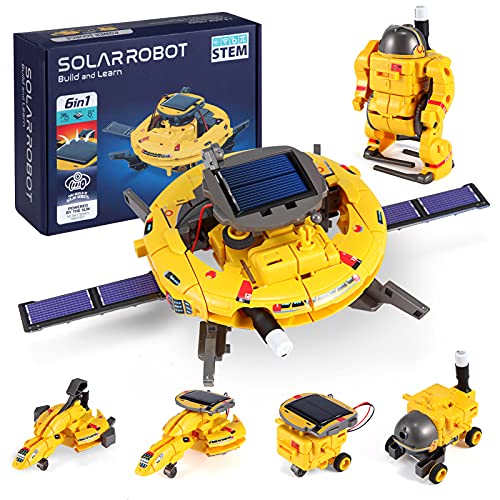
The COBFDHA kit combines curiosity-driven exploration with practical building challenges. Designed for ages 8-12, it includes 6 different building robots that move on land, encouraging hands-on experimentation with mechanical design. A solar power option allows outdoor play and introduces energy conversion concepts, while a battery-driven mode emphasizes indoor activities. This blend ensures kids can observe how sunlight and stored energy power motion, reinforcing cause-and-effect thinking essential to early engineering education.
Key features include diverse robot configurations to spark imagination, emphasis on manual dexterity, and skill development in problem solving. The kit’s approachable complexity makes it suitable for independent play or guided learning sessions, aligning well with elementary and early middle school STEM curricula.
Smartivity Robotic Mechanical Hand STEM Toy

The Smartivity mechanical hand kit offers action-packed, screen-free construction that fosters engineering thinking. Step-by-step instructions guide kids through assembling a functional mechanical hand, supporting fine motor skills and logical reasoning as they plan, adjust, and test their design. The kit is suitable for a broad age span within 8-14 years, ensuring durability through repeated builds and experimentation. Replacement parts are provided, minimizing downtime and encouraging continued exploration.
Educational value centers on mechanics, leverage systems, and cause-and-effect reasoning. The hands-on build process also helps children observe how changes in structure affect performance, reinforcing core STEM concepts while delivering a tangible, long-lasting project that can inspire future engineering interests.
Science Kits: FM Radio Kit for 8-14 Years

This FM radio kit invites young scientists to explore radio technology through hands-on assembly. It emphasizes circuitry fundamentals, signal reception, and antenna design, offering a practical window into how radios transmit and receive information. With a sleek design and a robust build, the kit is suitable as a gift for curious kids or teens who enjoy tinkering. The assembly process promotes patience, reading comprehension, and systematic troubleshooting—critical skills for STEM learners.
Expected outcomes include a better understanding of frequency bands, signal quality, and electronics fundamentals. The project’s educational payoff lies in demystifying radio engineering while providing a memorable, durable device for ongoing experiments and learning.
Klutz Gear Bots: A LEGO and Papercraft Kit

Klutz Gear Bots blends LEGO Technic elements with papercraft to create 8 physics-driven kinetic creatures. This kit encourages spatial reasoning and understanding of axles, cams, and cranks—topics central to mechanical engineering. A 64-page companion book provides STEM-rich context, alongside clear, step-by-step instructions that support independent construction. The mix of LEGO bricks and papercraft reinforces creative problem solving through hands-on experimentation with moving parts and simple machines.
By incorporating real-world engineering concepts into accessible builds, this kit helps learners connect theoretical knowledge with tangible outcomes, making it a strong option for fostering long-term interest in STEM disciplines.
Snap Circuits Flight Deck: Aero-Science Experiments

Snap Circuits Flight Deck focuses on electricity, physics, and aerodynamics with five unique projects. Children build circuits that launch paper airplanes, flying saucers, and levitating balls, while exploring how air pressure and propulsion interact. The kit’s guided projects promote independent learning, confidence, and a growing understanding of circuit design and energy transfer. This option is ideal for kids who enjoy hands-on experimentation and want to see immediate, visual results from their engineering choices.
Additional activities encourage questions such as: How do components influence performance? Why does a circuit’s configuration change a device’s behavior? The included instructions are designed for self-guided exploration and scalable learning.
Buying Guide: Choosing The Right STEM Toy For A 10-Year-Old
- Skill level and challenge: Consider the child’s current abilities and preferred pace. Kits with multiple projects or adjustable difficulty keep engagement high as skills advance.
- Hands-on learning style: Some kids prefer mechanical builds, others enjoy electronics or programming basics. Select a kit that aligns with their curiosity to maximize ongoing interest.
- Durability and quality: Look for sturdy materials, reliable components, and replacement parts or support when needed. Long-term viability improves value and reduces frustration.
- Educational focus: Prioritize kits that clearly teach concepts like energy, circuitry, mechanics, or physics, rather than purely toy-like experiences.
- Gift suitability: If buying as a present, consider design, aesthetics, and the potential for future expansion with related kits or additional parts.
- Safety and age appropriateness: Ensure components are appropriate for the child’s age and maturity level, with clear safety guidelines and parental supervision if required.
- Maintenance and storage: Kits with organized storage and included guides promote responsible use and long-term engagement.
- Future learning pathways: Some kits lay groundwork for higher-level topics such as robotics, electronics, and coding. Choose options that can grow with the child.
Additional Considerations For Parents And Educators
When selecting STEM toys for a 10-year-old, it’s useful to balance curiosity with achievable outcomes. Look for kits that offer visual results, clear instructions, and opportunities to iterate designs. Encouraging kids to explain their projects, troubleshoot issues, and compare different configurations strengthens understanding and communication skills. Consider pairing a kit with supplementary resources—like simple science journals or challenge cards—to extend learning beyond the box. Finally, check for compatibility with group activities to support collaborative problem solving in classroom or homeschool settings.
Across these five options, the emphasis remains on building foundational STEM competencies through tangible, motivating experiences. Each kit supports active learning, critical thinking, and a growing sense of mastery as young builders explore how science and engineering shape the world around them.