For designers, hobbyists, and makers seeking flexible, soft-touch prints, squishy 3D print filaments open new possibilities. This article reviews five popular filaments—focusing on TPU and flexible PLA variants—that deliver elasticity, durability, and smooth finishes on a range of FDM printers. Each option is evaluated for elasticity, printability, surface quality, and stability across common printing environments. Whether you’re crafting phone cases, insoles, flexible bracketing, or playful toys, these filaments offer reliable performance with consistent diameters and thoughtful storage features.
| Product | Brand | Material | Diameter | Approx. Weight | Notable Features |
|---|---|---|---|---|---|
| Geeetech TPU Filament 95A, 1Kg (Blue) | Geeetech | TPU | 1.75 mm | 1 kg | High elasticity, wear resistance, clog-free printing |
| Geeetech TPU Filament 95A, 1Kg (Clear) | Geeetech | TPU | 1.75 mm | 1 kg | Printer-friendly, strong layer adhesion, smooth finish |
| FLASHFORGE PLA Flexible, 1Kg | FLASHFORGE | PLA Flexible | 1.75 mm | 1 kg | Four times stretch, beginner-friendly, vacuum-sealed |
| Creality PLA+ Rainbow, 1kg | Creality | PLA+ | 1.75 mm | 1 kg | Tougher, reduced breakage, smooth extrusion |
| AMOLEN Glow-in-The-Dark PLA, 1kg | AMOLEN | PLA | 1.75 mm | 1 kg | Glow in the dark, UV activation, smooth printing |
Introduction to flexible filaments involves balancing elasticity, printability, and finish. TPU remains a go-to for true rubber-like feel and resilience, while flexible PLA variants offer gentler handling and excellent print reliability on many standard printers. The five products highlighted here illustrate a spectrum—from flexible TPU with high Shore hardness to glow-in-the-dark PLA options—each suited to different project needs and printer configurations. When evaluating a squishy filament, consider nozzle temperature, bed temperature, extrusion speed, and humidity control, as moisture can impact print quality. The following product sections provide concise, sectioned overviews to help you choose quickly based on your project goals.
Geeetech TPU 95A Blue: Flexible, Durable

The Geeetech TPU Filament 95A Blue is designed for flexible applications that require both elasticity and structural integrity. With a Shore hardness of 95A±2, it offers a robust balance between softness and strength, suitable for phone cases, insoles, watch bands, and small robotic components. The filament emphasizes clog-free printing and includes a 24-hour pre-drying process to minimize jams and bubbles at extrusion. It arrives vacuum-sealed and desiccants are recommended for storage to preserve dryness after opening. Printing with TPU often benefits from a slower, steady feed rate and a slightly higher nozzle temperature within the recommended range, which helps reduce stringing and improve layer adhesion. The strong layer bonding helps prevent delamination in flexible parts, ensuring a smooth surface finish and reliable performance under repeated flexing.
Geeetech TPU 95A Clear: Visibility and Versatility

This variant shares the same 95A elasticity and wear resistance as the blue option, with a clear appearance that suits translucent design goals or clear protective housings. It benefits from the same clog-free and bubble-free printing approach, helping users achieve reliable extrusion and smooth surface finishes. The clear aesthetic is advantageous for design projects that reveal internal structures or align with specific color palettes. As with any TPU, proper drying prior to use and careful printer tuning—such as raft selection, retraction settings, and print speed—contribute to the best results, particularly for thin-walled or detailed shapes that demand precise interlayer bonding.
FLASHFORGE PLA Flexible: Four Times Stretch
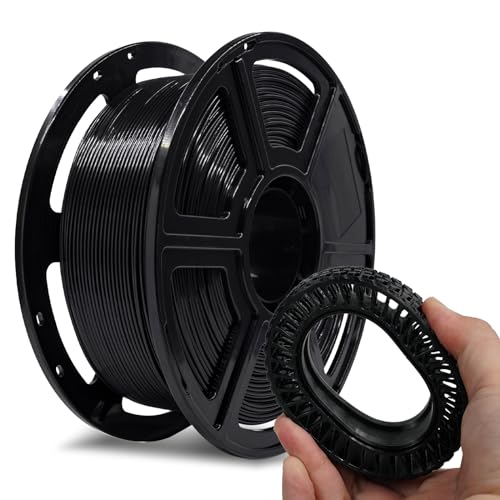
FLASHFORGE PLA Flexible is positioned as a user-friendly alternative to TPU with notable elasticity—claiming up to four times its original length. This makes it appealing for soft accessories, decorative items, and DIY projects where flexibility is beneficial but a TPU-like material may be harder to print. It’s described as beginner-friendly and compatible with both Bowden and direct-drive systems, though some Bowden setups may require adjustments. The filament is dried for 24 hours before packaging and vacuum-sealed to limit moisture-induced bubbles, supporting smoother extrusion and consistent surface appearance. For best results, follow recommended printing temperatures and speeds, and consider slight cooling adjustments for complex geometries to minimize deformation.
Creality PLA+ Rainbow: Tougher, Smoother

Creality’s Rainbow PLA+ stands out for improved toughness over standard PLA, reducing the likelihood of brittle breaks during handling or minor impacts. The filament is designed to minimize clogs and bubbles by leveraging a patent-pending clog-free design, ensuring smoother extrusion and stable prints. With a dimensional accuracy tolerance of ±0.02 mm, it serves well for multi-color or rainbow projects that require reliable feed consistency across the spool. The general printing guidelines align with typical PLA parameters, but users may notice stronger prints when printing at moderate speeds with adequate cooling and a well-calibrated hot end. The rainbow coloration adds a vibrant aesthetic to prototypes and display pieces alike.
AMOLEN Glow PLA: Color that Shines
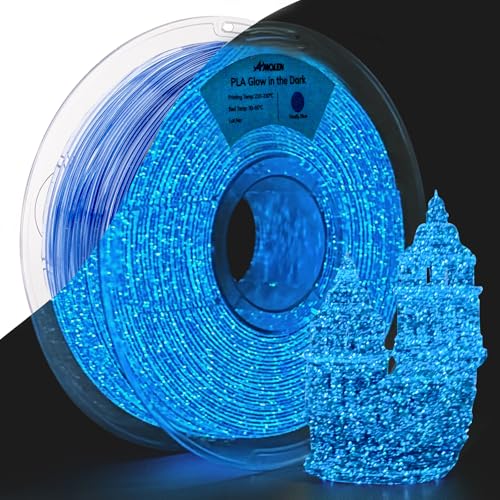
AMOLEN Glow PLA blends standard PLA with photoluminescent properties, producing a glow-in-the-dark effect that activates under UV light. This filament is ideal for night-time displays, decorative pieces, or safety-oriented tools that benefit from enhanced visibility in the dark. Effective glow depends on sufficient UV charging, with longer exposure boosting brightness duration. The filament is designed for smooth, non-tangle printing with a dimensional accuracy of ±0.02 mm, supporting consistent layer alignment and clean surface finishes. Printing conditions typically involve moderate temperatures and standard PLA printing practices, with extras like slower speeds helping manage fine details and avoiding stringing on intricate shapes.
Buying Guide: Key Considerations For Flexible Filaments
When selecting squishy filaments, a balanced view across material properties, printer compatibility, and post-processing is essential. Consider the following perspectives to refine your choice:
- Material type and elasticity: TPU provides genuine rubber-like feel and resilience, while flexible PLA offers easier printing with good flexibility. Choose based on the required touch and load-bearing use.
- Shore hardness: Higher numbers (e.g., 95A) indicate stiffer, more durable flexible parts; lower numbers deliver softer, more compliant textures. For wearable or protective parts, a mid-range value often works well.
- Printability: Look for clog-free or bubble-free formulations, pre-drying guidance, and vacuum-sealed packaging to minimize moisture-related issues. Ensure your printer supports flexible filaments and adjust temperatures and speeds accordingly.
- Dimension accuracy: Filaments with tight tolerances (±0.02–0.03 mm) reduce the risk of under- or over-extrusion and improve interlayer adhesion in complex shapes.
- Storage and humidity management: Moisture absorption degrades flexible filaments. Use sealed containers with desiccants, and consider re-drying if prints wobble or bubble during extrusion.
- Printer compatibility: Bowden versus direct-drive systems influence retraction, stringing, and extrusion control. Direct-drive setups generally handle flexible filaments more reliably with minimal tuning.
- Aesthetic and finish: Translucent or rainbow filaments are ideal for visual projects, while glow-in-the-dark options add novelty. Consider post-processing steps like sanding or painting for the desired final look.
- Application scope: Define whether the goal is functional parts, flexible prototypes, or decorative items. This will guide the priority between elasticity, toughness, and print reliability.
In sum, the five filaments covered here offer a practical cross-section of the squishy filament landscape. Each choice aligns with common consumer printer setups and a spectrum of project requirements—from durable, flexible TPU parts to glow-in-the-dark and multi-color PLA variants. For best outcomes, calibrate your machine to the material and perform small test prints to hone settings before tackling larger, detailed prints.