Finding space-themed toys that engage curious minds while developing STEM skills can be a challenge. The selections below bring together solar power, robotics, LEGO builds, and hands-on experiments that suit active 9-year-olds. Each option encourages exploration of space concepts, critical thinking, and fine motor practice—without relying on screens. The following five products are highlighted for their educational value, durability, and age-appropriate challenge, helping young explorers build rockets of imagination right at home.
| Product | Brand | Why It Stands Out |
|---|---|---|
| COBFDHA STEM Projects | COBFDHA | Six solar-powered or battery-driven robots that boost engineering curiosity. |
| Astronauts Light Up Terrarium Kit | ONXLL | Screenless, interactive space world with LED lights and models. |
| Rocket Launcher for Kids | VICHTOP | Dual flight modes with safe, stable outdoor launches. |
| LEGO Creator 3 in 1 Space Robot | LEGO | Three build options using the same bricks for versatile play. |
| AESGOGO STEM Solar Space Fleet | AESGOGO | 6-in-1 solar-powered space models fueling collaborative projects. |
COBFDHA Solar Robot Space Toys
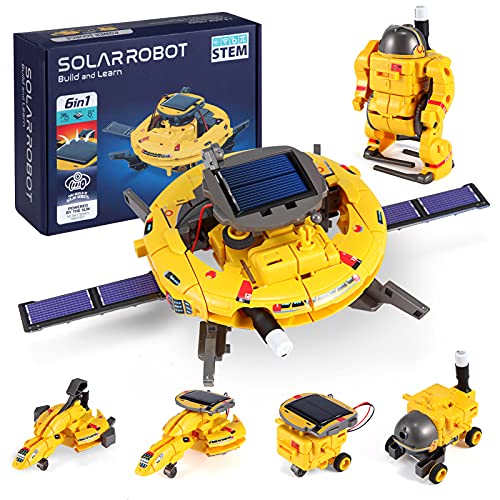
COBFDHA offers a six-robot STEM kit designed for kids aged 8–12. The models can move on land and are powered by solar energy or a battery drive, enabling outdoor experiments in sunlight or indoor play under alternative power. This versatility supports independent exploration while inviting collaborative problem solving as children compare power sources and motor mechanics. The set is especially suitable for expanding a budding space program in a classroom-like home environment, and the 120-piece configuration provides varied building experiences to sustain interest over weeks.
Key features include: six buildable robots, land mobility, solar and battery power options, and activities that cultivate curiosity in science exploration. The kit helps reinforce practical knowledge of energy conversion, engineering design, and iterative thinking as children test different configurations and observe outcomes. The design aims to enhance manual dexterity and logical reasoning through hands-on building tasks that align with space-themed goals.
Astronauts Light Up Terrarium Kit

ONXLL’s terrarium kit blends art and space science into a screen-free activity. It includes LED lighting, astronaut models, planet miniatures, paint brushes, decorative moss, and sand—all designed to create a tiny space world. This kit supports imaginative storytelling and spatial awareness as kids arrange planets and build a miniature space habitat. The LED component adds a dynamic, engaging element that can be used to teach time-based sequencing and cause–effect relationships in a tactile format.
Designed with safe, shatterproof materials, the kit emphasizes quality and kid-friendly crafting. It’s a good option for parents seeking collaborative play time that fosters attention to detail, pattern recognition, and fine motor skills through painting, arranging, and decorating. While it focuses on art, it remains rooted in space education through planetary models and astronaut figures.
Rocket Launcher For Kids

This VICHTOP rocket launcher is designed to spark outdoor exploration. It features two flight modes, enabling rockets to reach up to 100 or 200 feet depending on button presses. The design prioritizes safety with a stable, circular propeller system and a lightweight foam body. The automatic parachute deployment ensures a gentler landing and repeated play, making it ideal for open-space environments such as backyards and parks. It supports early aerodynamics learning, including thrust, projectile trajectory, and wind resistance concepts.
Suitable for ages 6–13, this toy provides a hands-on way to compare different launch strategies and observe the effect of air resistance on ascent and descent. It also encourages physical activity, parent–child interaction, and teamwork during setup and flight planning. The emphasis remains educational, with a focus on safe, controlled experimentation in a space-themed context.
LEGO Creator 3 in 1 Space Robot

LEGO Creator 3 in 1 Space Robot provides a versatile build experience with three distinct models using the same bricks: a space robot, a space dog, and a space rocket. This flexibility supports divergent play and creative storytelling, enabling kids to reimagine adventures as their understanding of space grows. The robot figure includes movable arms and fingers, while the dog model offers a rotating head and posable legs, encouraging expressive pose creation for space missions and deployment scenarios.
The design aligns with cognitive development by challenging children to plan, rebuild, and adapt their models. It also introduces spatial reasoning through multi-model constraints and encourages sequencing—the kind of critical thinking valued in STEM fields. As a storytelling tool, it helps children articulate space narratives with tangible constructs and visible cause–effect demonstrations.
LEGO Creator 3 in 1 Space Astronaut Toy

This LEGO Creator set presents three space-themed builds in one box: an astronaut, a space dog, and a viper jet. It emphasizes model versatility and replayability, offering ongoing opportunities to refine building techniques as the child’s space fantasies evolve. The astronaut figure is designed with movable joints, enabling dynamic posing for imagined missions. The shared brick system fosters creative engineering, spatial awareness, and fine motor control while reinforcing a love of space exploration through hands-on construction.
The set encourages experimentation with design and function, providing a practical introduction to the concept of modular building. It supports independent play and cooperative problem solving when building with siblings or friends. The enduring appeal is the ability to transform a single collection of pieces into multiple, distinctly themed play scenarios centered on space discovery.
AESGOGO Solar Space Fleet
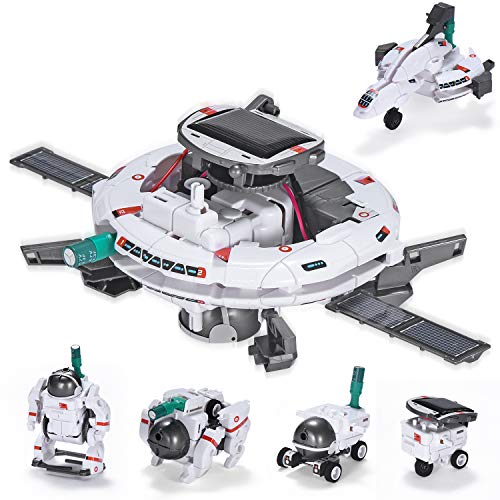
AESGOGO’s 6-in-1 solar space fleet offers a compact, collaborative STEM project for 8–12-year-olds. The set includes a space station, robot dog, astronaut, explorer, exploration vehicle, and aircraft. Children can start with a favorite model and expand to a full fleet, exploring energy sources, propulsion, and mechanics as they alternate between solar power and rechargeable batteries. The activity is well-suited for group play, with opportunities to divide tasks and compare build strategies, thereby reinforcing communication, teamwork, and scientific reasoning.
Designed to support outdoor and classroom-like settings, the Solar Space Fleet emphasizes renewable energy concepts and engineering iteration. It also encourages independent experimentation and guided parental support to maximize learning outcomes. The no-screen design aligns with sensory exploration and hands-on problem solving, helping kids develop confidence as they assemble and test different configurations.
Buying Guide: Space Toy Purchase Considerations
- Age and skill alignment: Choose kits that match a child’s physical dexterity and cognitive readiness. If a set feels too simple or overly complex, consider a related option with adjustable difficulty.
- Power and materials: Solar-powered options teach energy conversion, while battery-powered variants offer indoor viability. Look for durable, kid-safe materials and clear safety guidelines, especially for outdoor equipment.
- Educational focus: Some toys emphasize building mechanics and STEM skills; others prioritize art and creativity or storytelling. A balanced mix helps sustain long-term interest and broadens learning.
- Modularity and replay value: Products offering multiple builds or configurations enhance replayability and teach adaptability—key in space-age play.
- Parental involvement: Screen-free options promote family interaction and guided learning. Consider kits that allow shared tasks without sacrificing independent exploration.
- Durability and maintenance: Check for parts that are easy to assemble, replace, and store. Modular pieces should connect securely to withstand repeated play.
- Future-proofing: Some sets scale into bigger ecosystems or compatible expansions. If a child shows sustained interest in space, opt for kits that integrate with future builds.
In summary, the curated selections above offer a mix of solar robotics, craft-based space worlds, outdoor launch experiences, and versatile LEGO builds. Each option supports hands-on learning and imaginative space exploration, helping 9-year-olds connect science concepts with real-world applications. Parents can mix and match to build a diverse space-themed collection that grows with their child’s curiosity and budding engineering talents.