Discover top solar system toys that spark curiosity and support hands-on learning for 10-year-olds. From interactive models to glow-in-the-dark planetary kits, these selections blend science, engineering, and creativity. Each product below offers a unique way to explore the solar system, boost problem-solving skills, and decorate a space- or science-themed room.
| Product | Brand | Key Features |
|---|---|---|
| LEGO Technic Planet Earth and Moon in Orbit | LEGO | Crank-powered Earth-Moon-Sun orbit; printed months and moon phases; space-room décor |
| Science Can Solar System for Kids (Projector) | Science Can | 8 planets projection; bilingual options; 24 slides; interactive learning |
| National Geographic Glow-in-The-Dark Solar System Model | Blue Marble | Glow-in-the-dark 3D model; movable arms; all-in-one kit with paints and poster |
| MOCBURIKU Solar System Building Set | MOCBURIKU | Rotatable 8-planet model; L-motor; battery-powered motion; STEM focus |
| Nine Planets DIY Solar System Model | Little Jupiter | Wood model with puzzle; fact cards; hands-on building and painting |
The following sections highlight five top picks, each with a direct link to Amazon for quick comparison and purchase. All options are suitable for 10-year-olds and emphasize hands-on exploration of our solar system.
LEGO Technic Planet Earth and Moon in Orbit
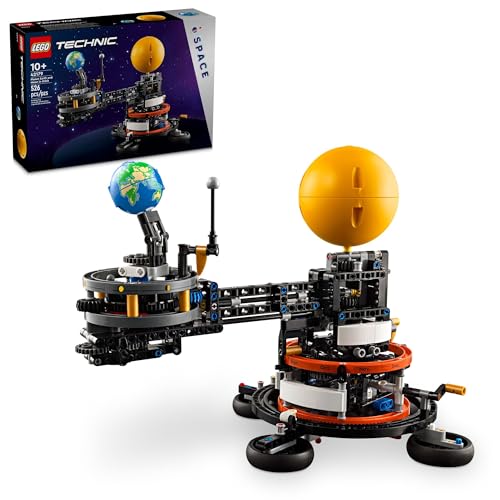
Interactive model that invites kids to build a representation of Earth, Sun, and Moon in orbit. The crank mechanism demonstrates orbital motion, while printed details show months and moon phases to illustrate how Earth’s orbit influences seasons. Suitable for imaginative, independent play and as space-themed room décor. The LEGO Technic design encourages engineering curiosity and fine motor skills as children assemble complex components and observe orbital dynamics.
Science Can Solar System for Kids (Projector)

This talking solar system model projects the eight planets and includes educational content in English and Spanish. It features 24 slides and an immersive planetarium projector with disks that display full-color space imagery on walls or ceilings. The interactive quiz mode and multilingual options help expand astronomy knowledge in a classroom or home setting, making it a strong STEM learning toy for curious minds.
National Geographic Glow-in-The-Dark Solar System

Glow-in-the-dark 3D solar system that kids can customize and display. The kit includes six paint colors, glow-in-the-dark accents, a brush, decals, and a poster with solar system facts. Movable arms let children adjust planetary positions, turning a static display into an interactive diorama. It’s a visually striking option for bedrooms and study spaces that emphasizes accurate planetary features while encouraging creativity in painting and arrangement.
Science Can Solar System for Kids (Interactive Talking Projector)

This interactive solar system model provides 48 astronomical facts via knowledge cards and bilingual support (English and French). It includes a planetarium projector with disks for 24 full-color images, transforming any room into a space observatory. The quiz-driven approach encourages critical thinking as children compare planetary features and orbital dynamics while exploring space-themed questions.
MOCBURIKU Solar System Building Set

STEM-focused construction kit that combines astronomy education with mechanical design. Features a rotating Solar System model powered by an L-motor and battery box (requires six AAA batteries). The kit imitates planetary orbits and revolutions, with color-coded components mapped to real planetary features. This hands-on set supports engineering thinking and understanding of orbital mechanics through tangible assembly and motion.
Nine Planets DIY Solar System Model

Wooden solar system model with a puzzle approach and fact cards. Designed for ages 8+, the kit provides a complete, paintable representation of the nine major planets and the sun. This option blends hands-on building with educational content, making it a suitable project for science fairs or classroom displays. It encourages patience, planning, and a tactile understanding of planetary scales and relationships.
Buying Guide: Key Purchase Considerations
- Learning objectives: Consider whether you want a model that demonstrates orbital mechanics, strengthens STEM skills, or emphasizes decorative display while sparking curiosity about space.
- Age and complexity: Some kits are beginner-friendly and rely on painting or simple assembly, while others include motors, projectors, or intricate mechanisms that suit pre-teens ready for more advanced building.
- Interactivity: Motion, rotation, and interactive quizzes can boost engagement. Choose options with actionable features (cranks, motors, or disks) for hands-on exploration.
- Display value: If space decoration matters, glow-in-the-dark materials or visually striking models add room appeal alongside educational content.
- Multilingual or broader educational content: Bilingual instructions or extensive fact cards can enhance language learning and science literacy.
- Durability and materials: Cardboard or paper components are common in models, while LEGO and wooden kits tend to be more durable for long-term play and display.
- Science alignment: For classroom or homeschool settings, consider whether the kit aligns with astronomy topics currently studied (or supports project-based learning).
- Budget and maintenance: Some kits require batteries or projectors with disks; factor ongoing costs and replacement parts when evaluating value.
Across these options, buyers can choose based on whether the priority is hands-on mechanical learning, visual astronomy displays, or interactive storytelling about the solar system. Each product listed here supports independent learning, classroom demonstrations, or collaborative space-themed activities for 10-year-olds.