Finding toys that promote social and emotional development helps toddlers label feelings, regulate behavior, and interact more confidently with peers. The following hand-picked items from trusted brands support emotion recognition, communication, and cooperative play. Each is designed to be engaging in homes, classrooms, or therapy spaces, and encourages mindful, age-appropriate exploration of social skills.
style=”display:none;”>This summary table highlights five carefully chosen products for quick comparison and quick shopping reference.
| Product | Brand | Key Benefit |
|---|---|---|
| See My Feelings Mirror | hand2mind | Emotion labeling with real-image prompts |
| Sensory Feelings Toys | LESONG | Emotion recognition through textures and faces |
| Big Feelings Nesting Fruit Friends | Learning Resources | Playful emotion concepts with fine motor play |
| Spinning Stacking Toys | JUXUE | Cause-and-effect, color recognition, coordination |
| Rainbow Emotion Fidget Poppers | Learning Resources | SEL skills with hands-on fidget play |
See My Feelings Mirror by hand2mind

The See My Feelings Mirror helps toddlers label and identify six core emotions using easy-to-identify emoji slides that snap in place. This visual tool supports early social awareness by connecting facial expressions with feeling words, aiding emotional regulation in a friendly, approachable format.
Social skills activities are woven into the design as children practice recognizing emotions in themselves and others. The product also features diverse photos of real children showing real emotions, which encourages inclusive understanding during group play or classroom activities. This combination of reflection and interaction creates a calm, structured space for SEL practice.
LESONG Sensory Feelings Toys

LESONG’s sensory feel-things set uses six expressive faces to help kids name, discuss, and feel emotions. The set is designed for social-emotional learning in classrooms and homes, with textures and soft materials that support calm-down strategies and focused conversation about emotions and responses.
These tactile items are described as calming and suitable for diverse needs, including supportive use in small-group discussions or one-on-one guidance. The variety in expression helps children practice empathy, turn-taking, and help-seeking during play and daily routines.
Big Feelings Nesting Fruit Friends

These nesting fruit pieces introduce 10 emotions via double-sided faces, blending emotional literacy with fine motor play. The nested design makes it easy for toddlers to explore sequencing, hand-eye coordination, and in-hand manipulation while discussing how different feelings show up in everyday situations.
The kit supports a multi-sensory approach: bright colors and varied shapes invite exploration, while the open-ended play encourages conversation about how to respond to emotions in social settings, both at home and in class rotations.
JUXUE Spinning Stacking Toys
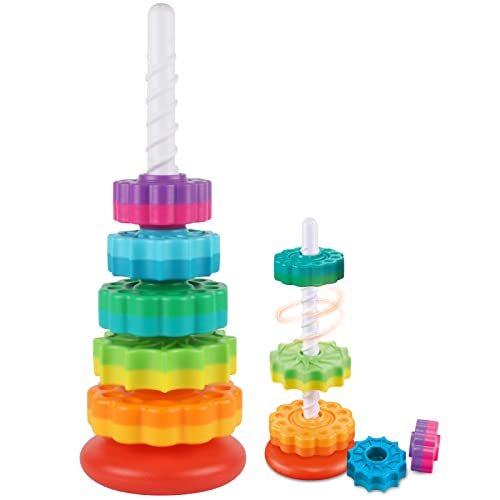
This rainbow ring stacker combines stacking with spinning action, offering hands-on opportunities for cause-and-effect learning. Toddlers can arrange by size or color, then spin the discs to watch them cascade. The toy fosters fine motor skills, hand strength, and early problem-solving as children explore different assembly options.
Beyond motor development, the toy encourages color recognition and tactile exploration. The dynamic motion also invites social interaction when children compare configurations or take turns during shared play sessions.
Rainbow Emotion Fidget Poppers

These five-color, five-emotion silicone fidget poppers offer a tangible way to practice emotion identification and regulation. Soft, squeezable surfaces are engaging for toddlers and provide a quiet, focused outlet for sensory processing and self-regulation tasks within a classroom or therapy setting.
As a ready-to-use tool for home or classroom use, the Rainbow Emotion Fidget Poppers support quick, repeatable SEL activities. They also serve as excellent add-ons for calm-down corners, helping children transition between activities with reduced stress and increased focus.
Buying Guide: Key Purchase Considerations
- Age appropriateness: Choose items labeled for toddlers and confirm they meet safety standards, including small parts and choking hazards.
- Emotion scope: Look for tools that cover a broad set of core emotions, plus prompts for discussing causes, reactions, and coping strategies.
- Multi-sensory design: Toys that incorporate visual cues, textures, sounds, and movement can boost engagement and retention of social-emotional concepts.
- Durability and cleaning: Select durable, easy-to-clean products suitable for frequent toddler use in homes or classrooms.
- Classroom or therapy alignment: Consider whether a toy supports small-group activities, one-on-one guidance, or both, and whether it fits your space constraints.
- Storage and portability: Puzzles or nesting items that disassemble easily and store compactly are ideal for busy environments.
- Cost versus longevity: Invest in versatile tools that offer ongoing SEL value through repeated play and guided lessons.
- Safety features: Check for non-toxic materials, smooth edges, and secure hardware to minimize injury risk during active play.
- Brand reliability: Reputable providers often ensure consistent quality, safety testing, and accessible support for educators and caregivers.
- Supplementary resources: Some sets include teaching tips, books, or digital content that can extend learning beyond playtime.