Discover top smart balance boards that blend balance training with interactive feedback. This guide highlights five leading options, covering beginner-friendly models to advanced boards with apps, games, and dynamic stability challenges. Learn what to look for, how they perform in real-world workouts, and which board best fits your goals—core strength, balance, rehabilitation, or family fitness.
| Product | Brand | Key Feature |
|---|---|---|
| GoBalance Play | GoCube | Bluetooth motion sensing with 12 interactive games |
| GoBalance Play & Sport | GoCube | Interactive games, enhanced sports features, full-body workouts |
| Amazon Basics Wood Wobble Balance Trainer Board | Amazon Basics | Solid wood top, non-slip surface, supports up to 265 lbs |
| MERACH Balance Board | MERACH | Full-body cardio with silent operation and LCD monitor |
| Sportneer Balance Board | Sportneer | 7 modes, 2-in-1 with roller and ball for versatility |
GoBalance Play: Fun Bluetooth Balance Board

The GoBalance Play combines exercise with entertainment, using Bluetooth motion sensors and a dedicated app for real-time feedback. Its 12 interactive games promote balance, coordination, and core strength while turning family workouts into engaging activities. With lightweight design under 2 lbs, the board is portable and easy to set up in living rooms, home gyms, or even small spaces. While the board itself cannot connect directly to a TV, casting or screen mirroring from a Bluetooth-enabled device expands the viewing options for larger displays. This model emphasizes accessibility, making it a practical entry point for users seeking a playful approach to balance training.
Key features drawn from the listing include active family-friendly games, plug-n-play Bluetooth connectivity, and a portable form factor. The intuitive app integration provides progress tracking and motivation, helping beginners establish a steady routine. A compact design makes it suitable for users of various ages, though higher-intensity workouts may benefit from more advanced boards as skills grow. Overall, GoBalance Play is positioned as an approachable, entertaining balance trainer that can support consistent practice at home.
GoBalance Play & Sport: Premium Interactive Balance Board

The GoBalance Play & Sport extends the GoBalance concept with enhanced features for families and fitness enthusiasts. It builds on the same Bluetooth connectivity, adding more dynamic interactions and sport-focused sequences. Real-time analytics help users monitor progress, while the 12 interactive games and training routines encourage comprehensive workouts that engage multiple muscle groups. This board is ideal for users who want a playful yet effective tool for balance training, core work, and light cardio, all integrated into one compact platform. It also emphasizes portability and ease of setup, ensuring quick transitions between activities or rooms.
From the features provided, this version emphasizes sports-oriented routines and broader appeal for households. It suits users who want more varied workout options, including core-strengthening sequences, balance challenges, and activity tracking. With its continued emphasis on app-driven feedback, GoBalance Play & Sport supports progressive training that can scale with ability levels while maintaining an enjoyable user experience.
Amazon Basics Wood Wobble Balance Trainer Board
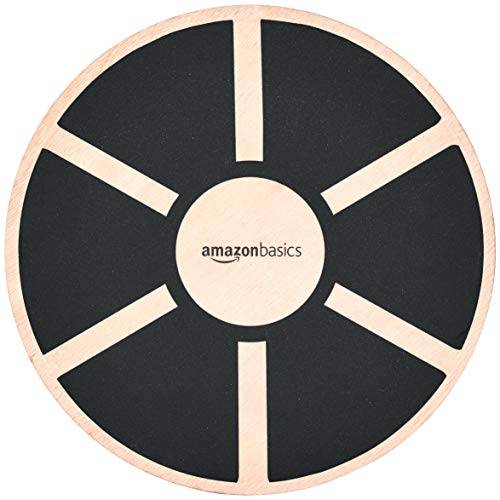
The Amazon Basics Wood Wobble Balance Trainer offers a solid, traditional balance training option with a wooden top and a non-slip surface. Its classic design supports a wide range of exercises, including push-ups, planks, standing balance poses, and targeted movements to strengthen muscles, ligaments, tendons, and joints. The board is engineered to handle up to 265 pounds, providing a versatile platform for beginners and intermediate users alike. Its simple construction appeals to users who prefer a straightforward, durable balance trainer without electronics or app dependencies.
Key considerations with this model include stability, surface grip, and durable construction. The wooden top provides a natural feel and reliable footing, which can be advantageous for certain balance drills and rehab-focused routines. While it lacks smart features, it remains a dependable core-strength and balance tool suitable for family use or keeping a steady home workout routine. This makes it a strong baseline option in a market increasingly dominated by tech-enabled devices.
MERACH Balance Board: Silent Full-Body Training

The MERACH Balance Board targets full-body workouts with a focus on cardio and core engagement. The device operates with a balance slide that mimics a gliding motion, delivering a low-impact cardio experience that can burn calories efficiently. The LCD monitor provides immediate feedback on performance, and the design emphasizes quiet operation with a sub-25 dB noise level, making it suitable for apartment living or late-evening sessions. With a robust 300-pound capacity and a sturdy steel frame, this board offers reliable stability for a wide range of users working on leg, core, and hip strength.
Usage considerations include the balance dynamics, motion range, and the music of steps that the user experiences. For individuals seeking low-impact cardio that still delivers a solid workout, MERACH provides an option that blends the feel of cross-country skiing with the convenience of home fitness. The combination of quiet operation and durable construction makes it a viable choice for people prioritizing consistent daily activity without disruption to others in the home.
Sportneer Balance Board: 7 Modes With Power Add-ons

The Sportneer Balance Board stands out with a 2-in-1 setup that includes a balance board, a roller, and a ball. It offers seven challenging modes and four independent magnetic removable stoppers to customize resistance and balance difficulties. The board is crafted from high-quality birch, supporting up to 450 pounds, with durable rollers designed to prevent floor scratches. This model aims at a broad audience—from casual exercisers to athletes seeking versatility in balance training, stability work, and rehab-friendly movements. The added accessories enhance the range of exercises and stability challenges across different training goals.
For shoppers prioritizing versatility, the Sportneer system provides options for progressive difficulty and multi-surface workouts. The robust construction and accessory set enable a broader spectrum of activities, including balance drills, proprioception work, and low-impact cardio. While it may be heavier to move than some compact boards, its capabilities make it a compelling choice for households seeking a single board with multiple workout modalities.
Buying Guide: Key Purchase Considerations
- Skill level and goals: Beginners may prefer plug-and-play boards with interactive feedback, while advanced users might seek 360° rotation, heavier weight capacity, or app-driven analytics for progress tracking.
- Surface and stability: Wooden tops offer a traditional feel and solid grip, while composite tops can vary in grip texture. A non-slip base and wide stance area improve safety during dynamic moves.
- Weight capacity and portability: Consider user weight and how easily the board can be moved around the home. Lighter boards are easier to reposition but may offer less stability in vigorous workouts.
- Smart features and apps: Bluetooth connectivity, real-time feedback, and integrated training programs can enhance motivation and adherence but may require a compatible device and app updates.
- Versatility: If you want to cover cardio, balance, core strengthening, and rehab, a model with additional accessories (roller, ball) or multiple modes provides broader utility.
- Durability and warranty: Look for solid construction materials, tested weight limits, and warranty coverage to ensure long-term value, especially for family use or frequent workouts.
Additional Perspectives And Considerations
When assessing smart balance boards, some users prioritize the entertainment value of interactive games, while others focus on the precise analytics of performance. Boards with screen mirroring or app-based coaching may inspire consistent routines, but require ongoing device compatibility. For rehabilitation or gentle mobility, lower-impact boards with stable bases and quiet operation can be preferable to high-intensity models. Finally, consider whether you want a single, all-purpose board or a package that includes accessories to diversify training, as the best option often balances durability, usability, and the specific training goals of your household.