For beginners, a compact, budget-friendly instrument can make practice easier and more enjoyable. This guide highlights small pianos and beginner keyboards that balance realistic playing experience with simple setup, built-in learning aids, and engaging features. Below, you’ll find five carefully chosen options with concise overviews to help you compare sound, playability, and instructional value. A quick summary table follows the intro for fast scanning.
Summary of Selected Products
- Faber Piano Adventures: Lesson Book Primer Level – A classic method book paired with standard notation and pedals.
- First 50 Popular Songs You Should Play on Piano – An approachable beginner songbook spanning pop, jazz, and Broadway hits.
- Best Choice Products 61-Key Complete Electronic Keyboard Set – A feature-rich, bundled option with learning modes and lighted keys.
- Best Choice Products 61-Key Portable Electronic Keyboard – A compact starter set emphasizing guided learning and sound customization.
- BEATBIT Piano Notes Guide – A silicone, no-sticker solution for note learning on full-size 88-key keyboards.
Faber Piano Adventures: Lesson Book Primer Level

The Faber Piano Adventures primer-level lesson book introduces foundational concepts with engaging melodies and clear notation. Designed for both kids and adults, it emphasizes essential piano skills such as note recognition, rhythm, and hand coordination. The included songs build musical literacy through a structured progression that aligns with early hands-on practice and pedaling fundamentals. This beginner-friendly resource pairs well with short daily practice, reinforcing proper fingering and musical phrasing as players gain confidence on the keyboard.
First 50 Popular Songs You Should Play on Piano

This beginner songbook offers a curated set of 50 popular tunes spanning classic pop, jazz, and Broadway hits. With 210 pages of approachable arrangements, it provides an easy path to building repertoire and confidence. The selections are chosen to maximize recognizable melodies while introducing basic musical concepts such as dynamics, phrasing, and accompaniment patterns. For learners who thrive on targets and milestones, completing these songs can provide measurable progress and motivation to continue practicing.
Best Choice Products 61-Key Complete Electronic Keyboard Set
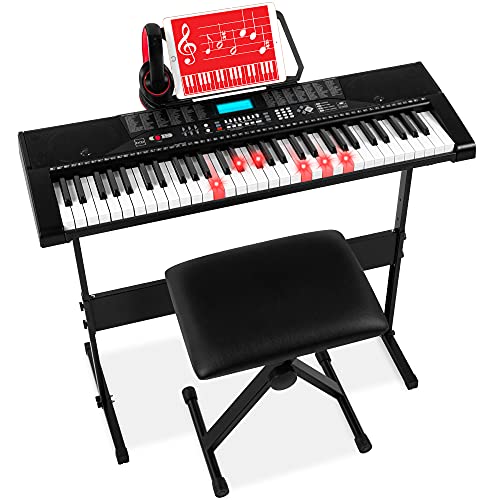
This comprehensive beginner kit covers essential learning aids and practice features in a compact 61-key format. It includes an adjustable stand, music stand, padded stool, and teaching modes, plus an LCD display and light-up keys to help beginners read notes as they play. With 255 timbres and 255 rhythms, learners can explore different sounds and accompaniments, supporting creative exploration while reinforcing rhythm and pitch. The inclusion of a recorder with playback further aids self-assessment and guided practice sessions.
Best Choice Products 61-Key Electronic Keyboard Portable Set
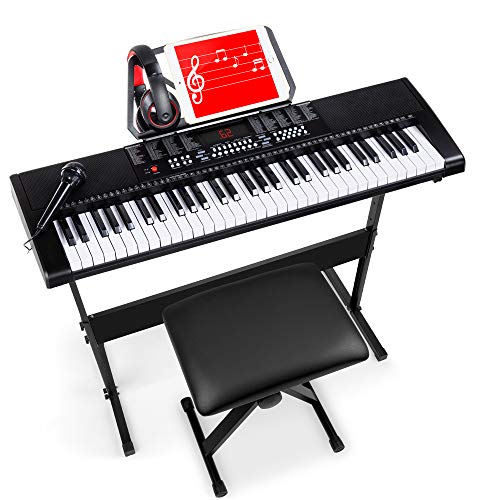
This portable starter kit emphasizes guided learning with three teaching modes designed to help novices build skills progressively. The 61-key instrument offers 255 timbres and rhythms, enabling users to experiment with sounds and accompaniments as they develop technique. A built-in LED screen and sound customization options support independent practice, while the bundled accessories—stand, bench, and headphones—facilitate a quiet, focused practice environment. The kit’s practicality makes it suitable for bedrooms, classrooms, or small living spaces.
BEATBIT Piano Notes Guide For Beginner

The BEATBIT note guide uses silicone note strips that attach without sticking to keys, offering a clean alternative to traditional stickers. The double-staff layout (treble and bass) helps beginners locate notes quickly and understand precise pitch relationships. This product is designed to be reusable across different keyboards and suits learners who prefer a sticker-free approach. The inclusion of a box makes it easy to store and transport practice material, ideal for learners who practice on multiple instruments or at school and home.
Buying Guide: Key Purchase Considerations
- Learning goals and age: Younger players often benefit from lighted keys, engaging visual cues, and bundled stands, while older beginners may prioritize a compact footprint and good sound quality.
- Keyboard size and portability: 61-key models fit tight spaces and are travel-friendly, whereas 88-key options better simulate a full piano experience but require more space.
- Learning aids and pedagogy: Look for built-in teaching modes, metronome, and rhythm guides, or accompany learning books that align with your method of instruction.
- Sound and touch: Acoustical realism is helpful for developing proper technique. If budget is a constraint, prioritize adjustable touch response and a reasonable piano tone for the size of the keyboard.
- Accessories and setup: Bundled stands, benches, headphones, and lesson books can reduce friction and create a ready-to-practice environment in one purchase.
- Note learning approach: Sticker-based or silicone note guides can speed initial note identification, but option sets like beat-friendly sheets or method books can reinforce reading skills over time.
- Durability and maintenance: Consider materials, build quality, and warranty when selecting a starter instrument that will endure regular practice with a young or enthusiastic beginner.
- Price-to-value balance: For beginners, prioritize functional features that directly support learning (pedaling, tempo control, instructional content) rather than high-end sound libraries, to maximize long-term value.
Additional Perspectives
- Educational approach: Some learners benefit from structured method books with progression steps, while others thrive with a curated set of familiar songs to build confidence quickly.
- Practice routines: If space is limited, a compact setup with a consistent schedule can yield steady improvement, especially when paired with short, daily sessions.
- Portability vs. fullness: Decide whether you need a portable option for practice on the go or a more substantial keyboard that mirrors a traditional piano’s feel and range.
- Future-proofing: Choose a model that can grow with the student, either by extending range (88 keys) or by enabling more advanced features (external pedals, USB MIDI, or connectivity).
These five products address a spectrum of beginner needs—from compact practice sets with learning modes to broader songbooks and sticker-free note guides. Each option provides practical ways to start learning piano or keyboards in a small space, with instructional resources to support steady progress.