For model-making, tiny electric motors unlock dynamic motion in airplanes, boats, robots, and science fascinators. The following selections cover beginner kits, advanced micro motors, and multi-motor bundles that suit school projects, hobby builds, and quick experiments. Each entry includes core specs, included parts, and practical notes to help you pick a motor that matches your voltage, RPM, and mounting needs. Use this guide to compare compact options and assemble reliable, low-cost setups for hands-on learning and fun.
A quick overview of the chosen products:
| Product | Brand | Voltage Range | Approx. RPM | Includes |
|---|---|---|---|---|
| EUDAX 6 Set DC Motors Kit (3V-12V) | EUDAX | 3V-12V | 9,000–25,000 | 2 AA holder, 9V clip, shaft propeller |
| EUDAX 6 Set Rectangular Mini Electric (3V) | EUDAX | 3V | ~24,000 | 84 gears, wires, boat rocker switch |
| 6Pcs Micro DC Motors (3V-12V) | Mrosnail | 3V-12V | ~13,500 | 2.8mm insulated connectors, 6″ wires |
| EUDAX 6 Set Mini Generator Motors (3V-12V) | EUDAX | 3V-12V | up to 6,500 | propellers, LEDs, quick connectors |
| bociloy 8Pcs Mini DC Motor (5V) | bociloy | 5V | 6,000 | 8 motors, wiring |
EUDAX 6 Set DC Motors Kit

The EUDAX DC Motors Kit consolidates six small DC motors designed for educational and hobby use. Voltage range spans 3V to 12V, with no-load speeds between 9,000 and 25,000 RPM depending on voltage. Each kit includes a 2 AA battery holder and a 9V clip, plus a shaft propeller with a 2 mm bore. The motors feature a compact 27 mm body diameter and 10 x 2 mm shaft, making them compatible with many micro gearboxes, props, and basic DIY projects. Follow supplied diagrams to avoid short circuits and overheating. Color accents vary randomly, which helps with quick visual orientation in multi-motor builds.
EUDAX 6 Set Rectangular Mini Electric 1.5-3V

These rectangular motors operate at 3 V with a rated speed near 24,000 RPM. They come with 84 plastic gears and additional electronic wiring, providing an accessible entry point for gear-driven experiments and small robotic projects. With a 27 mm motor body and a 15 mm center-to-center mounting distance, they fit compact spaces in DIY boats, tiny robots, and model devices. The kit emphasizes safe operation: follow the included circuit diagrams to minimize the risk of overheating and melting the battery holder box, and ensure secure electrical connections to prevent arcing.
6Pcs 280 Micro DC Motors

This bundle provides six micro DC motors with a 3 V to 12 V operating range and up to 13,500 RPM at peak performance. Each unit includes 2.8 mm insulated connectors and six inches of wire, simplifying integration into RC boats, DIY airplanes, and small model projects. The blend of voltage flexibility and moderate speed makes these motors versatile for educational kits, teaching experiments, and hands-on engineering exploration. Users should plan for heat management in longer runs and verify compatibility with any attached gearboxes or propellers.
EUDAX 6 Set Mini Generator Motors

This beginner-friendly kit includes six mini generator motors and mounting brackets suitable for wind, solar, or hand-cranked demonstrations. With adjustable voltages and speeds, the set helps illustrate energy conversion concepts in physics classrooms or maker spaces. Each motor accommodates 3V to 12V operation, and the kit ships with LED indicators to visualize generated power at different speeds. This makes it a strong choice for hands-on science projects and exploratory energy experiments.
bociloy 8Pcs Mini DC Motor
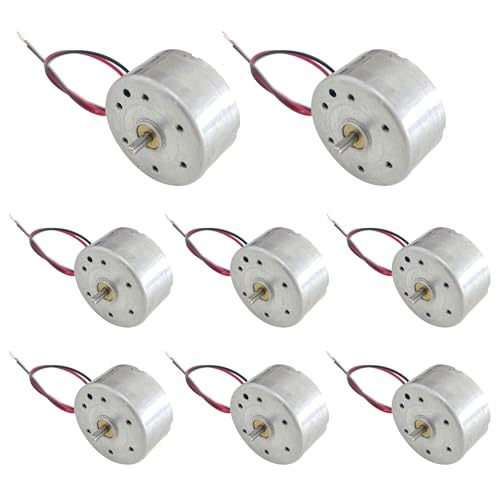
The bociloy set provides eight 5 V, 6,000 RPM motors in a compact form factor. Each motor measures roughly 24.4 x 12.4 mm, with an 8 x 2 mm shaft. The included wiring makes quick prototyping for model crafts and educational demos straightforward. This bundle is well-suited for small propeller-driven projects, servo-like substitutions, or scavenger builds in a classroom or workshop setting. You’ll want to plan appropriate voltage regulation when integrating these motors into more complex systems to avoid overdriving them.
Buying Guide: Key Considerations For Small Model Motors
- Voltage Compatibility: Most kits cover 3V to 12V. Match your power source to the motor’s rated range to prevent overheating and ensure adequate torque.
- RPM And Torque: Higher RPM accelerates motion, but torque matters for propellers, gears, and heavier loads. Consider whether your project needs speed, torque, or a balance of both.
- Size And Mounting: Check motor body diameter, shaft size, and mounting hole spacing to fit your chassis or Gearbox. Compact motors often require custom mounting or adapters.
- Wiring And Connectors: Flexible cables and quick-connects simplify prototyping. Plan wire gauges and insulation for reliability and safety in longer runs.
- Included Accessories: Battery holders, propellers, gears, and brackets add value. Kits with gears and mounting hardware save time during assembly.
- Durability And Heat: Repeated operation can heat motors. Use short test runs, proper airflow, and consider heat sinks or intermittent operation to extend motor life.
- Educational Value: Kits with LEDs, switches, and diagrams help demonstrate fundamentals of electromagnetism, energy conversion, and robotics.
- Budget And Availability: Bundles offer better per-motor pricing and convenience, while individual motors allow precise part selection for custom builds.
In model-building, selecting the right motor depends on voltage availability, space constraints, and the intended motion profile. For beginners, kits with integrated propellers or gears can simplify experimentation and minimize setup time. For more advanced projects, pairing higher-RPM micro motors with efficient gearboxes can unlock faster, smoother motion in small vehicles or robotic arms. Consider starting with a labeled, color-coded kit to reduce wiring mistakes, then expand with higher-torque options if your design demands it.
For best results, document each test run: note the voltage used, RPM observed, and any thermal changes. This practice helps refine your design and provides a clear path for iterative upgrades without guesswork.