Single bevel knives specialize in delivering ultra-precise cuts, especially for fish, delicate meats, and thin-slice work. This guide spotlights five top options that balance sharp, enduring edges with comfortable handling and authentic design. Each knife targets right-handed users and offers distinctive builds—from traditional Japanese carpentry-inspired handles to modern high-carbon steels—so you can choose based on style, balance, and craft. Below, you’ll find product sections, a quick comparison, and a buying guide to navigate key decisions.
| Product | Brand | Type | Edge |
|---|---|---|---|
| KEEMAKE Deba Knife 6.5″ | KEEMAKE | Deba (Single Bevel) | 58+ Rockwell, 12-15° edge |
| Traditional Gyuto, 8″ | Simple Song | Single Bevel Chef Knife | 15° per side on one side |
| Kiridashi Knife | Yoshiharu | Right-Hand Kiridashi | Single bevel, compact |
| Yanagiba Knife, 10.5″ | KYOKU | Yanagiba Sushi Knife | Cobalt-added steel, HRC 56-58 |
| Dexter Fish Fillet Knife, 8.5″ | RyoriNinja | Honesuki/Single bevel | 8.5″ AUS-8 core steel, one-side 9° |
KEEMAKE Deba Knife 6.5 Inches

The KEEMAKE Deba Knife uses premium German high-carbon stainless steel 1.4116, precisely tempered and hardened to reach 58+ Rockwell hardness. The blade is hand sharpened to 12-15 degrees for a sharp edge and long edge retention. Its natural rosewood handle provides a smooth transition from blade to grip, contributing to balance and control during delicate fish and meat work. As a single-bevel knife, it supports precise, clean cuts with minimal waste, especially when deboning or portioning fish.
Traditional Gyuto Knife — 8 Inch Single Bevel
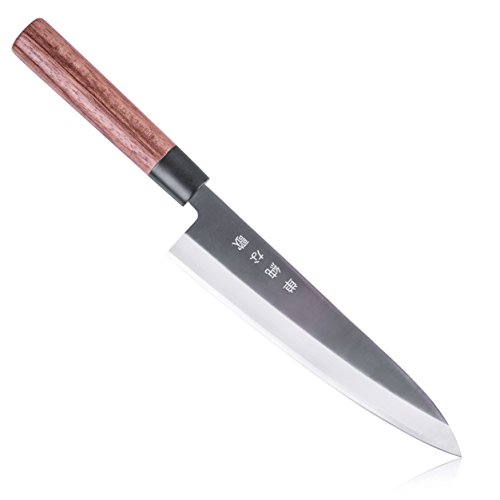
The Simple Song Gyuto combines a single-bevel edge on one side with a full-tang construction and a rosewood handle. The 420HC stainless steel offers corrosion resistance and solid edge retention, while being easy to sharpen. Its right-side bevel delivers an incredibly sharp edge when slicing, while the flat opposite side helps separate food slices cleanly. This knife balances traditional Japanese design with practical Western handling for versatile kitchen use.
Right Hand Kiridashi Knife

The Yoshiharu Kiridashi is a compact, right-handed utility knife crafted in Japan. It features a simple, precise edge suitable for small cuts, trimming, and detail work. The blade’s single-bevel configuration enables highly controlled slicing, while the lightweight design and wooden handle provide a comfortable grip for extended use. This is a focused tool for precision tasks rather than heavy-duty chopping.
KYOKU Yanagiba Knife — 10.5″
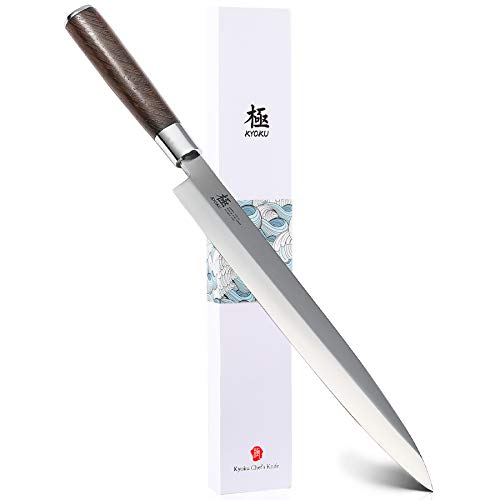
The KYOKU Yanagiba is a traditional Japanese sushi knife with a single-bevel edge designed for precise sashimi slicing. It features a cobalt-added steel cutting core, cryogenically treated to enhance hardness (HRC 56-58) and edge retention. The blade’s long, narrow profile supports clean, paper-thin cuts, and the wenge wood handle provides a balanced grip and authentic aesthetic, making it a reliable tool for delicate fish preparation and presentation.
RyoriNinja Dexeter Fish Fillet Knife 8.5″

The RyoriNinja Dexter Fish Fillet Knife uses RyoriNinja’s Pro steel with AUS-8 core steel and vacuum heat treatment to boost hardness and edge retention. The single-bevel blade is honed to about 9° on one side, ensuring precise, thin slicing ideal for sashimi and filleting tasks. An ergonomic sakura wood handle and full-tang construction contribute to control and balance, making it suitable for professional kitchen tasks that demand accuracy and finesse.
Buying Guide: Key Purchase Considerations
- Blade geometry and edge angle: Single bevel knives require correct sharpening on the appropriate side. The standard edge ranges around 9°–15° per side depending on the knife, which affects sharpness and durability. For beginners, a guide or professional sharpening service can help maintain performance.
- Steel type and hardness: High-carbon stainless steels offer sharpness and corrosion resistance, but care is needed to prevent staining. Look for hardness in the 56–60 HRC range for a balance of edge retention and ease of sharpening.
- Handle material and balance: Traditional Japanese handles like rosewood or wenge wood provide a warm, tactile grip. Full-tang construction adds balance, especially in longer knives used for slicing fish or large cuts.
- Knife purpose and profile: Yanagiba, Deba, Kiridashi, and Gyuto all serve distinct roles. Deba excels at fish prep, Kiridashi supports detail work, Yanagiba is ideal for sashimi, and Gyuto offers general slicing and chopping capabilities. Choose based on the primary tasks in your kitchen.
- Maintenance and care: Single bevel knives are often used for highly precise cuts. Regular honing and occasional sharpening are essential. Dry thoroughly after washing and store in a protective sheath or on a magnetic rack to prevent nicks.
- Budget and craftsmanship: Higher-end single bevel knives tend to feature premium materials and traditional construction. If you value Japanese craftsmanship and edge performance, investing in a respected brand can yield long-term value.
- Usage environment: For home kitchens, a versatile single bevel that can handle fish, vegetables, and delicate cuts may be preferable. For professional settings, consider durability, ergonomic handles, and maintenance support from the manufacturer.
Across these options, buyers can choose based on the intended tasks, preferred handle style, and maintenance tolerance. The best single bevel knives provide clean, precise cuts with reliable edge retention, while offering comfortable handling that minimizes fatigue during long prep sessions.