For bird watchers, a quality spotting scope can turn distant, elusive birds into detailed, up-close observations. The right scope offers clarity, light transmission, and ergonomic features that reduce fatigue during long outings. The following selections are among the most relevant options for American outdoor enthusiasts seeking dependable performance, weather resistance, and versatile magnification across a variety of birding scenarios. Each choice emphasizes sharp optics, durability, and practical design to enhance field observations.
Product Summary
- SVBONY SV28 Spotting Scopes with Tripod (25-75x70mm) – Waterproof and fogproof with a phone adapter for quick sharing.
- Gosky Flagship DiamondEdge (20-60×80) – High-definition optics, nitrogen-filled, waterproof, and durable build.
- Gosky Flagship (25-75×80) – Upgraded flagship with BAK4 prism, FMC optics, and strong weather protection.
- Gosky 20-60×85 Spotting Scope – Wide magnification range with a full-size tripod and accessories.
- URBANCOAST 20-60x60mm – IPX7 waterproof with phone adapter and integrated zoom design.
SVBONY SV28 25-75×70 Spotting Scope
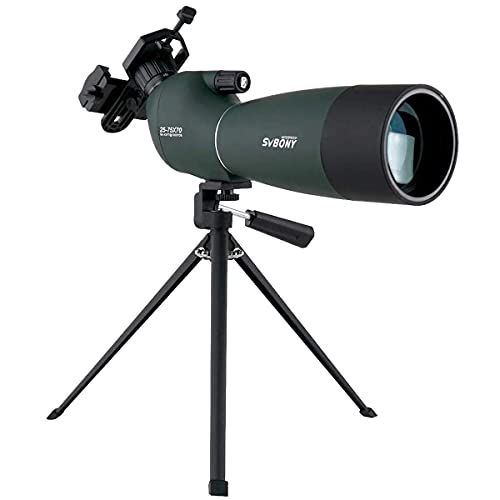
The SV28 offers a flexible 25-75x magnification range and a 70mm aperture, balancing power and portability for field use. Its compact design suits beginners to intermediate bird watchers who want a straightforward setup for quick birding sessions. The 70mm objective lens helps gather more light, which is especially useful during early morning or late afternoon birding when light is limited. A built-in extendable sunshade helps reduce glare on bright days, and the waterproof, fogproof construction protects performance in variable field conditions. The scope’s non-slip exterior resists hand slippage when it’s wet, contributing to steadier viewing. A phone adapter expands listening and sharing opportunities for field notes and social media.
Key considerations: This model emphasizes ease of use and portability, making it a practical all-around option for classic birding routes, nature trails, and backyard feeders where quick setup and reliable performance matter most. It’s well-suited for users who want a solid entry into longer-range observation without a steep learning curve.
Gosky Flagship DiamondEdge 20-60×80

This Gosky DiamondEdge model covers 20x to 60x magnification with an 80mm objective for brighter, crisper images. Its premium optics include an 80mm green film objective lens and a BAK4 Porro prism, enhancing light transmission for clear field views across longer distances. The scope is nitrogen-filled and sealed for waterproof and fog-proof performance, enabling reliable use in changing weather. A rugged rubber-armored body provides a non-slip grip and durability, while a stretchable eyepiece shield adds lens protection. This combination makes it a strong choice for serious bird watchers who require dependable image quality under varied outdoor conditions.
Pros: excellent light transmission, solid construction, and a broad zoom range. Cons: may be heavier than entry-level options, requiring a sturdy tripod for optimal stability during high magnification.
Gosky Flagship 25-75×80 Spotting Scope

This upgraded flagship model features a wide 25–75x magnification paired with an 80mm objective lens and BAK4 prism for bright, high-contrast views. FMC optics contribute to color accuracy and resolution, making it easier to distinguish plumage patterns and subtle feather details. The scope’s design supports birds in varied light conditions from dawn to dusk and is well-regarded for hiking and wildlife viewing, with weatherproofing and a robust build that performs in rugged outdoor environments. The included carrying bag and phone holder add convenience for field documentation.
Considerations: The model blends high-end optics with practical birding features. It is particularly suitable for enthusiasts seeking sharper visuals at longer distances and in mixed weather, though it may require careful handling and a stable tripod to maximize the high magnification range.
Gosky 20-60×85 Spotting Scope

With a generous 85mm objective and a versatile 20-60x magnification, this Gosky scope delivers bright, vivid imagery across a broad viewing range. The full-size tripod and included cleaning kit support stable, precise viewing, essential for identifying subtle markings on distant birds. The 85mm lens improves light gathering in overcast conditions, which is valuable for dawn and late-evening birding. Its portable design makes it a practical choice for hikers and frequent travelers who want a capable scope without sacrificing ease of transport.
Notes: The product emphasizes a balance between image quality and user-friendly setup. It is suitable for wildlife viewing on varied terrain, including coastal and forested habitats where light levels shift quickly throughout the day.
RIROMA 40X60 Monocular With Smartphone Holder

Although marketed as a monocular, this option delivers 40x magnification with a 60mm objective, dual focus, and a phone holder for sharing field observations. The BAK4 prism and FMC coating ensure clearer, sharper images with improved color fidelity. Its compact form makes it suitable for quick, on-the-go birding or as a lightweight addition to a longer optics kit. Waterproof and fog-resistant design supports outdoor use in variable conditions.
Considerations: This entry offers a portable alternative with strong magnification, but its field of view and stabilization at higher zoom levels may benefit from a sturdy support and careful handling on windy days.
URBANCOAST 20-60x60mm Spotting Scope

The URBANCOAST scope pairs a 60mm objective with 20–60x magnification and IPX7 waterproofing, making it a robust choice for unpredictable weather. The integrated phone adapter and tripod enhance field documentation and stable observation. Its unique zoom-focus design places control within easy reach, supporting quick focus adjustments during fast bird movements. The package typically emphasizes portability for hikers and casual observers who want dependable performance without heavy gear.
Strengths: Weather resistance and thoughtful ergonomics. Weaknesses: The 60mm aperture may be less light-gathering than larger models in dim light, but the design remains solid for casual and mid-range birding adventures.
Buying Guide: Key Purchase Considerations And Comparisons
Optics quality: Look for fully multi-coated lenses and a high-quality prism (BAK4 is a common standard) to ensure bright, color-accurate images across light levels. A larger objective lens (e.g., 80mm) improves light gathering but adds weight and reduces portability.
Magnification and versatility: A broad zoom range (e.g., 20x–60x or 25x–75x) provides flexibility for close-ups of nearby birds and distant subjects. Consider whether you need higher magnification for long-range viewing or a wider field of view for scanning habitats.
Weather resistance: Birding often involves changing conditions. Nitrogen-filled and o-ring sealed designs prevent fogging and water intrusion, maintaining performance in rain, humidity, and temperature swings.
Ergonomics and durability: A non-slip grip, protective armor, and a sturdy tripod compatibility are essential for long sessions in the field. For extended treks, weight and balance should be considered to minimize fatigue.
Accessories and compatibility: Phone adapters, carrying bags, tripods, and cleaning kits add value. Ensure the scope you choose has compatible eyepieces or adapters for the devices you own.
Portability vs. performance: Entry-to-mid level scopes prioritize ease of transport and quick setup, while premium models emphasize image quality at the expense of extra weight. Your choice should align with typical birding locations and duration of field days.
Use-case scenarios: For coastal or forest-edge birding, emphasize higher light transmission and contrast; for backyard feeders or park birding, budget-friendly options with solid optics may suffice. For long-range shorebird or waterfowl identification, high magnification with a stable tripod is crucial.
Maintenance: Regularly clean lenses with proper lens cloths, protect the optics with lens caps, and store scopes in a dry place to prevent mold and internal distortion over time.