Choosing the right scissors for preschoolers helps kids build confidence in arts and crafts while keeping little hands safe. The following products are designed for toddlers aged around three, featuring blunt tips, plastic blades, and easy-grip handles that support developing motor skills. This guide reviews five top options, highlighting safety features, ease of use, and suitability for both left- and right-handed children.
| Product | Brand | Key Safety Feature | Ideal For |
|---|---|---|---|
| Crayola Toddler Safety Scissors (3pk) | Crayola | Plastic blades, blunt tips | Beginner cutting projects |
| Fiskars Training Scissors (Red) | Fiskars | Training lever with spring-action | Early training, guided cutting |
| Channie’s Safety Scissors (2 pack) | Channie’s | Small handles, blunt tips | Hands-on practice for 3–5 |
| Skillmatics Scissor Skills Activity Book | Skillmatics | Includes 2 child-safe scissors | Structured scissor skill development |
| 3-Pack Toddler Safety Scissors Kit (amassan) | amassan | Ergonomic blunt-tipped blades | Beginners, classroom use |
Crayola Toddler Safety Scissors (3pk)

Crayola’s trio of safety scissors are designed for ouch-free cutting, making them a popular choice for preschoolers. The set includes straight, wavy, and zigzag blades to support a variety of art projects, from simple cutting tasks to more creative craft activities. The blades are plastic with rounded tips, prioritizing safety for classroom or home use. The ergonomic handles accommodate both left- and right-handed children, helping develop grip and coordination during early art exploration. These scissors are ideal for teachers and parents seeking versatile, kid-friendly tools that align with beginner cutting skills.
Fiskars Training Scissors (Red)

Fiskars Training Scissors are specifically engineered for early cutters. They feature a training lever and spring-action that helps guide the hand through the cutting motion, promoting proper technique. The blades are covered with plastic for safety, and blunt tips reduce the risk of poking or scraping. Designed to be comfortable for young hands, the handles accommodate both left- and right-handed users with oversized loops. This option is widely recommended by teachers as a durable classroom staple that supports gradual independence in cutting tasks.
Fiskars Training Scissors (Turquoise)
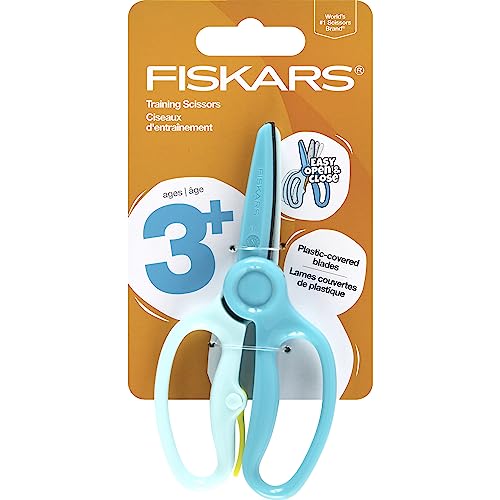
This turquoise variant of Fiskars Training Scissors shares the same core benefits as the red version, including the training lever, spring-action mechanism, and blunt-tipped blades. The ergonomic, kid-friendly handles support both-handed use and help children learn accurate cutting motions without frustration. Suitable for home classrooms or playrooms, these scissors are a dependable choice for steady skill-building as children progress from simple snips to more controlled cuts.
Channie’s Safety Scissors for Small Hands (2 pack)
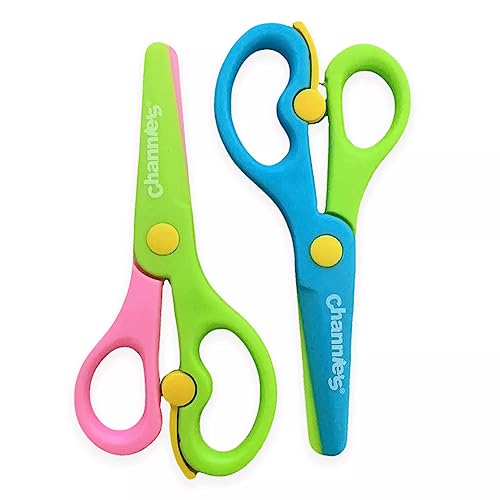
Channie’s Safety Scissors are designed for small hands ages 3–5, with a blunt tip and compact handles that fit young fingers. The small grip enhances hand-eye coordination and makes cutting tasks feel achievable, fostering confidence during preschool activities. Made from sturdy plastic, these scissors withstand frequent use in arts and crafts while maintaining safety. They are an excellent option for parents seeking lightweight tools that support early motor skills and safe exploration.
Skillmatics Scissor Skills Activity Book

Skillmatics combines a structured activity book with practical cutting practice, ideal for progressive skill-building. The package includes two child-safe scissors and 25 cutting activities that guide kids from straight lines to curved shapes and eventually cutting out forms. The interactive format encourages kids to cut, fold, and paste, reinforcing coordination and precision. This kit supports classroom or home learning and provides a clear path from basic snips to more complex cuts as confidence grows.
3-Pack Toddler Safety Scissors Kit (amassan)
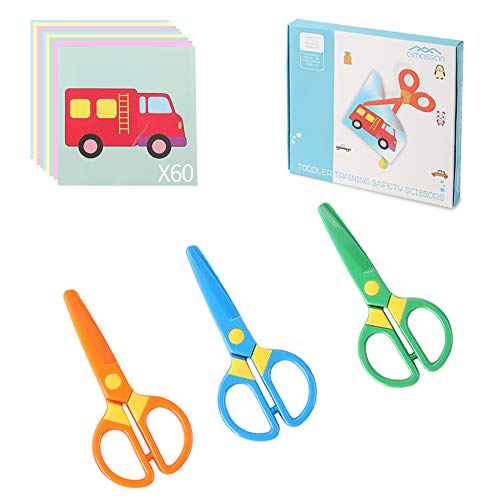
This 3-pack from amassan focuses on ergonomic, blunt-tipped blades designed for early childhood use. The set emphasizes a safety-first design with comfortable soft handles and a range of colors to engage kids. The blades are plastic for safe learning experiences, and the package includes multiple scissors to support shared activities in a classroom or家庭 setting. The kit is well-suited for teachers and parents seeking reliable, kid-safe tools for group crafts and individual practice.
Buying Guide: Key Purchase Considerations
- Safety features: Look for blunt tips, plastic blades, and rounded edges to minimize finger injuries during cutting practice.
- Ergonomics: Opt for easy-grip handles and larger loops that fit small hands and support proper finger placement.
- Ambidexterity: Choose models that accommodate both left- and right-handed users, promoting inclusive use.
- Skill progression: Consider sets that include different cutting styles or activity books to gradually advance cutting accuracy and confidence.
- Durability: Durable plastic or coated blades improve longevity in busy preschool environments.
- Educational value: Some kits pair scissors with guided activities or books to reinforce motor skills and following instructions.
- Maintenance: Lightweight, easy-to-clean designs help maintain hygiene in classroom settings.
When selecting scissors for a 3-year-old, prioritize safety, comfort, and potential for skill growth. Packages that combine practice activities with kid-friendly tools can streamline learning and keep children engaged in arts and crafts. For parents and teachers, a mix of individual scissors and structured activity materials often yields the best long-term outcomes for early scissor skills development.