Discover top-rated science toys that engage 12-year-olds in practical learning. From robotics and solar power to crystal growing and circuit experiments, these kits foster curiosity, critical thinking, and problem-solving while providing screen-free, hands-on activities. The selected products emphasize safety, clear instructions, and opportunities for independent or guided exploration at home or in classrooms.
| Product | Brand | Key Focus | Age Range |
|---|---|---|---|
| Smartivity DIY Robotic Mechanical Hand | Smartivity | Mechanics, hands-on building | 8–14 |
| STEM 13-in-1 Solar Power Robots | Bottleboom | Solar energy, robotics, disassembly/rebuild | 8–12 |
| 24-in-1 STEM Circuit Kit | MEWOCHEE | Circuit theory, robotics, creative builds | 8–13 |
| Dan&Darci Crystal Growing Kit | Dan&Darci | Chemistry, crystal formation, observation | 8–14 |
| National Geographic Rocket Launcher | Blue Marble | Aerodynamics, outdoor science, propulsion | 8–12 |
Smartivity Diy Robotic Mechanical Hand

The Smartivity kit offers action-packed, screen-free engineering fun. With a step-by-step manual, kids build a mechanical hand and explore core STEM concepts through a tangible project. The kit is designed for both boys and girls aged 8–14, promoting confidence, creativity, and a practical understanding of mechanical systems. A lifetime supply of replacement parts reduces long-term frustration and supports ongoing play and experimentation.
STEM 13-In-1 Solar Power Robots

This solar robot kit provides 13 build-and-rebuild options, with parts including gears, plates, tires, and shafts. Builds can move on land or water, powered by a solar panel or an included battery option. The kit uses non-toxic ABS materials and emphasizes learning through play, encouraging exploration of solar energy, engineering, and problem-solving in a safe, reusable package.
24-In-1 STEM Circuit Kit

MEWOCHEE’s 24-in-1 kit introduces circuit principles through hands-on construction of walking robots, bubble-blowing machines, and more. With a modular design and guided instructions, it helps young builders grasp circuits, sensors, and basic robotics. The kit encourages experimentation, iteration, and a practical grasp of STEM concepts, making it suitable for creative projects and classroom demonstrations.
Dan&Darci Crystal Growing Kit
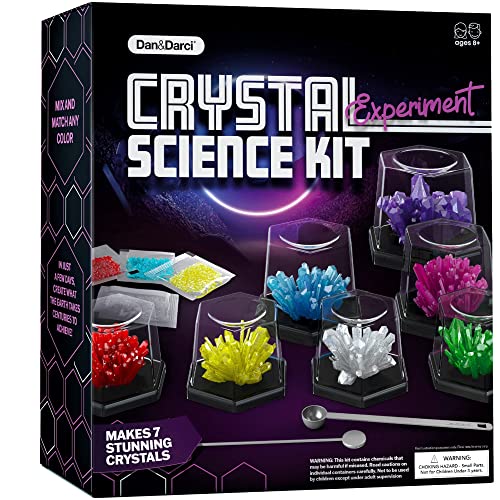
The crystal growing kit provides a tangible chemistry experience. With seven growing crystals, seed packets, measuring tools, and a display case, children learn about crystal formation, observation, and patience. Illustrated guides explain the science behind crystallization, offering a clear link between hands-on activity and scientific concepts.
National Geographic Rocket Launcher

This motorized rocket launcher brings outdoor science to life. With up to 200 feet of flight range and multiple height settings, it demonstrates propulsion, aerodynamics, and safe landing design. The authoritative National Geographic branding adds educational credibility, making it a compelling option for STEM-friendly outdoor play and classroom demonstrations.
Buying Guide
When choosing science toys for a 12-year-old, consider how the kit supports key learning goals and long-term engagement.
- Learning objectives: Identify whether the product strengthens understanding of physics, chemistry, biology, or engineering. Do the activities align with hands-on experimentation and problem-solving?
- Age appropriateness and safety: Ensure parts are suitable for older children and that materials meet safety standards for classroom or home use.
- Build complexity and progression: Look for kits that offer multiple builds or levels of challenge to grow with the child, not just a single project.
- Instructional quality: Clearly written guides, diagrams, and step-by-step tutorials improve independent learning and reduce frustration.
- Material durability and reusability: Reusable components and replacement parts extend the kit’s lifespan and value.
- Cross-disciplinary relevance: Kits that blend science with engineering, technology, and math provide broader educational benefits.
- Outdoor vs. indoor use: Some kits (like rockets) favor outdoor activity; consider your space and safety considerations.
Purchasing considerations also include the availability of replacement parts, the potential for parent or mentor involvement, and the potential to integrate with school-based STEM curricula. For families seeking a broad introduction to multiple disciplines, multi-activity kits (such as solar robots or circuit-building sets) offer long-term engagement. For deeper chemistry or physics exposure, crystal-growing or projectile-based kits provide vivid demonstrations of core concepts. Finally, consider how a kit might spark ongoing curiosity and future exploration in science, technology, engineering, and math.