Exploring science through interactive models helps kids grasp complex concepts by touching, assembling, and observing. This guide reviews five engaging, age-appropriate science models that foster curiosity in anatomy and space. Each option emphasizes hands-on exploration, safety, and clear educational value for homes and classrooms alike.
Summary Of Selected Products
| Product | Brand | Key Focus | Pieces |
|---|---|---|---|
| National Geographic Human Body Model for Kids That Glows in The Dark | Blue Marble | Anatomy with glow-in-the-dark bones | 32 pieces |
| EVOTECH SCIENTIFIC 2025 New Human Body Model for Kids | EVOTECH SCIENTIFIC | 15 detachable body parts, portable | 15 pieces |
| Science Can Human Body Model for Kids | Science Can | Interactive anatomy with talking modes | 15+ parts |
| Dan&Darci Human Anatomy Squishy Body Model | Dan&Darci | 30 removable squishy parts, tactile learning | 30 parts |
| National Geographic Glow-in-The-Dark Solar System Model Kit | Blue Marble | Glow-in-the-dark planetary display | Full kit (planets + sun) |
National Geographic Human Body Model for Kids That Glows in The Dark
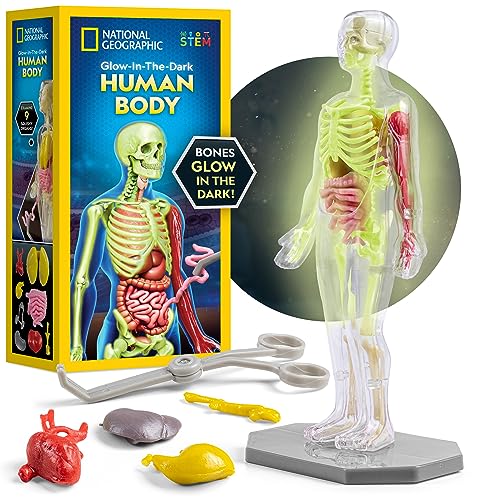
The 32-piece anatomy kit invites kids aged 8 and up to explore human biology by removing and examining 9 organs, 18 glow-in-the-dark bones, and arm muscles. The 9-inch body shell opens to reveal a detailed internal map, and a display stand helps learners present their findings. A forceps tool supports careful handling, while an organization chart and learning guide provide context and facts for classroom or at-home projects.
EVOTECH SCIENTIFIC 2025 New Human Body Model for Kids

This 11-inch torso model features 15 detachable parts, including major organs, brain, heart, lungs, stomach, liver, and intestines. It arrives on an oak-wood base for display and classroom use, with a colorfully detailed brochure to guide learning. The pieces fit securely, reducing likelihood of collapse, and the compact size makes it portable for demonstrations and take-home study.
Science Can Human Body Model for Kids

This interactive model offers two modes: Explanation and Quiz, turning anatomy into a game. It features 15+ removable organs, muscles, and bones for hands-on exploration, plus a 26-page illustrated anatomy book and four double-sided knowledge cards. The kit supports school projects and homeschool lessons with accessible explanations and guided activities.
Dan&Darci Human Anatomy Squishy Body Model

Designed for ages 4-8, this squishy model breaks down into 30 removable parts, including the brain, heart, lungs, ribs, and spine. Kids explore textures and connections while rebuilding the body for continued discovery. A kid-friendly guide with facts and interactive challenges supports learning while making anatomy approachable and fun.
National Geographic Glow-in-The-Dark Solar System Model Kit

This kit lets kids build and display a 3D solar system with glow-in-the-dark features. It includes six paint colors, glow-in-the-dark accents, a brush, decals, and a facts poster. Movable arms on the display aid arrangement of planets and the sun, encouraging experimentation with scale and orbital layouts while reinforcing space-science concepts.
National Geographic Glow-in-The-Dark Solar System Model Kit (Second Entry)
Note: This section reiterates the solar system kit’s versatility and its appeal for space-themed rooms and classroom displays. The glow feature enhances nighttime learning, while the included materials provide a complete, ready-to-build experience for curious minds who enjoy hands-on projects.
Poraxy 5 in 1 STEM Kits for Kids
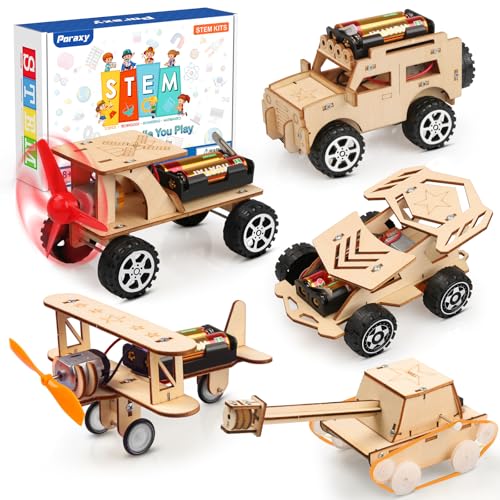
This versatile kit includes five model car projects designed to spark engineering interest in kids aged 8-10. It promotes hands-on construction, imaginative play, and practical engineering concepts. The kit emphasizes improving hand-eye coordination and stimulating curiosity through building and experimentation.
Science Kit for Kids: 80 Science Lab Experiments

This comprehensive science kit offers 80 experiments across a wide range of topics. Included are clear safety notes, a guidance card outlining steps and principles, and activities like erupting volcanoes and rainbow rain. The kit supports curiosity, critical thinking, and hands-on scientific inquiry for aspiring young scientists.
Buying Guide: Key Purchase Considerations
- Age and safety: Check recommended ages and small parts. Choose kits with non-toxic materials and robust construction for repeated use.
- Educational goals: Decide whether you want anatomy-focused models, space-themed kits, or broad STEM exploration to support curricula or homeschool learning.
- Hands-on depth: Consider the number of detachable parts and the level of assembly difficulty to match a child’s interest and fine-motor skills.
- Display and portability: Portable models and display-ready bases help with classroom demonstrations and bedside study alike.
- Learning aids: Look for accompanying guides, brochures, or knowledge cards that deepen understanding and provide experiments or quizzes.
- Durability and reuse: Reusable kits with sturdy shells and securely fitting parts offer long-term educational value.
- Value across topics: If possible, balance anatomy and space models to maintain varied interest and broad scientific literacy.
- Expansion potential: Some kits pair with additional modules or future purchases, enabling progressive learning as kids grow.
These considerations help educators and parents select models that balance engagement, safety, and instructional value, ensuring that kids remain motivated to explore the wonders of science.