Roller coaster kits mix engineering, physics, and creativity into engaging learning experiences. From gravity-powered tracks to motorized models, these kits help explorers understand force, motion, energy, and velocity while building something exciting. The selections below showcase a range of difficulty and educational value, making it easier to pick a project that fits a learner’s age and interests.
| Product | Brand | Key Benefit |
|---|---|---|
| Thames & Kosmos Roller Coaster Engineering STEM Kit | Thames & Kosmos | Working roller coasters, physics experiments, building challenges |
| K’NEX Education – STEM Explorations: Roller Coaster Set | K’NEX | 546 pieces, motor, hands-on inquiry aligned with STEM standards |
| ThinkFun Roller Coaster Challenge | ThinkFun | 50% logic game, 50% building, engaging for ages 6+ |
| K’NEX 51438 Typhoon Frenzy Roller Coaster | Basic Fun | Multi-model design with long track and motorized options |
| CDX Blocks: Little Dipper | CDX Blocks | Gravity-powered, realistic operation with gear system |
Thames & Kosmos Roller Coaster Engineering STEM Kit

This kit invites learners to design and build working roller coaster models while conducting physics experiments. Topics include force, motion, energy, velocity, and related concepts. The included challenges push builders to craft coasters of varied shapes and sizes, testing ideas through hands-on experimentation. Students gain practical insight into how track geometry, gravity, and propulsion influence ride dynamics.
K’NEX Education – STEM Explorations: Roller Coaster Set

The 546-piece roller coaster set comes with a battery-powered motor and multiple models, including a ramp and a half-pipe. It supports individual or small group builds, encouraging collaborative problem solving. An activity guide aligns with STEM standards for grades 5–9, guiding learners through time, distance, speed, and related relationships. This kit emphasizes inquiry-based learning as students design, test, and refine their rides.
ThinkFun Roller Coaster Challenge

ThinkFun blends logic games with roller coaster building into a versatile STEM activity. The package includes a game board, tracks, posts, a coaster car, and 40 challenge cards with solutions. With a balance of strategy and construction, this set strengthens engineering, reasoning, and planning skills while delivering an entertaining, compact format suitable for families or classrooms.
K’NEX 51438 Typhoon Frenzy Roller Coaster
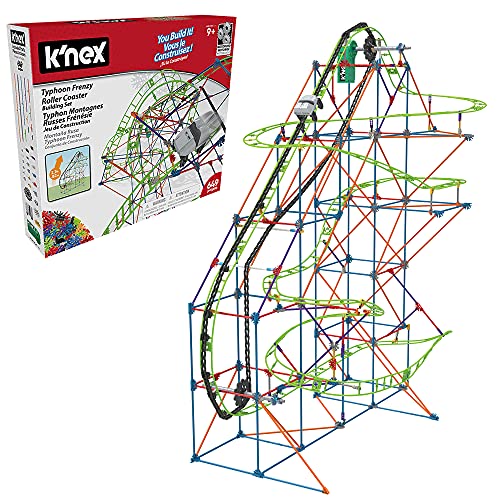
This 19-foot-long coaster kit includes more than 640 pieces and a motorized power system. It provides dual-model building options—two different coasters to assemble—expanding playtime and design exploration. The set strengthens fine motor skills, logical thinking, and problem-solving as builders plan layouts, assemble tracks, and optimize performance. The included additional model introduces variation while maintaining educational value.
Wood Trick Wooden Marble Run Electric Motorized
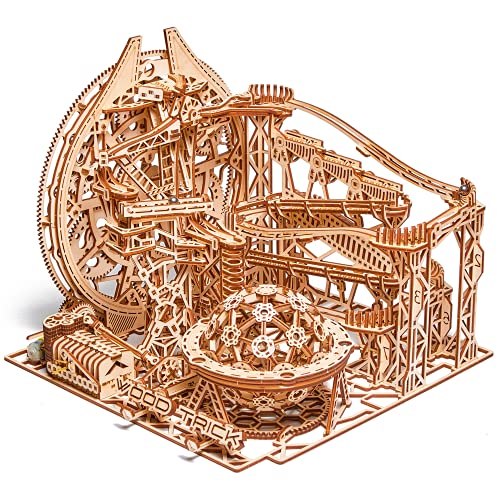
Wood Trick presents a large 15×14-inch wooden marble run with an electric motor. The 678-piece kit aims for a robust wood construction with no glue, offering a perpetual-motion-inspired illusion as marbles race along connected tracks. The project engages participants in mechanical design and kinetic motion, suitable for adults or older students seeking a deeper, hands-on building experience.
CDX Blocks: Little Dipper

The Little Dipper set uses gravity-driven action with a simple gear system to lift the ride up the initial hill. Built from CDX Blocks, this model emphasizes realistic operation and supports compatibility with other block systems. It offers a straightforward entry point into roller coaster construction, making it accessible for younger builders while retaining educational value in physics and engineering concepts.
Buying Guide: Key Purchase Considerations
Choosing a roller coaster model kit depends on goals like classroom-ready learning, family-friendly play, or advanced engineering challenges. Consider the following:
- Age and skill level: Some sets suit younger builders with simpler mechanics, while others target teens and adults with complex track designs and motorized components.
- Educational focus: Look for kits that explicitly connect to physics topics such as gravity, energy transfer, speed, and forces, plus any aligned standards.
- Power and propulsion: Decide between gravity-powered coaster models and motorized systems. Motors enable continuous testing and repeatable outcomes, but gravity-driven models encourage exploration of potential energy and kinetic energy.
- Number of building options: Some sets offer multiple coaster designs, which extends play value and demonstrates how design choices affect performance.
- Materials and durability: Wooden kits tend to be sturdy and visually engaging, while plastic or composite parts may offer easier assembly and modifiability.
- Compatibility and expansion: Check whether parts from different sets can interoperate or be combined for expanded builds.
- Instruction quality: Clear, step-by-step guides and included experiment or activity cards help sustain curiosity and reduce setup time.
- Storage and space: Larger tracks require more room; consider the workspace available for assembly and display.
Across these options, planners should balance educational aims with practical considerations, ensuring the model aligns with the learner’s interests and the available time for building and experimentation.