Choosing the right robotics kit for a 12-year-old can boost critical thinking, problem solving, and creativity. The following selections emphasize solar power, programmable features, and hands-on building to engage young engineers. Each kit supports interactive learning and encourages exploration of science, technology, engineering, and math in a safe, age-appropriate way.
| Product | Brand | Key Benefit |
|---|---|---|
| Bottleboom 13-in-1 Solar Robot Kit | Bottleboom | 13 builds, solar-powered movement |
| Henoda Remote & App Controlled STEM Robot | Henoda | Remote and app programming, 5 app modes |
| Bottleboom 13-in-1 Solar Power Robots Kit (Another Variant) | Bottleboom | Solar-powered, reusable parts |
| COBFDHA Solar & Battery STEM Projects | COBFDHA | Sun or battery power, multiple builds |
| MEWOCHEE 24-in-1 STEM Circuit Kit | MEWOCHEE | 24 builds, circuit-based robot heads and modules |
Bottleboom 13-in-1 Solar Robot Kit

The Bottleboom 13-in-1 Solar Robot Kit provides 13 distinct robot designs that move on land or water. Follow the included manual to assemble, disassemble, and reassemble components such as gears, plates, tires, and shafts. The parts are made from non-toxic ABS material with smooth edges for safer play and extended durability. Solar power encourages understanding of renewable energy and reduces reliance on batteries during experimentation.
Educational goals include building mechanical intuition, basic gear systems, and problem-solving through iterative construction. The kit supports collaborative play between parent and child, offering opportunities to explore solar energy’s role in propulsion and mechanism design. Maximum engagement comes from creating multiple configurations and observing how changes affect motion and balance.
Henoda Remote & App Controlled STEM Robot
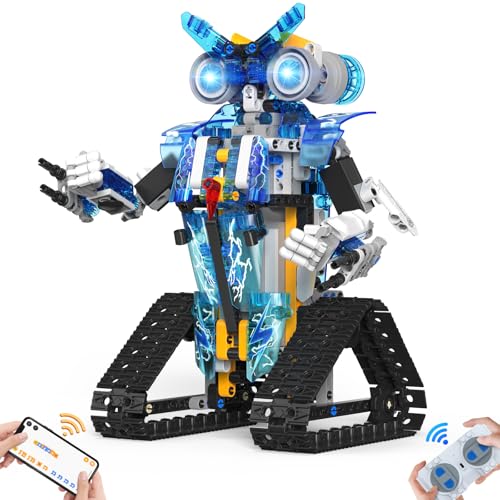
This kit blends physical building with remote and app-based programming. It features 443+ unique parts, transparent components, and glow accents for an appealing, futuristic look. The remote control supports directional commands and a 360-degree rotation, while the app adds modes such as voice control, gravity sensing, and path programming. The setup encourages patience, planning, and iterative testing to achieve desired robot behaviors.
Designed for ages 8-16, the Henoda set emphasizes engineering thinking, spatial reasoning, and basic programming concepts. The dual control methods allow for varied learning experiences—hands-on assembly followed by digital interaction—while offering a structured path from simple operations to more complex mode-based programming. The long run time of up to 40 minutes per charge supports extended activities without frequent interruptions.
Bottleboom 13-in-1 Solar Power Robots

This variant mirrors the core Bottleboom design with 13 builds powered by solar energy. It focuses on land and water mobility, disassembly-friendly parts, and an emphasis on safe play through non-toxic ABS materials. Children learn by building and modifying mechanisms, discovering how solar energy drives gear trains, and observing how different configurations impact speed and stability.
Key educational themes include renewable energy, mechanical engineering, and hands-on experimentation. The kit encourages safe collaboration between kids and adults, fostering communication and teamwork as they explore multiple designs and shared challenges ideas for improving efficiency and performance.
COBFDHA STEM Projects: Solar & Battery Robots
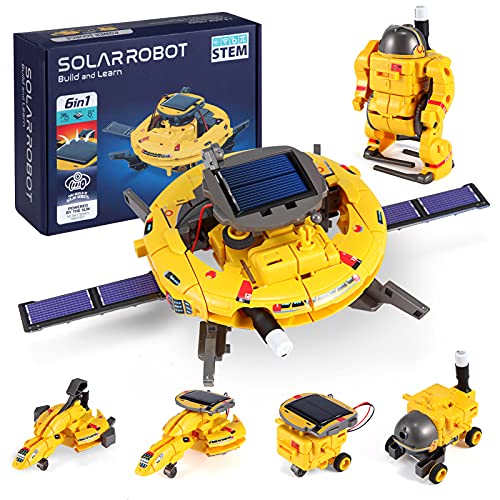
COBFDHA’s project set emphasizes a solar or battery power option with six different builds. It aims to spark curiosity about energy sources, conversion, and propulsion. The kit is designed to be accessible for home use, promoting practical understanding of how solar panels convert light into motion and how batteries can sustain operation during indoor experiments or cloudy days.
Educational outcomes include dexterity development, problem solving, and the cultivation of STEM confidence. The variety of builds helps maintain interest across multiple sessions, while clear instructions reduce setup friction and allow learners to focus on experimentation and reflection about how design choices affect outcomes.
MEWOCHEE 24-in-1 STEM Circuit Kit

The MEWOCHEE kit expands options with 24 build configurations, including robot heads and a range of functional modules. Learners connect circuits and wires to form working robots, gaining hands-on exposure to circuit concepts, sensors, and control logic. This kit appeals to curious minds who enjoy troubleshooting and optimizing how modules interact to achieve successful motion or intermediary tasks like bubble blowing.
The set is designed to grow with older ages, supporting a progression from simple assemblies to more advanced programming-like thinking. Clear assembly instructions help beginners, while the diverse module roster invites more experienced builders to experiment with more complex creations and systematic testing.
Buying Guide: Key Purchase Considerations
- Power source: Solar-powered kits teach renewable energy concepts, but battery-powered options can work indoors and on cloudy days. Consider climate and typical play locations when choosing.
- Number of builds: Kits with more configurations encourage experimentation and sustained engagement, but may require more time to master. Balance interest with available time.
- Programming and control: Remote, app-based, or manual controls offer different learning angles. For older kids, programmable features can deepen computational thinking.
- Materials and safety: Non-toxic plastics and smooth edges are important for safe play. Check for small parts that could be a concern for younger siblings or peers.
- Guidance and learning curve: Clear instructions help beginners, while open-ended modules support advanced learners. Look for kits that offer step-by-step guidance and independent challenges.
- Durability and repairability: Reusable parts and easy disassembly encourage iterative learning. Consider kits that allow reconfiguration without losing components.
- Educational goals: Some kits emphasize energy, mechanics, or circuitry. Identify the core skills you want to develop, such as problem solving, spatial reasoning, or basic coding concepts.
- Age range alignment: Ensure the kit’s complexity aligns with a 12-year-old’s abilities to avoid frustration or boredom.