Discover top-rated robot kits designed for children around eight years old. These kits blend hands-on engineering with creative play, helping kids learn fundamentals of robotics, coding, and problem solving without screens. Each selection below emphasizes safe, age-appropriate construction, inspiring experimentation and persistence as young builders iterate their designs.
| Product | Brand | Key Benefit |
|---|---|---|
| Smartivity DIY Robotic Mechanical Hand | Smartivity | Hands-on mechanical engineering for ages 8-14 |
| Henoda Remote & App Controlled Robot Toy | Henoda | Multi-mode control and programming with phone or remote |
| Sillbird 12-in-1 Solar Robot Kit | Sillbird | Sun-powered robotics with outdoor versatility |
| COBFDHA STEM Building Robots | COBFDHA | Solar or battery power with multiple moving robots |
| Sillbird 5-in-1 Programmable Robot Kit | Sillbird | Five model variations with app and remote control |
Below are five carefully chosen robot kits that align with an 8-year-old’s curiosity, safety needs, and developmental goals. Each product section includes a direct link to Amazon for quick access, an image, and a concise overview of the key features.
Smartivity Mechanical Hand Kit

The Smartivity DIY Robotic Mechanical Hand invites kids to assemble a functioning hand mechanism. The kit emphasizes step-by-step instructions, a screen-free build, and a design that supports hours of constructive play. It targets ages 8 through 14, helping develop fine motor skills, spatial reasoning, and an interest in engineering. A lifetime of replacement parts is included to reduce interruptions during ongoing play. This kit offers a hands-on, educational experience suitable for independent exploration or guided family projects.
BeAndge STEM Robot Car Kit

This kit includes five sets of STEM activities including a solar car, wind-powered car, obstacle avoidance robot, and more. It’s designed for kids ages 8–12 and is suitable for classroom projects or family science afternoons. While batteries are required, the included packaging and multiple components invite creative experimentation and group learning. It encourages collaboration, problem solving, and an early understanding of energy conversion in a kid-friendly format.
Henoda APP & Remote Controlled Robot
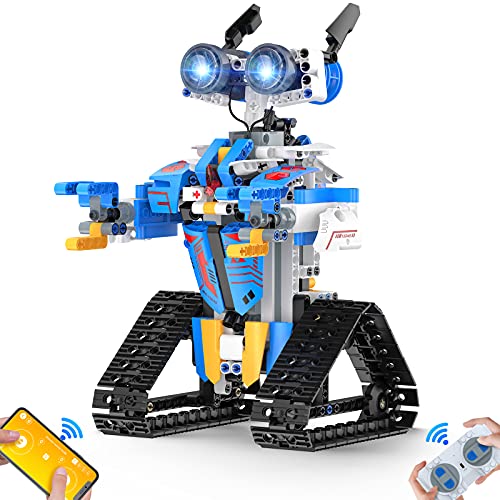
The Henoda robot combines remote control with mobile app programming. Its 468+ piece construction supports multi-directional movement, glow effects, and movable joints to demonstrate basic robotics concepts. The included remote control and Bluetooth app modes offer different interaction pathways, enabling kids to explore path planning, programming, and simple logic. Suitable for children aged 8 and up, this kit supports ongoing play as skills advance.
Sillbird 12-in-1 Solar Robot Kit
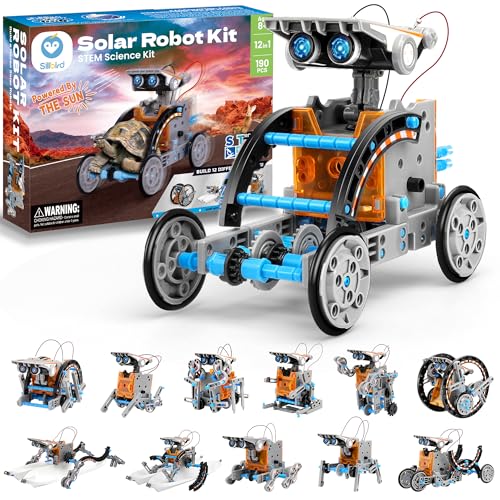
The Sillbird solar robot kit focuses on solar power and STEM education. With 190 pieces, it supports outdoor play powered by the sun or indoor activity under simulated light. The kit is designed to grow with the child, reinforcing renewable energy concepts while delivering a hands-on building experience. It’s a solid option for experiments in energy efficiency, engineering design, and practical problem solving.
Sillbird 5-in-1 Programmable Robot Kit
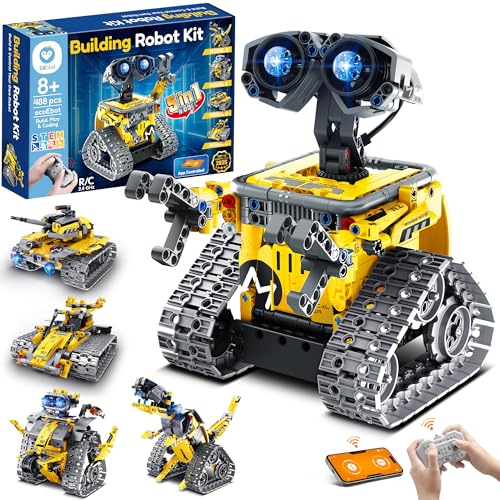
This 5-in-1 programmable robot kit provides multiple model configurations for varied play. It combines app-based programming with remote control to introduce kids to sequence logic, basic coding concepts, and modular design. The kit is well-suited for ongoing interest in engineering projects, offering varied build paths to keep kids engaged beyond a single model.
Buying Guide
Key considerations when selecting a robot kit for an eight-year-old include safety, complexity, and educational value. Look for age-appropriate components, non-toxic materials, and clear, easy-to-follow instructions. A balance between hands-on construction and basic programming helps sustain interest while building confidence.
- Educational goals: Decide whether the focus is on basic engineering, solar energy, or coding foundations. Some kits emphasize mechanical problem solving, while others blend programming with control features.
- Power source: Solar-powered kits encourage environmental awareness and outdoor play, while battery or USB-powered kits are generally better for indoor projects and consistent performance.
- Expandability: Consider whether the kit offers multiple builds or modular parts to grow with the child’s abilities over time.
- Limitations and safety: Check the number of small parts, choking hazards, and age recommendations. Ensure parental supervision is feasible for younger children.
- Learning resources: Strong instructions, visual guides, and available replacement parts can extend the life of a kit and reduce frustration during builds.
- Social and collaborative value: Kits that support family activities or classroom projects can enhance teamwork and communication skills.
Across these options, the dominant themes are hands-on construction, exposure to basic robotics principles, and opportunities for screen-free play. Parents and caregivers can assess a child’s interests, then select a kit that aligns with preferred learning pathways—whether it’s mechanical hands-on building, solar-powered exploration, or introductory coding through remote and app interfaces.