Choosing the right robot for a 9-year-old blends creativity, learning, and fun. The following selections offer hands-on programming, responsive gestures, and smart features that suit curious minds. Each option supports STEM skills, problem solving, and imagination, helping kids explore robotics in safe, engaging ways.
| Product | Brand | Key Benefit | Why It Works For 9-Year-Olds |
|---|---|---|---|
| Ruko 1088 Smart Robots for Kids | Ruko | Large size with voice and app control | Impressive presence, easy-to-use interfaces, introduces programming concepts |
| Henoda Robot Toys | Henoda | 468+ building pieces with multi-mode control | Hands-on construction and flexible play modes |
| KingsDragon Robots Toy | KingsDragon | Gesture sensing and remote control | Immediate feedback, encourages exploration of motions and programming |
| ELEGOO UNO R3 Smart Robot Car Kit | ELEGOO | Arduino-based coding and sensors | Foundational robotics and electronics understanding |
| Makeblock mBot Robot Kit | Makeblock | Scratch & Arduino coding | Structured coding path with fun robotics projects |
Each of these choices aligns with a 9-year-old’s curiosity, offering engaging activities that blend building, coding, and play. Consider the child’s interests—whether they prefer construction, remote control, or hands-on programming—when making a final decision.
Ruko 1088 Smart Robots For Kids

The Ruko 1088 stands out with a tall presence, reaching up to 15.8 inches in height. It offers 10 expressions, 9 flexible joints, and 10 songs that animate movements beyond typical toys. Kids can explore basic programming through expressive interactions, strengthening logical thinking, coordination, and creativity. Features include voice control and APP-based operation, enabling varied play modes such as storytelling, dance, and music recording. This is a robust option for kids who enjoy interactive, lifelike robots that double as imaginative companions.
Henoda Robot Toys For 8-16 Year Olds
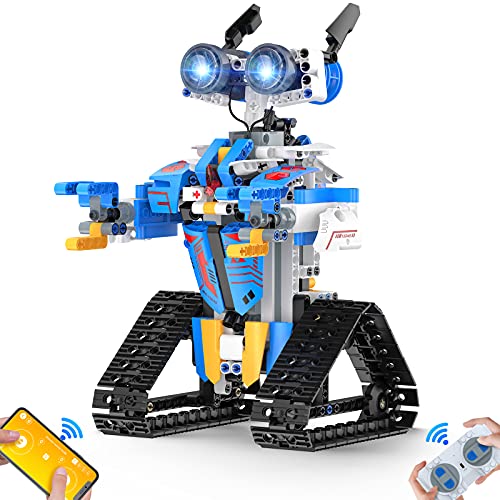
The Henoda kit combines building blocks with smart robotics, featuring 468+ pieces and a remote control, plus 4 modes including path, voice control, and STEM programming. Its versatility promotes hand-eye coordination, problem solving, and practical understanding of how mechanics and electronics interact. The flexible remote control distance and 2.4 GHz link enable responsive play, while the glow in the eyes and rotating joints keep kids engaged as they construct and test different robot configurations.
KingsDragon RC Gesture Sensing Robot

This robot emphasizes gesture sensing and remote control, responding to hand motions for forward, backward, and turning actions. Its obstacle-detection helps prevent collisions, and LED eyes provide visual feedback as it moves. The programmable moves feature lets kids record up to 50 actions, reinforcing memory, sequencing, and planning. Singing and dancing capabilities add a musical dimension to learning, while volume control on the remote supports comfortable listening during play.
ELEGOO UNO R3 Smart Robot Car Kit

The ELEGOO kit introduces hands-on electronics and programming, designed for beginners to explore robotics with Android and iOS control. It includes 24 modules such as obstacle avoidance and line tracing, making it a comprehensive platform for learning sensors, motor control, and code integration. The assembly is straightforward, aiding early confidence in building and debugging. It provides a solid foundation for kids to transition from basic robotics to more advanced projects as they grow.
Makeblock mBot Robot Kit

The Makeblock mBot Kit blends Scratch and Arduino coding, making it a prime choice for gradual skill development. It ships with clear building instructions and can be assembled in about 15 minutes, letting kids quickly see results. Beyond remote control, mBot offers line-following and obstacle-avoidance modes, along with rich tutorials and optional apps. The kit supports learning through project-based play, ideal for children who enjoy structured coding challenges and expandability as they progress.
Buying Guide
Key purchase considerations help ensure the selected robot matches a child’s interests and developmental stage:
- Learning path: Decide between building and coding focus (LEGO-like construction, drag-and-drop Scratch, or text-based Arduino). If the child enjoys storytelling and creative play, models with expressive features and music can be especially engaging.
- Control method: Remote control, gesture sensing, voice commands, or app control—each offers different interaction styles. Combining modes can maintain interest as skills grow.
- Expandability: Kits with modular components or future add-ons enable ongoing learning, reducing the need to replace toys as a child’s abilities advance.
- Durability and safety: Look for non-toxic materials, rounded edges, and sturdy builds suitable for 9-year-olds, who may push devices during play.
- Educational value: Consider kits that cover core STEM concepts—sensors, programming logic, motors, and energy sources—to build a solid foundation for future projects.
- Assistance and resources: Access to tutorials, coding guides, and community support helps caregivers and kids stay motivated and troubleshoot effectively.
- Cost and maintenance: Compare upfront costs and the need for batteries or charge cycles. Some kits require common batteries, while others use USB-C charging for longer sessions.
Overall, the right choice balances hands-on construction, accessible coding, and engaging play. Parents may opt for a start with a larger, more expressive robot like Ruko 1088 for immediate impact, and complement it with modular kits such as ELEGOO UNO R3 or Makeblock mBot to gradually introduce programming concepts. For ongoing engagement, rotating through remote-control and gesture-based models can help maintain curiosity and motivation over time.