Finding an approachable RC helicopter can jumpstart a hobby for kids and adults alike. The following hand-picked models balance easy controls, stability, and engaging features, making them ideal for first-time pilots in the United States. Each pick emphasizes beginner-friendly flight systems, durability, and value.
Summary of chosen products
| Product | Brand | Key Benefit | Flight Time (approx.) | Special Feature |
|---|---|---|---|---|
| BUSSGO RC Helicopter | BUSSGO | 7-color LED lights with easy hover | 30-34 min (with two batteries) | Demo mode and durable alloy protection |
| SYMA S107H-E | SYMA | Altitude hold for stable hovering | ~20-25 min | Alloy body, dual speed modes |
| SIMREX RC Helicopter | SIMREX | 2-speed control with long flight time | ~30 min | 2 batteries, precise gyro |
| SYMA X550 Military | SYMA | High/low speed with stunt capability | Varies by use | Military-style design, stunt potential |
| XIKOTEC RC Helicopter | XIKOTEC | Stable altitude hold and dual batteries | ~20 minutes per charge | USB-C charging, 2.4 GHz control |
The selections span popular beginner options, from small indoor flyers to more capable outdoor models. They share helpful features like altitude hold, gyro stabilization, and simplified controls, while offering varying flight times and durability to fit different learning paces and spaces.
BUSSGO RC Helicopter For Beginners

The BUSSGO model centers on intuitive control and safety. Its upgraded gyro system provides stable hovering, letting new pilots practice ascent, descent, forward/backward movement, and left/right turns with relative ease. A standout feature is the 7-color LED light system that creates a captivating indoor display, especially during evening play. In demo mode, auto-rotation and circle flight add excitement while helping learners observe smooth flight paths. The helicopter uses a modular battery setup for extended sessions; two batteries deliver about 30-34 minutes of flight time, a practical duration for practice without frequent recharging. The lightweight PVC body and alloy protective elements help minimize damage during rookie misjudgments.
Key features in practice:
- One-key take-off and landing with simple trim adjustments
- Customizable speed settings for gradual skill growth
- Low-battery alert to manage session planning
- Modular batteries and durable construction
SYMA S107H-E RC Helicopter For Beginners

The SYMA S107H-E uses a full alloy body for durability, making it a strong choice for new pilots who may encounter occasional bumps. Its explicit altitude hold function helps maintain a steady hover, enabling beginners to learn controls with less need to constantly adjust height. Two speed modes let new flyers start slowly in tighter spaces and graduate to higher speed as confidence builds. The combination of robust construction and simple controls helps users practice hovering, basic maneuvers, and gradual maneuvering without overwhelming complexity.
Highlights for learners:
- One-button takeoff/landing for effortless use
- Alloy frame for long-lasting resilience
- Low-to-high speed progression for skill development
SIMREX Beginner RC Helicopter With Altitude Hold

The SIMREX model emphasizes easy control via one-key take-off/landing and a stable 2.4 GHz remote with a reliable signal. Altitude hold assists in precise hovering, allowing beginners to practice level flight without constant altitude adjustments. The kit includes two batteries, extending flying sessions to approximately 30 minutes in total. This setup helps beginners build confidence before tackling more complex maneuvers, while the gyro stabilization minimizes sudden tilts or wobbles during flight.
Educational and practical notes:
- Simple trim and stabilization controls
- Rechargeable batteries with USB charging
- 2.4 GHz control minimizes interference in busy spaces
SYMA X550 Military RC Helicopter

The X550 brings a more robust, stunt-capable design with a military aesthetic. Its dual-speed control supports a gentle indoor learning pace and more dynamic outdoor practice as skills improve. The helicopter is designed to handle higher-speed flight while maintaining control stability, allowing new pilots to experiment with maneuvers like quick turns and moderate aerial routes. This model is suited for learners who want a bit more challenge and a strong build to withstand bumps during learning.
What learners should know:
- Manual or guided practice required for complex stunts
- Adjustable speed settings to match space and skill
- Sturdier frame for longer-term use
XIKOTEC RC Helicopter With Stable Flight
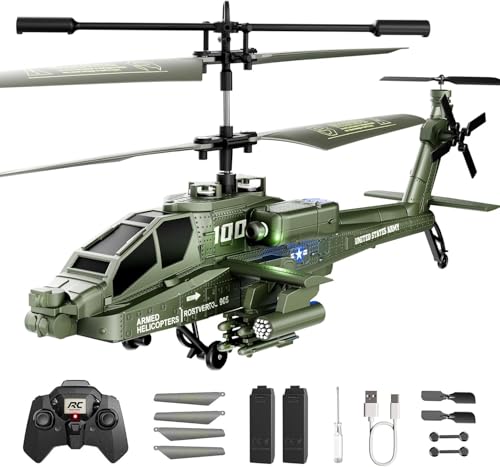
The XIKOTEC helicopter emphasizes stable height maintenance and a straightforward one-key takeoff/landing workflow, making it beginner-friendly. With two modular batteries and USB-C charging, pilots can enjoy longer practice sessions with quick recharges. A 2.4 GHz control system supports a reliable connection up to 50 meters, which helps when practicing in larger rooms or outdoor spaces with light wind. A 3.5-channel control and gyro stabilization further enhance the learning curve by delivering precise responses to input, reducing the likelihood of abrupt tilts or crashes.
Purchase considerations for newcomers:
- Battery life and ease of charging
- Signal range and interference robustness
- Durability against crashes and indoor environmental factors
SYMA S53H Rescue RC Helicopter

The S53H Rescue model blends lifelike design with practical safety features. Its intelligent power-off protection helps prevent damage if blades are blocked or stuck, a valuable safeguard for beginners still learning spatial awareness. The flashing indicator light provides a clear recharge reminder, ensuring more structured practice sessions. The design aims to be beginner-friendly while offering an engaging rescue-themed aesthetic that can spark curiosity about aviation concepts and mechanics.
Learning benefits:
- Single-button lift-off for easy starts
- Protective safety systems to minimize damage
- Clear charging indicators to manage practice time
SYMA S52H Military Transport RC Helicopter

The S52H models a military transport aesthetic with realistic styling and dual safety features. One-key takeoff/landing simplifies initial flights, while the low-battery reminder helps learners schedule practice sessions efficiently. The camouflage body and twin-rotor presentation offer educational value by fostering curiosity about how real-world military helicopters operate. This model balances accessible handling with a visually appealing design for entry-level pilots interested in a more authentic look.
Key considerations for beginners:
- One-button operations to reduce setup time
- Safety features that protect both the toy and the user
- Visual design that may appeal to aviation enthusiasts
Buying Guide: What To Look For In A Beginner RC Helicopter
- Stability features: Look for altitude hold, headless mode, and gyroscope stabilization to help new pilots maintain steady flight with minimal input.
- User-friendly controls: One-key takeoff/landing, trim controls, and simple speed settings reduce the learning curve and build confidence quickly.
- Durability and materials: Alloy frames, protective shells, and impact-resistant landing gear minimize damage from gentle crashes common during first flights.
- Battery life and charging: Consider models with two batteries or modular packs to extend practice sessions without long downtimes. USB-C charging is a plus for fast recharges.
- Range and interference: A reliable 2.4 GHz or similar control system helps prevent signal drop-offs, especially in larger rooms or busy households with multiple toys.
- Indoor vs outdoor use: Indoor-friendly models favor stable hover and compact size, while outdoor-capable units offer more space for learning advanced maneuvers—mind wind and safety considerations.
- Learning progression: Some helicopters come with adjustable speeds and stunt modes that scale with user skill, enabling continued use as experience grows.
- Safety features: Auto-shutoff, blade protection, and low-battery indicators reduce risk and encourage disciplined flying habits for beginners.
- Value vs. complexity: For absolute beginners, start with simpler models and fewer moving parts to minimize frustration; progressive kits can aid growth over time.