Choosing the right robot for kids blends education with imagination. The following five options combine hands-on play, basic programming, and engaging features that help children learn by doing. Each robot supports STEM skills, problem solving, and creative expression while staying age-appropriate for 3 to 12-year-olds and older. Read on for quick details and a practical buying guide to help you compare capabilities, durability, and ease of use.
| Product | Brand | Key Focus | Learning Angle |
|---|---|---|---|
| Ruko 1088 | Ruko | Voice control, APP control, 10 expressions | Programming basics, coordination |
| KingsDragon RC Robot | KingsDragon | Gesture sensing, 50 actions | Spatial awareness, sequencing |
| BAZOLOTA Robot | BAZOLOTA | Gesture control, 50 actions, singing/dancing | Motion patterns, creative routines |
| HOLIBIBE Drawing Robot | HOLIBIBE | Drawing with cards, voice guidance | Fine motor, visual-spatial skills |
| Sillbird 12-in-1 Solar Robot Kit | Sillbird | Solar-powered, 5-in-1 builds | Engineering basics, renewable energy |
Below are five detailed product sections. Each entry highlights how the toy supports interactive learning, safety considerations, and how it might fit different ages and interests. Links direct to Amazon for convenience, but the content remains objective and focused on developmental value.
Ruko 1088 Smart Robot for Kids

The Ruko 1088 stands tall at up to 15.8 inches, offering a presence that can captivate kids during interactive play. It supports voice and APP control, enabling kids to experiment with commands and routines. With 10 expressions and 9 flexible joints, the robot moves with a lifelike range of motion, helping children link actions with outcomes. The bundled experiences include gymnastics, storytelling, dancing, music, and even recording, broadening the avenues for imaginative play while introducing basic programming concepts through structured activities.
Educationally, the unit emphasizes logical thinking and coordination. The 10 songs and varied expressions provide immediate feedback and a sense of agency as kids design sequences or simple storytelling arcs. The combination of physical presence and programmable features makes this model a robust entry point for early STEM exploration, especially for children curious about how programmable toys translate into dynamic behavior.
KingsDragon Gesture-Sensing Robot

The KingsDragon robot integrates infrared remote control with hand-gesture control for movement—turn left, turn right, slide forward or backward, and more. It also features obstacle avoidance and auto-display modes to demonstrate routines. The device uses bright blue LED eyes to indicate activity, adding an engaging visual element. Its intelligent programming mode supports up to 50 user-input actions, which can be replayed in sequence. This combination of gesture control and programmable action is well suited for children who enjoy hands-on exploration and pattern creation.
From a developmental lens, this robot supports sequencing, memory for actions, and motor planning as kids design and execute multi-step movements. The sturdy ABS construction with flexible joints helps withstand active play, while the ability to store and replay actions encourages persistence and experimentation without constant guidance.
BAZOLOTA Remote Control Robot
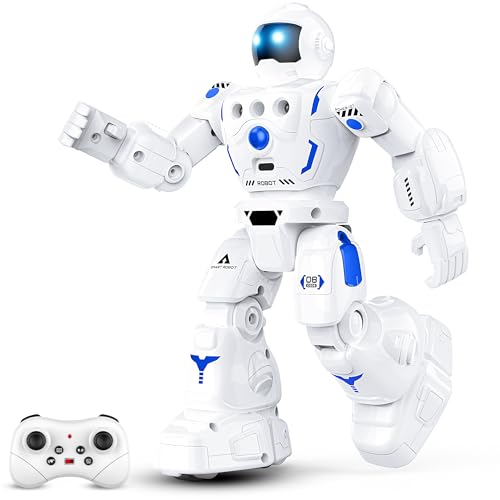
The BAZOLOTA robot blends gesture sensing with robust remote control functions and a 164-foot control range. Users can input up to 50 actions for memory playback, enabling kids to build longer sequences such as “turn left, slide forward, dance, sing.” The device offers adjustable volume for teaching auditory processing and listening levels. The design emphasizes non-toxic materials and multi-joint flexibility to support a range of poses and movements. This model is ideal for kids who want a more complex, programmable experience without needing a computer.
Educationally, the ability to program a set of actions and watch them unfold supports early computational thinking, cause-and-effect reasoning, and constructive exploration of motion. Its emphasis on gesture and remote control blends intuitive play with structured programming, which can help children transition from simple button presses to more deliberate sequence planning.
HOLIBIBE Drawing Robot
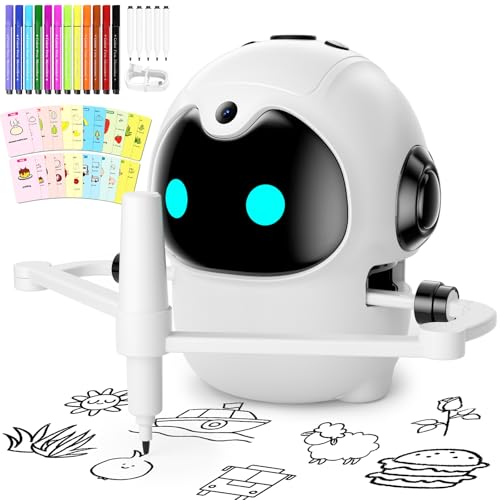
The HOLIBIBE drawing robot introduces a creative dimension to robotics. With 150 drawing cards across seven themed worlds and 12 color markers, children engage in guided drawing under voice guidance. The Montessori-inspired approach emphasizes independent exploration, observation, and the development of concentration. The combination of cards and a friendly voice encourages kids to follow steps, judge shapes, and iterate on drawings, which nurtures fine motor skills and spatial reasoning while reinforcing basic sequencing.
From a learning standpoint, this robot is less about motor control of movement and more about cognitive development through drawing and problem-solving. It can serve as a calm, educational counterpoint to more action-oriented robots, offering a balance of creativity and structure in a home learning setup.
Sillbird 12-in-1 Solar Robot Kit
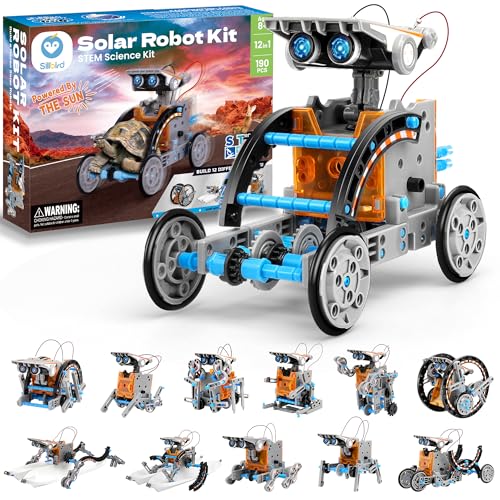
This solar-powered kit includes 190 pieces and supports 12-in-1 building configurations, providing a hands-on engineering experience. The solar power option encourages outdoor exploration and an understanding of renewable energy concepts, while the alternative power source ensures continued use indoors. The kit emphasizes iterative building, testing, and adjustment—core habits in engineering thinking. Its modular design helps kids explore different mechanisms, gears, and motion, reinforcing practical problem-solving and resilience when parts don’t behave as expected.
Educationally, the Sillbird kit aligns with STEM learning goals by combining construction play with real-world energy concepts. It also supports collaborative play when siblings or friends work together to design and refine their robots, reinforcing teamwork and communication alongside technical skill-building.
Buying Guide: Key Purchase Considerations
When selecting a robot for kids, consider the following factors to tailor choices to individual interests and developmental stages:
- Age and safety: Look for age-appropriate features and durable, non-toxic materials. Prefer models with rounded edges and compliant certifications when available.
- Learning goals: Decide whether the focus is on programming basics, engineering skills, creative expression, or a mix. Some toys emphasize storytelling and music; others center on hands-on construction or drawing.
- Control mode: Evaluate whether kids prefer gesture control, remote control, app-based programming, or a combination. Simple controls suit younger children, while multi-step programming appeals to older kids.
- Power source: Battery type and replacement needs matter. Solar-powered kits promote environmental learning and outdoor play, while battery-powered toys offer consistent indoor use.
- Durability and maintenance: Check build quality, joint flexibility, and availability of spare parts. Toys that are easy to clean and repair extend play life.
- Educational value vs. entertainment: Balance imaginative play with structured learning to maintain engagement while delivering cognitive benefits.
- Resource availability: Consider whether the toy comes with learning cards, programming guides, or companion apps that facilitate ongoing exploration.
In sum, the best pick depends on the child’s curiosity: interactive robots with storytelling and motion engage imagination; gesture-enabled and programmable models cultivate sequencing and planning; drawing-focused robots foster fine motor skills and spatial reasoning; and solar-powered kits provide a hands-on introduction to energy concepts. The five options above offer a spectrum of learning pathways while remaining accessible and entertaining for American kids today.