Choosing the right RC plane transmitter is essential for stable, responsive flight. This guide highlights top 5 transmitters that suit hobbyists and enthusiasts in the American market, focusing on reliability, interference resistance, and ease of use. Each model is paired with its listed features to help you compare performance, compatibility, and expansion potential for fixed-wing aircraft, gliders, and other RC crafts.
Summary of Selected Products
| Product | Brand | Channels | Key Focus |
|---|---|---|---|
| DTXMX FS-i6X 6-10CH | DTXMX | 6-10 | Upgradeable, bidirectional, strong interference protection |
| FLYSKY FS-i6 | FLYSKY | 6 | Unique ID pairing, jam-free operation |
| Radiolink T8FB 8CH | Radiolink | 8 | Bluetooth app setup, long-range potential |
| Radiolink AT10II 12CH | Radiolink | 12 | Telemetry options, strong anti-interference |
| DTXMX FS-i6 6CH with FS-iA6 | DTXMX | 6 | Reliable AFHDS 2A system, fixed-wing suitability |
DTXMX FS-i6 6-Channel Transmitter
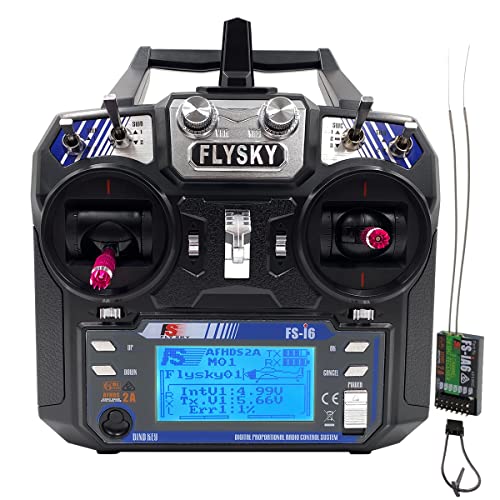
DTXMX offers the FS-i6 family’s familiar AFHDS 2A system with 2.4 GHz reliability. The transmitter supports fixed-wing aircraft, gliders, helicopters, and can extend to RC cars and boats, depending on the setup. Key attributes include quick response, compatibility with FS-iA6 receivers, and a distance capability up to 500 meters in air. This model is designed for versatility in DIY projects and multi-aircraft configurations, making it a practical entry point for beginners and hobbyists who want a capable, extendable system.
FLYSKY FS-i6 6CH 2.4GHz Radio System

FLYSKY FS-i6 is a widely used 6-channel 2.4 GHz radio system paired with the FS-iA6 receiver. Its standout features include a robust anti-interference profile, a unique binding ID that ensures communications stay between transmitter and receiver, and a secure pairing that prevents other transmitters from inadvertently connecting. The system is well-known for reliability in FPV and fixed-wing applications, offering a balance of affordability and dependable performance for hobbyists building or upgrading their RC fleets.
FLYSKY FS-i6X 10CH Transmitter
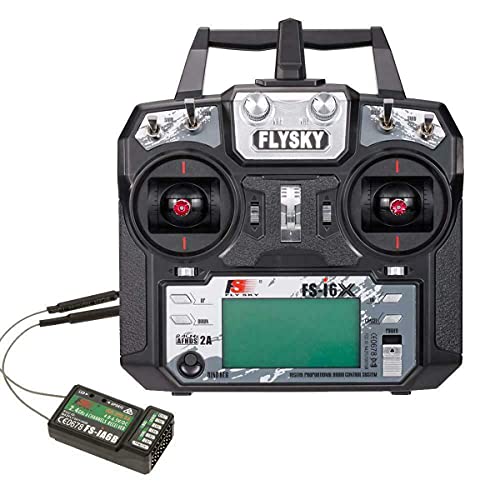
The FS-i6X expands capabilities with 10 channels when paired with the FS-iA10B receiver. It supports bidirectional data exchange, enabling telemetry and sensor data to flow between airframe and transmitter. Its hopping frequency approach reduces interference, with a broad bandwidth across the 2.4 GHz spectrum. The system’s multi-channel hopping and i-BUS support make it a strong choice for more complex aircraft setups, including FPV drones and multi-sensor-equipped gliders.
GoolRC Flysky FS-i4 4CH Transmitter

The FS-i4 offers a cost-effective 4-channel 2.4 GHz solution with AFHDS 2A, including a 6-channel mini receiver. Its automatic frequency hopping delivers a steady signal, making it suitable for more straightforward RC planes and gliders. The affordability and simplicity make it a popular option for new hobbyists who want reliable basic control without a heavy feature load.
Radiolink AT10II 12CH Transmitter

Radiolink AT10II brings 12 channels to the table with advanced anti-interference features, including DSSS and FHSS technologies. It supports voltage telemetry and multiple landing scenarios for airplanes, FPV drones, quads, helicopters, cars, and boats. The AT10II emphasizes telemetry visibility and flexible channel control, with a screen-friendly interface and robust performance for more demanding RC airframes and mixed-use builds.
Buying Guide
When selecting an RC plane transmitter, consider the following factors to ensure solid performance and future-proofing:
- Channels and expandability: Start with 6- to 6-10 channels for most hobby planes; choose 10 to 12 channels if you plan to fly multiple aircraft types or add sensors and telemetry.
- Interference resistance: Look for systems that use frequency hopping (AFHDS, FHSS, DSSS) and unique IDs to prevent cross-talk with other transmitters.
- Telemetry capabilities: Transmitters with real-time telemetry (voltage, altitude, RSSI) can improve flight safety and troubleshooting, especially for FPV and complex airframes.
- Bidirectional communication: Systems that support data exchange between transmitter and receiver enable advanced sensor integration and calibration features.
- Compatibility and ecosystem: Ensure receivers you plan to use are available and compatible with your airframes (fixed-wing, gliders, helicopters, boats).
- Ease of use: Simple binding procedures, clear displays, and firmware update paths help long-term maintenance and upgrades.
- Battery life and ergonomics: Consider grip comfort, weight, and power consumption for prolonged flight sessions.
- App and PC configurations: Some brands offer PC/phone apps for parameter setup; this can simplify advanced tuning and model management.
For most hobbyists, starting with a 6- to 10-channel system from a reputable brand offers a strong balance of reliability and expansion potential. If telemetry and multi-airframe flying are priorities, models with built-in telemetry and app-based configuration provide a deeper level of control. Always verify compatibility with your airframe, receivers, and any modules you may add in the future.