Finding the right beginner-friendly RC helicopter can simplify learning, boost confidence, and reduce crashes. The following selections emphasize stability, simple controls, and durable design to help newcomers enjoy flying sooner. Each pick includes beginner-friendly features like altitude hold, one-key takeoff/landing, and safe indoor operation. Read on to compare capabilities and find a kit that fits a new pilot’s needs.
| Product | |||
|---|---|---|---|
| SYMA S107H-E RC Helicopter | SYMA | Alloy body, altitude hold, two speed modes | Depends on use; multiple packs available |
| SIMREX RC Helicopter | SIMREX | One-key take-off/landing, altitude hold, 2.4GHz stability | Up to 30 minutes (2 batteries) |
| XIKOTEC RC Helicopter | XIKOTEC | Altitude hold, 2 batteries, 2.4GHz control | About 20 minutes |
| SYMA S53H Rescue RC Helicopters | SYMA | Upgraded safety system, beginner-friendly lift-off | Varies by pack |
| LM19-F Army Apache RC Helicopter | LMRC | Altitude hold, one-key take-off, 6-axis gyro | Typical flight times vary by battery |
These selections were chosen for accessibility, durable construction, and safety features that help beginners gain confidence quickly. Each model balances ease of use with engaging flight experiences, making them ideal starting points for hobbyists, kids, and adults exploring RC helicopters for the first time.
SYMA S107H-E: Alloy Beginner RC Helicopter

The SYMA S107H-E is built with a full alloy metal body designed to endure rough landings and bumps, making it well-suited for learners who are still refining control. It features easy one-button takeoff and landing, an altitude hold function for stable hovering, and a gyro-based stabilization system to reduce wobble. Dual speed modes let new pilots practice in smaller spaces at a slower pace, then switch to higher speed as skills improve. This model emphasizes durability and straightforward controls, supporting steady skill-building for beginners.
SIMREX RC Helicopter: Easy Beginners Model

SIMREX focuses on effortless flight with One Key Take-Off/Landing and Trim Control, coupled with a 2.4GHz system for stable signals and reduced interference. The altitude hold function helps new pilots maintain a consistent hover, while the two included batteries extend flying sessions to about 30 minutes. The overall setup supports a forgiving learning curve, enabling beginners to practice trims, hovering, and smooth transitions without constant adjustments.
XIKOTEC RC Helicopter: Beginner’s Stability Kit
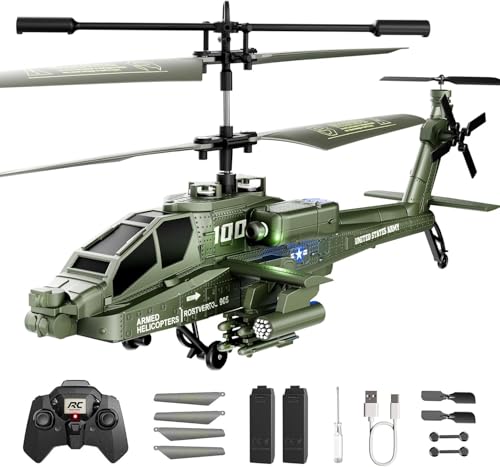
XIKOTEC emphasizes height maintenance with a one-key takeoff/landing feature, making initial flights simpler and less intimidating. The kit includes two swappable batteries for about 20 minutes of flight time per session, and a 2.4GHz control system with a gyro stabilizer to help keep the helicopter steady during indoor flight. Its compact, lightweight design prioritizes indoors use and gentle handling, reducing the risk of crashes while learning basic maneuvers.
SYMA S53H Rescue RC Helicopter: Beginner-Friendly Lift-Off

SYMA’s S53H Rescue model blends lifelike design with built-in safety features that help learners master flight. The craft prioritizes a safe, easy lift-off and steady hover, making it approachable for first-time pilots who want a realistic helicopter experience. Its safety-oriented design aims to prevent blade interference or unexpected stalls, allowing beginners to focus on throttle control, pitch, and simple steering rather than wrestling with an overly reactive airframe.
LM19-F Army Apache: Realistic Beginner’s Copter
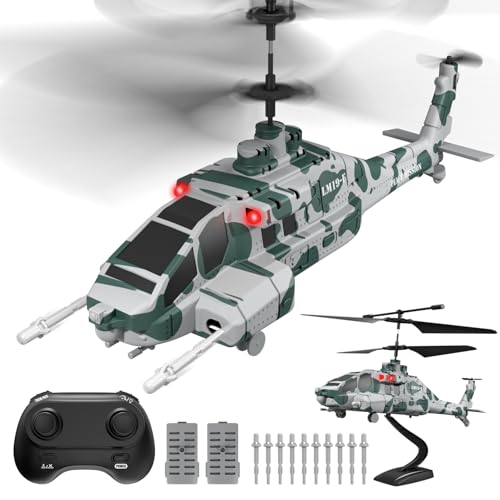
The LM19-F Army Apache offers a 1:100 scale look with authentic styling and a stable flight profile suitable for beginners. It features altitude hold, one-key take-off, and a six-axis gyro for improved control. The included stabilizing system helps learners maintain level flight and develop confident steering, while the military aesthetic adds an engaging, collectible element for hobbyists seeking a more immersive experience in their early flights.
Buying Guide: Key Considerations For Beginners
- Stability and self-leveling features: Look for altitude hold, gyro stabilization, and automatic trim options to reduce crashes and boost confidence during hover and basic maneuvers.
- Ease of use: One-key takeoff/landing and minimal control complexity help new pilots learn quickly. Check if the controller uses intuitive sticks, simple modes, and clear battery indicators.
- Durability and materials: Aluminum/alloy bodies or robust plastics resist impact during indoor flights. A design that tolerates inevitable bumps supports longer learning sessions.
- Battery life and charging: Two-battery kits extend practice time. USB-C charging and straightforward battery swaps minimize downtime between flights.
- Indoor vs outdoor use: Many beginner models are best suited for indoor use or calm outdoor spaces. Consider wind resistance and weight distribution when planning where to fly.
- Control range and interference: A reliable 2.4GHz system helps prevent signal loss when practicing with family or multiple RC toys nearby.
- Expandability: Some models offer add-ons or easy upgrades (better gyros, stronger motors) as skills grow. This can help extend the life of the initial investment.
- Safety features: Power-off protection on blade obstruction and blade guards minimize damage and injuries while learning flight controls.
When selecting a beginner RC helicopter, prioritize models with stable hovering, forgiving controls, and durable construction. Start with short, slow practice sessions to build muscle memory, then gradually introduce more complex maneuvers as confidence develops. The kits above provide a range of options that emphasize easy handling, safety, and value for new pilots in the American market.