Discover top-rated project kits that blend science, art, and engineering for curious kids. Each kit below offers hands-on activities, clear instructions, and age-appropriate challenges to spark creativity and critical thinking. Use this guide to compare options that support STEM learning, artistry, and maker activities in one engaging bundle.
| Product | Brand | Key Focus | Ideal Age |
|---|---|---|---|
| UNGLINGA 150 Experiments | UNGLINGA | Earth science, chemistry, physics; 150 experiments | 6+ |
| National Geographic Science Magic Kit | Blue Marble | Science combined with magic tricks | 6-12 |
| National Geographic Earth Science Kit | Blue Marble | Earth science experiments; volcano, crystals | 8-12 |
| Creativity for Kids Grow ‘N Glow Terrarium | Creativity for Kids | Terrarium building; living science, glow-in-the-dark | 6-8+ |
| Yutin STEM Kits for Kids (6-pack) | Yutin | Multiple building and motor projects; 6 kits | 8-12 |
UNGLINGA 150 Experiments Science Kit

The UNGLINGA kit offers a broad range of science activities across earth science, chemistry, physics, and more. With 150 experiments, kids can explore a variety of concepts through guided, hands-on projects. The included manual is illustrated and designed to make step-by-step instructions easy to follow, supporting independent or guided exploration. Tools and materials are tailored for safe, kid-friendly experimentation, and goggles help emulate real lab procedures at home.
National Geographic Science Magic Kit

This kit blends science and magic into 100+ experiments designed as magic tricks. Children can perform each trick with a wand and gloves, adding a performative element to learning. The set includes all materials necessary for conducting 20 science magic tricks, emphasizing physics and chemistry concepts. It’s structured to engage kids in demonstrations for family and friends, encouraging curiosity and presentation skills as part of the science process.
National Geographic Earth Science Kit

Designed for earth science exploration, this kit offers more than a dozen activities including volcano experiments, crystal growth, and fossil-like dig activities. A colored learning guide explains the science behind each project, helping kids connect experiments with real-world Earth science concepts. The kit emphasizes collaborative learning, making it a great option for family science nights or classroom demonstrations at home.
Creativity for Kids Grow ‘N Glow Terrarium Kit

This terrarium kit invites kids to plant and watch a tiny ecosystem thrive, with glow-in-the-dark accents for nighttime science. It includes a terrarium jar, potting mix, seeds, and decorative elements to personalize the project. The activity blends biology with observation, care, and environmental awareness, offering a tangible way to study ecosystems and plant growth in a compact, reusable container.
Yutin STEM Kits for Kids (6-Pack)
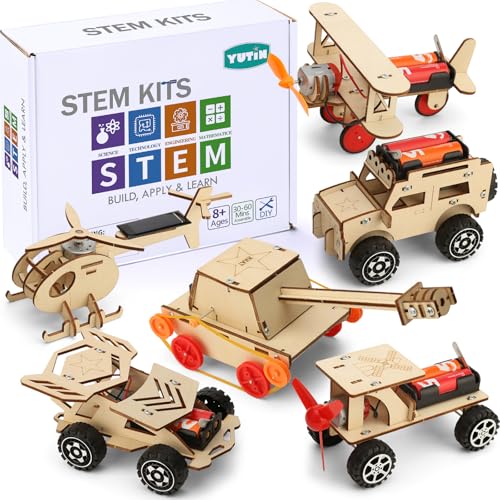
This set includes four-wheel-drive, tank, wind-powered vehicle, off-road vehicle, solar helicopter and biplane, along with a screwdriver. It emphasizes engineering concepts, energy conversion, and motor operation through hands-on assembly. The projects encourage problem-solving and resilience as kids test, adjust, and improve their designs, making it a robust option for long-term STEM engagement.
Buying Guide
Key considerations when selecting a kids’ project kit include age range, complexity level, and safety components. Choose kits with clearly written instructions and visual steps to support independent learning or guided participation by adults. Look for a mix of science, technology, engineering, arts, and math (STEAM) topics to broaden exposure and maintain interest over time.
- Age and skill level: Ensure the kit matches the child’s developmental stage. Some sets offer scalable difficulty with tiered activities.
- Materials and safety: Prefer kits with non-toxic materials, protective gear, and clear safety guidelines. Check for small parts if the child is younger.
- Learning outcomes: Identify whether the kit emphasizes observation, measurement, hypothesis testing, or design iteration to align with educational goals.
- Hands-on time and cleanup: Consider total active build time and whether the kit requires extensive cleanup or extra tools.
- Quality and longevity: A kit with reusable components (containers, figures, reusable instructions) can provide lasting value beyond a single project.
For families seeking variety, combining one comprehensive science kit with a creative craft option offers balance—ensuring STEM curiosity while fostering artistic expression. When possible, opt for kits that include a learning guide or troubleshooting tips to support independent exploration and ensure safe, confident experimentation.